


Webvision
@webvision.bsky.social
Reposted by Webvision

New paper presenting rather compelling evidence that the stem-vertebrate Haikouichthys had paired lateral and supranumerary medial eyes (!!!), and proposing that the medial eyes may have deep homology with the pineal and parapineal organs.
www.nature.com/articles/s41...
www.nature.com/articles/s41...

Four camera-type eyes in the earliest vertebrates from the Cambrian Period - Nature
Early vertebrates, particularly myllokunmingids, possessed four camera-type eyes (a pair of lateral eyes and pineal and parapineal organs), which indicates that these structures functio...
www.nature.com
January 21, 2026 at 5:47 PM
New paper presenting rather compelling evidence that the stem-vertebrate Haikouichthys had paired lateral and supranumerary medial eyes (!!!), and proposing that the medial eyes may have deep homology with the pineal and parapineal organs.
www.nature.com/articles/s41...
www.nature.com/articles/s41...
Reposted by Webvision

A new paper from my lab. I will have a full description soon. rdcu.be/eX1Ld

ipRGC properties prevent light from shifting the SCN clock during daytime
Nature - The inability of intrinsically photosensitive retinal ganglion cells to shift the circadian clock in the suprachiasmatic nucleus during daytime is caused by light-dependent depolarization...
rdcu.be
January 7, 2026 at 5:17 PM
A new paper from my lab. I will have a full description soon. rdcu.be/eX1Ld
Reposted by Webvision

Studying vision across light levels? Interested in rod photoreceptors and related (patho)physiology? Matteo Rizzi, Kate Powell and I wrote a review on rod photoreceptor activity at daylight doi.org/10.1016/j.vi... . Free access link here kwnsfk27.r.eu-west-1.awstrack.me/L0/https:%2F...
December 18, 2025 at 9:50 AM
Studying vision across light levels? Interested in rod photoreceptors and related (patho)physiology? Matteo Rizzi, Kate Powell and I wrote a review on rod photoreceptor activity at daylight doi.org/10.1016/j.vi... . Free access link here kwnsfk27.r.eu-west-1.awstrack.me/L0/https:%2F...
Reposted by Webvision

I'm so excited that @christ3na.bsky.social 's paper describing temporal control of photoreceptor development in human organoids is out at Genes and Dev and we got the cover!
genesdev.cshlp.org/content/40/1...
genesdev.cshlp.org/content/40/1...
genesdev.cshlp.org/content/40/1...
genesdev.cshlp.org/content/40/1...
Cover Photo — January 1, 2026, 40 (1-2)
A biweekly scientific journal publishing high-quality research in molecular biology and genetics, cancer biology, biochemistry, and related fields
genesdev.cshlp.org
January 5, 2026 at 6:04 PM
I'm so excited that @christ3na.bsky.social 's paper describing temporal control of photoreceptor development in human organoids is out at Genes and Dev and we got the cover!
genesdev.cshlp.org/content/40/1...
genesdev.cshlp.org/content/40/1...
genesdev.cshlp.org/content/40/1...
genesdev.cshlp.org/content/40/1...
Reposted by Webvision

Hey, @drdorotask.bsky.social is here on Bsky!
Such cool work.
We think that retinas degenerate with time and that if all of us live long enough, we’ll get AMD or other neurodegenerative diseases.
But Greenland sharks manage to live for hundreds of years and repair their eyes.
How?
Such cool work.
We think that retinas degenerate with time and that if all of us live long enough, we’ll get AMD or other neurodegenerative diseases.
But Greenland sharks manage to live for hundreds of years and repair their eyes.
How?


January 7, 2026 at 4:15 AM
Hey, @drdorotask.bsky.social is here on Bsky!
Such cool work.
We think that retinas degenerate with time and that if all of us live long enough, we’ll get AMD or other neurodegenerative diseases.
But Greenland sharks manage to live for hundreds of years and repair their eyes.
How?
Such cool work.
We think that retinas degenerate with time and that if all of us live long enough, we’ll get AMD or other neurodegenerative diseases.
But Greenland sharks manage to live for hundreds of years and repair their eyes.
How?
Reposted by Webvision

Excited to share our new work on visual information processing in the retinocollicular pathway. We discovered that while luminance responses can predict motion responses in retinal ganglion cells, this prediction does not hold in the superior colliculus cells.
www.cell.com/current-biol...
www.cell.com/current-biol...

Decoupling of visual feature selectivity in the retinocollicular pathway
Schwartz and Matsumoto et al. show that visual feature selectivity for luminance and
motion is coupled in the retina but becomes decoupled in the superior colliculus.
This transformation reorganizes t...
www.cell.com
December 17, 2025 at 3:11 AM
Excited to share our new work on visual information processing in the retinocollicular pathway. We discovered that while luminance responses can predict motion responses in retinal ganglion cells, this prediction does not hold in the superior colliculus cells.
www.cell.com/current-biol...
www.cell.com/current-biol...
Reposted by Webvision
It’s @petetheteapot.bsky.social at the Retinal Ganglion Cell meeting talking about his work in gene therapy targeting neuroprotection and neurodegeneration.

December 11, 2025 at 8:14 AM
It’s @petetheteapot.bsky.social at the Retinal Ganglion Cell meeting talking about his work in gene therapy targeting neuroprotection and neurodegeneration.
Reposted by Webvision

"All existing prosthetic vision systems — penetrating electrodes, cortical surface grids, retinal implants, optogenetics, or sensory substitution — deliver signals that differ drastically from natural retinal coding. The brain must reinterpret foreign codebooks under bandwidth and noise constraints"
December 11, 2025 at 7:42 AM
"All existing prosthetic vision systems — penetrating electrodes, cortical surface grids, retinal implants, optogenetics, or sensory substitution — deliver signals that differ drastically from natural retinal coding. The brain must reinterpret foreign codebooks under bandwidth and noise constraints"
Reposted by Webvision
It is @michelcayouette.bsky.social speaking at the Retinal Ganglion Cell Meeting.

December 11, 2025 at 4:51 PM
It is @michelcayouette.bsky.social speaking at the Retinal Ganglion Cell Meeting.
Reposted by Webvision
It’s @richardevalab.bsky.social speaking at the Retinal Ganglion Cell Meeting about his work in retinal neuroprotection and optic nerve regeneration.

December 11, 2025 at 5:05 PM
It’s @richardevalab.bsky.social speaking at the Retinal Ganglion Cell Meeting about his work in retinal neuroprotection and optic nerve regeneration.
Reposted by Webvision
It’s @john-ash8831.bsky.social talking at the Retinal Ganglion Cell Meeting about his work in retinal neuroprotection with combination therapy.

December 11, 2025 at 5:12 PM
It’s @john-ash8831.bsky.social talking at the Retinal Ganglion Cell Meeting about his work in retinal neuroprotection with combination therapy.
Reposted by Webvision

Frog eye, frog eye. Can I have a confocal microscope to play on for 12 hrs a day again please? 👉👈🥺 🐸

December 9, 2025 at 7:58 PM
Frog eye, frog eye. Can I have a confocal microscope to play on for 12 hrs a day again please? 👉👈🥺 🐸
Reposted by Webvision
Depends upon application for sure. But I made @webvision.bsky.social CC BY-NC for that content. www.webvision.pitt.edu
Question for NIH funded US scientists: Which open access license is appropriate for publications under new NIH open access policy:
open access CC BY license, or open access CC BY-NC license ?🙋
open access CC BY license, or open access CC BY-NC license ?🙋
December 8, 2025 at 7:55 PM
Depends upon application for sure. But I made @webvision.bsky.social CC BY-NC for that content. www.webvision.pitt.edu
Reposted by Webvision
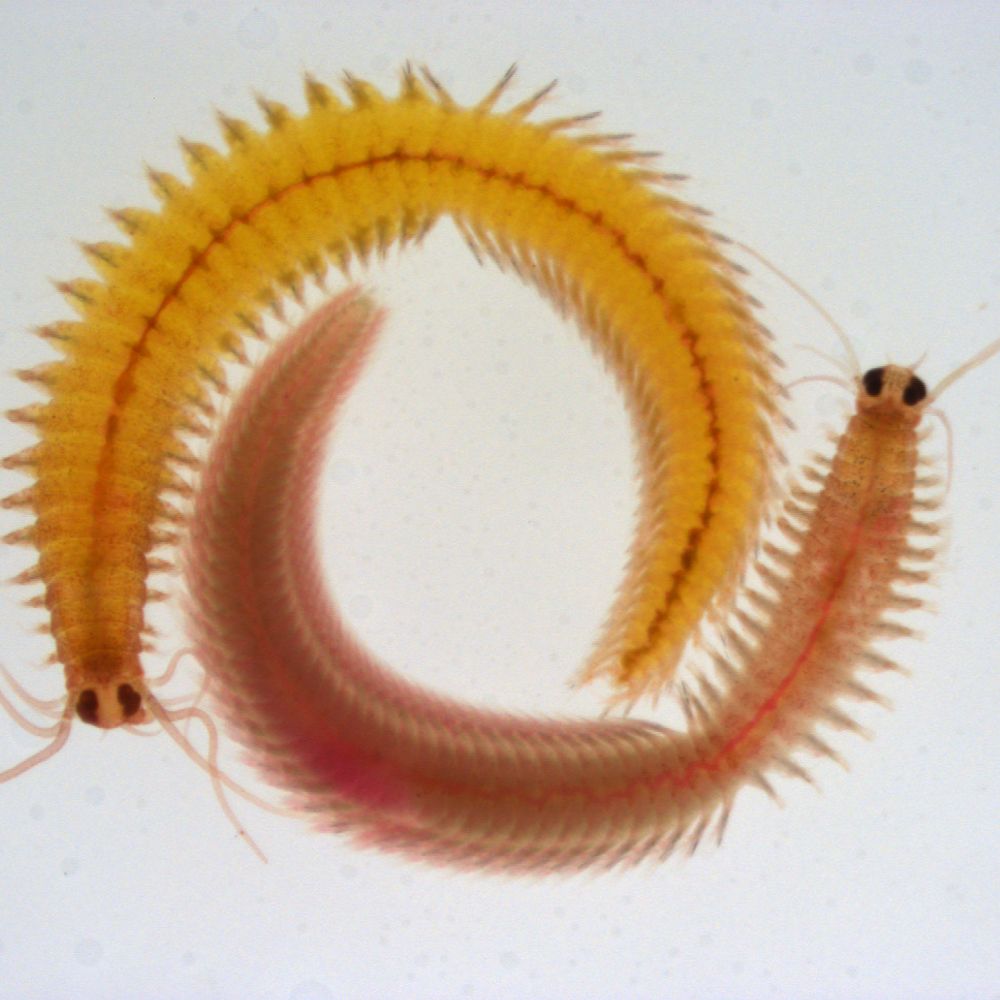
Freshly out at @natcomms.nature.com ! Our @univie.ac.at @awi.de @viennabiocenter.bsky.social @ercgrantees.bsky.social research into neurogenic plasticity of adult worm brains, and similarities in stem cells supporting growth of camera-type eyes. www.nature.com/articles/s41... [1/7]

December 1, 2025 at 10:51 AM
Freshly out at @natcomms.nature.com ! Our @univie.ac.at @awi.de @viennabiocenter.bsky.social @ercgrantees.bsky.social research into neurogenic plasticity of adult worm brains, and similarities in stem cells supporting growth of camera-type eyes. www.nature.com/articles/s41... [1/7]
Reposted by Webvision

Buenos días, ojazos 👀

December 9, 2025 at 7:20 AM
Buenos días, ojazos 👀
Reposted by Webvision
A great talk by @cuilab.bsky.social at the Retinal Ganglion Cell meeting.

December 9, 2025 at 8:14 AM
A great talk by @cuilab.bsky.social at the Retinal Ganglion Cell meeting.
Reposted by Webvision
It’s @a-alexandris.bsky.social talking at the Retinal Ganglion Cell Meeting about his work in axonal degeneration.

December 9, 2025 at 9:00 AM
It’s @a-alexandris.bsky.social talking at the Retinal Ganglion Cell Meeting about his work in axonal degeneration.
Reposted by Webvision
Trying to find some protocols for cone isolation from frogs that don't involve transgenics or freezing. There is a surprising dearth of information out there for cone isolation? Seems to be mostly rods. Is anyone familiar with any simple-ish protocols? 🧪 👀 #xenopus
December 5, 2025 at 1:43 AM
Trying to find some protocols for cone isolation from frogs that don't involve transgenics or freezing. There is a surprising dearth of information out there for cone isolation? Seems to be mostly rods. Is anyone familiar with any simple-ish protocols? 🧪 👀 #xenopus
Reposted by Webvision

Extremely proud to share our publication on S-cone circuitry in the ground squirrel, newly available this week in PNAS. We've been staring at these reconstructions for a long time, and I'm excited for others to see the results. 1/n
www.pnas.org/doi/10.1073/...
www.pnas.org/doi/10.1073/...

S-cone-specific circuitry in the outer plexiform layer of a cone-dominant mammal | PNAS
In the vertebrate retina, short wavelength-sensitive S-cones and their downstream
interneurons play unique roles in both image forming and non-imag...
www.pnas.org
December 3, 2025 at 3:36 PM
Extremely proud to share our publication on S-cone circuitry in the ground squirrel, newly available this week in PNAS. We've been staring at these reconstructions for a long time, and I'm excited for others to see the results. 1/n
www.pnas.org/doi/10.1073/...
www.pnas.org/doi/10.1073/...
Reposted by Webvision

Just a heads up: I just got a phishing attempt pretending to be from the #VisualSystemDevelopment #GRC. It looked pretty convincing at first glance, so be careful!
November 27, 2025 at 7:36 PM
Just a heads up: I just got a phishing attempt pretending to be from the #VisualSystemDevelopment #GRC. It looked pretty convincing at first glance, so be careful!
Reposted by Webvision

That image is from 1961 and an idealization. Here is an actual trajectory of fixational eye movements. The dots are 2 ms apart. If a midget ganglion cell, with single-cone receptive field, fires at 100 Hz, then every spike reports about a different cone. How can we ever read anything?

November 7, 2025 at 6:23 PM
That image is from 1961 and an idealization. Here is an actual trajectory of fixational eye movements. The dots are 2 ms apart. If a midget ganglion cell, with single-cone receptive field, fires at 100 Hz, then every spike reports about a different cone. How can we ever read anything?
Reposted by Webvision

#FluorescenceFriday
A sky of light within ✨
This is the ganglion cell layer of the avian retina. The nerve fiber layer lies beneath like a soft green current, carrying quiet signals forward.
Sometimes to see the universe with its beautiful scattered stars, one only has to look inside.
A sky of light within ✨
This is the ganglion cell layer of the avian retina. The nerve fiber layer lies beneath like a soft green current, carrying quiet signals forward.
Sometimes to see the universe with its beautiful scattered stars, one only has to look inside.
November 6, 2025 at 6:39 PM
#FluorescenceFriday
A sky of light within ✨
This is the ganglion cell layer of the avian retina. The nerve fiber layer lies beneath like a soft green current, carrying quiet signals forward.
Sometimes to see the universe with its beautiful scattered stars, one only has to look inside.
A sky of light within ✨
This is the ganglion cell layer of the avian retina. The nerve fiber layer lies beneath like a soft green current, carrying quiet signals forward.
Sometimes to see the universe with its beautiful scattered stars, one only has to look inside.
Reposted by Webvision
Hey folks, this is a very cool opportunity for peeps to do an amazing postdoc in Sydney, Australia in translational vision research.

We’re hiring! Join the Sivyer Lab at The University of Sydney as a Postdoctoral Research Fellow in Neurodegeneration within the Snow Vision Accelerator, a $50M initiative tackling glaucoma and optic nerve disease. iPSCs, electrophysiology, drug discovery, and gene therapy.

November 26, 2025 at 12:48 AM
Hey folks, this is a very cool opportunity for peeps to do an amazing postdoc in Sydney, Australia in translational vision research.
Excellent work @victorcalbiagueg.bsky.social !!!

In this #TopicalReview, Victor Calbiague-Garcia of sorbonne-universite.fr et al. review current knowledge of #amacrine cells & discuss how emerging approaches are advancing our understanding of their function 👁️ 🐁
🔗 Read it here: physoc.onlinelibrary.wiley.com/doi/10.1113/...
🔗 Read it here: physoc.onlinelibrary.wiley.com/doi/10.1113/...

November 17, 2025 at 3:55 PM
Excellent work @victorcalbiagueg.bsky.social !!!
Reposted by Webvision

Axonal pathfinding of zebrafish retinal ganglion cells forms the optic nerve. Credit to Dr. Matthew Bostock @houartlab.bsky.social. #ZebrafishZunday 🧪
November 16, 2025 at 8:30 PM
Axonal pathfinding of zebrafish retinal ganglion cells forms the optic nerve. Credit to Dr. Matthew Bostock @houartlab.bsky.social. #ZebrafishZunday 🧪