




Dmitry Kretov
@dmitry-kretov.bsky.social
Group Leader @Centre de Recherche du CHU de Québec-Université Laval #NewPI
RNA-binding proteins and microRNAs in development and beyond.
RNA-binding proteins and microRNAs in development and beyond.
Reposted by Dmitry Kretov

After a huge amount of work w/ @alex-stark.bsky.social's group, a new version of our Ledidi preprint is now out!
In an era of AI-designed proteins, the next leap will be controlling when, where, and how much of these proteins are expressed in living cells.
www.biorxiv.org/content/10.1...
In an era of AI-designed proteins, the next leap will be controlling when, where, and how much of these proteins are expressed in living cells.
www.biorxiv.org/content/10.1...

Programmatic design and editing of cis-regulatory elements
The development of modern genome editing and DNA synthesis has enabled researchers to edit DNA sequences with high precision but has left unsolved the problem of designing these edits. We introduce Le...
www.biorxiv.org
December 10, 2025 at 3:18 PM
After a huge amount of work w/ @alex-stark.bsky.social's group, a new version of our Ledidi preprint is now out!
In an era of AI-designed proteins, the next leap will be controlling when, where, and how much of these proteins are expressed in living cells.
www.biorxiv.org/content/10.1...
In an era of AI-designed proteins, the next leap will be controlling when, where, and how much of these proteins are expressed in living cells.
www.biorxiv.org/content/10.1...
Reposted by Dmitry Kretov

Do you want to image RNA in living cells? Check out our new live-cell Click labeling approach. An amazing collaboration with the Meier Lab at UHH and the Wagenknecht Lab at KIT! doi.org/10.1002/anie...
Congratulations, especially to Doerte, Eileen, and Iven!
Thanks to DFG CRC1648
Congratulations, especially to Doerte, Eileen, and Iven!
Thanks to DFG CRC1648

Live‐Cell RNA Imaging via Clickable TriPPPro Nucleotide Reporters
The intracellular delivery of trans-cyclooctene and bicyclo[6.1.0]nonyne as sterically demanding groups for the inverse electron-demand Diels–Alder was achieved by the triphosphate prodrug (TriPPPro)....
doi.org
November 28, 2025 at 9:40 AM
Do you want to image RNA in living cells? Check out our new live-cell Click labeling approach. An amazing collaboration with the Meier Lab at UHH and the Wagenknecht Lab at KIT! doi.org/10.1002/anie...
Congratulations, especially to Doerte, Eileen, and Iven!
Thanks to DFG CRC1648
Congratulations, especially to Doerte, Eileen, and Iven!
Thanks to DFG CRC1648
Looking forward to sharing our work!

If you’re into RBPs, miRNAs, RNA regulation, or love cool new tech in biology…You don’t want to miss the talk of @dmitry-kretov.bsky.social (@ulaval.ca) the creator of RBPscan, a powerful method to quantitatively map RNA–protein interactions inside living cells; Wed 10th at 16:30 online.
December 5, 2025 at 6:16 PM
Looking forward to sharing our work!
Reposted by Dmitry Kretov
Great collaboration with Dougherty and Pavlovic Djuranovic
labs on using MPRAs to look into non-coding mutations.
Approaches for identification of 5′ UTR mutations impacting translation and protein production from neurodevelopmental disorder genes
www.sciencedirect.com/science/arti...
labs on using MPRAs to look into non-coding mutations.
Approaches for identification of 5′ UTR mutations impacting translation and protein production from neurodevelopmental disorder genes
www.sciencedirect.com/science/arti...
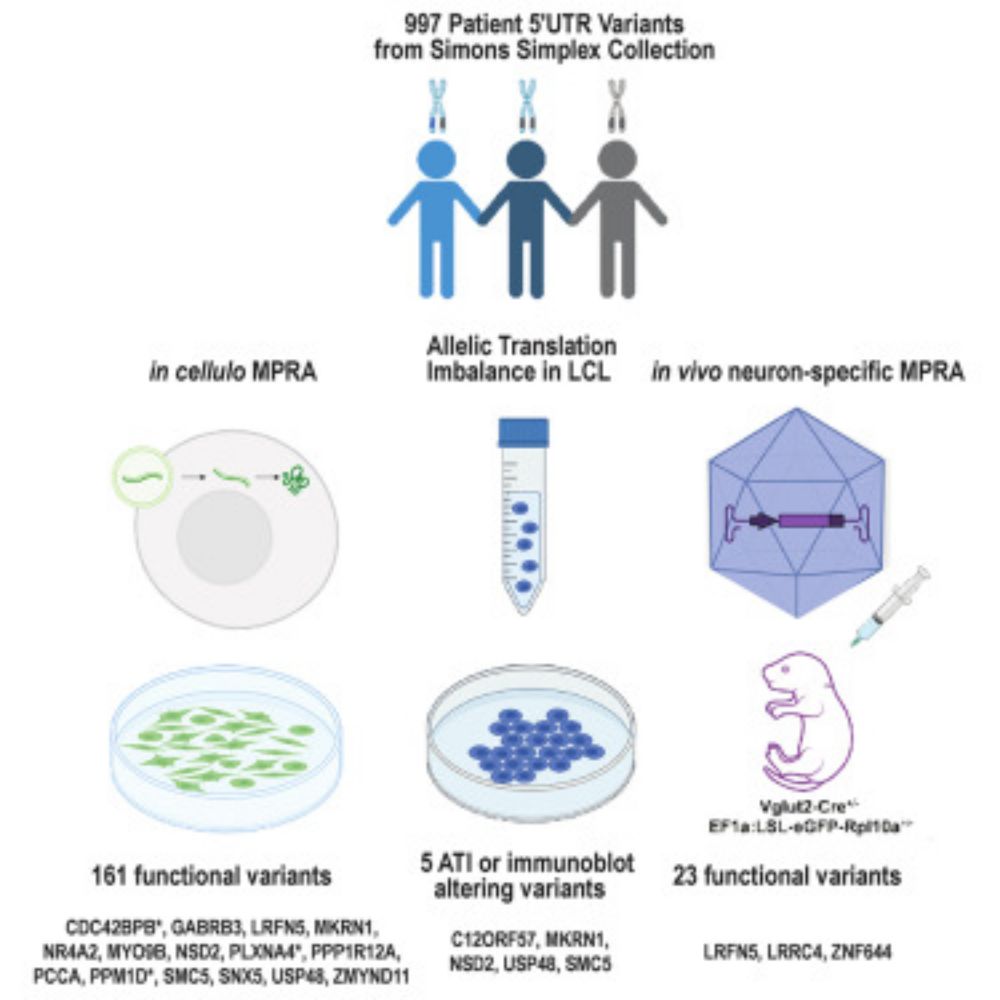
Approaches for identification of 5′ UTR mutations impacting translation and protein production from neurodevelopmental disorder genes
Coding mutations can cause neurodevelopmental disorders (NDDs), including autism. Yet, predicting which non-coding (e.g., 5′ untranslated region [UTR]…
www.sciencedirect.com
December 5, 2025 at 2:49 PM
Great collaboration with Dougherty and Pavlovic Djuranovic
labs on using MPRAs to look into non-coding mutations.
Approaches for identification of 5′ UTR mutations impacting translation and protein production from neurodevelopmental disorder genes
www.sciencedirect.com/science/arti...
labs on using MPRAs to look into non-coding mutations.
Approaches for identification of 5′ UTR mutations impacting translation and protein production from neurodevelopmental disorder genes
www.sciencedirect.com/science/arti...
Reposted by Dmitry Kretov

🌟G&D SPOTLIGHT 🌟
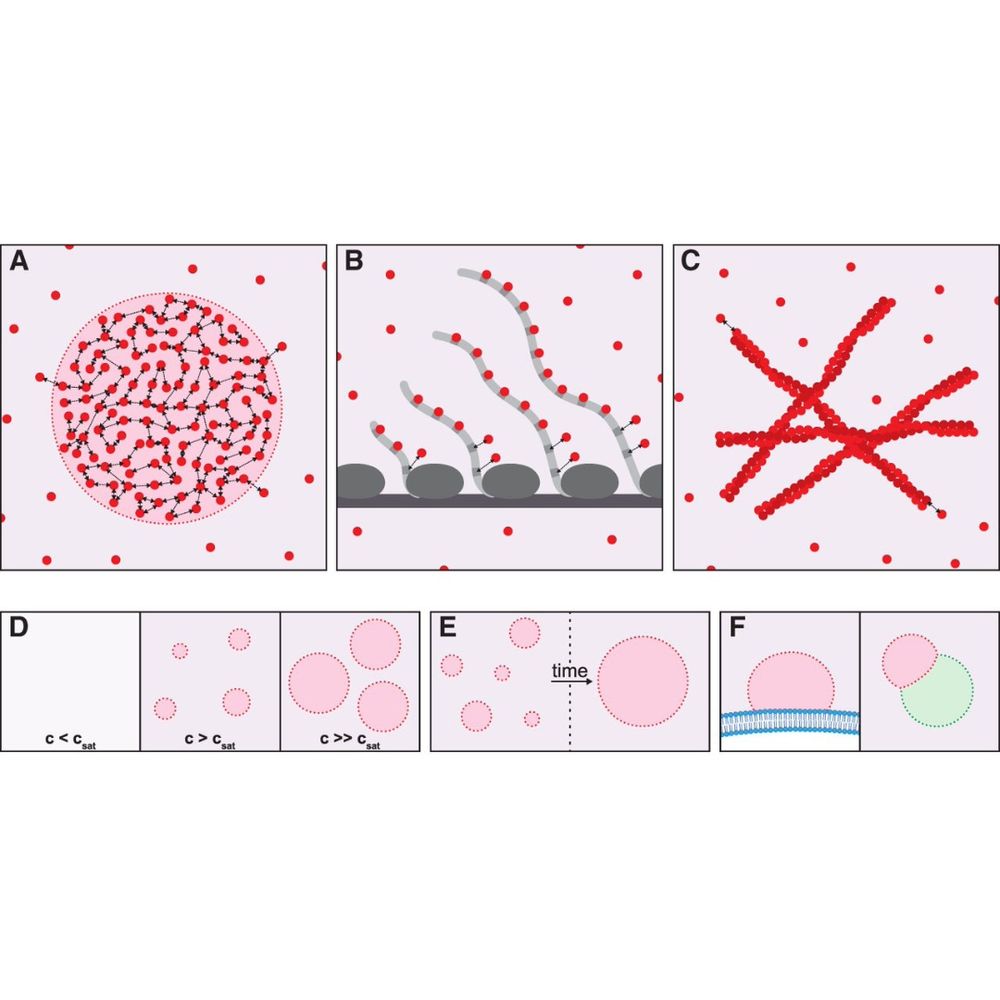
REVIEW: RNA granules: functional compartments or incidental condensates?
By Andrea Putnam, Laura Thomas and Geraldine Seydoux
➡️ https://genesdev.cshlp.org/content/37/9-10/354.abstract
#RNAmetabolism #RNAgranules #phaseseparation #RiboNucleoProteins #condensates
REVIEW: RNA granules: functional compartments or incidental condensates?
By Andrea Putnam, Laura Thomas and Geraldine Seydoux
➡️ https://genesdev.cshlp.org/content/37/9-10/354.abstract
#RNAmetabolism #RNAgranules #phaseseparation #RiboNucleoProteins #condensates
November 28, 2025 at 7:00 PM
🌟G&D SPOTLIGHT 🌟
REVIEW: RNA granules: functional compartments or incidental condensates?
By Andrea Putnam, Laura Thomas and Geraldine Seydoux
➡️ https://genesdev.cshlp.org/content/37/9-10/354.abstract
#RNAmetabolism #RNAgranules #phaseseparation #RiboNucleoProteins #condensates
REVIEW: RNA granules: functional compartments or incidental condensates?
By Andrea Putnam, Laura Thomas and Geraldine Seydoux
➡️ https://genesdev.cshlp.org/content/37/9-10/354.abstract
#RNAmetabolism #RNAgranules #phaseseparation #RiboNucleoProteins #condensates
Reposted by Dmitry Kretov

📣 I hereby make my Bluesky debut to announce that our work linking DNA binding affinities and kinetics 𝘪𝘯 𝘷𝘪𝘵𝘳𝘰 and 𝘪𝘯 𝘷𝘪𝘷𝘰 for the human transcription factor KLF1 just got published in Cell! @cp-cell.bsky.social
www.cell.com/cell/fulltex...
Key findings in a thread (1/6):
www.cell.com/cell/fulltex...
Key findings in a thread (1/6):

November 27, 2025 at 1:17 PM
📣 I hereby make my Bluesky debut to announce that our work linking DNA binding affinities and kinetics 𝘪𝘯 𝘷𝘪𝘵𝘳𝘰 and 𝘪𝘯 𝘷𝘪𝘷𝘰 for the human transcription factor KLF1 just got published in Cell! @cp-cell.bsky.social
www.cell.com/cell/fulltex...
Key findings in a thread (1/6):
www.cell.com/cell/fulltex...
Key findings in a thread (1/6):
Reposted by Dmitry Kretov

Excited about Kolya Aleksashin's new work, enabling preparation of active in vitro translation systems from primary human cells and difficult-to-edit cells (fibroblasts and cardiomyocytes). This opens new opportunities to probe mechanisms of translation regulation.
www.biorxiv.org/content/10.1...
www.biorxiv.org/content/10.1...

Overcoming the eIF2α Brake in Human Cell-Derived Translation Systems
Cell-free translation from human cells is a powerful platform for studying mammalian gene expression and building synthetic biology tools, but productivity is often curtailed by inhibitory phosphoryla...
www.biorxiv.org
November 18, 2025 at 6:29 PM
Excited about Kolya Aleksashin's new work, enabling preparation of active in vitro translation systems from primary human cells and difficult-to-edit cells (fibroblasts and cardiomyocytes). This opens new opportunities to probe mechanisms of translation regulation.
www.biorxiv.org/content/10.1...
www.biorxiv.org/content/10.1...
Reposted by Dmitry Kretov

new Lai lab paper @natsmb.nature.com! Dicer is specifically mutated in cancer, but we don't fully understand its molecular/reg impacts. with @danweihuangfu.bsky.social, we characterized the first knockin Dicer hotspot in hESCs, and found unexpected defects in miRNA biogenesis! 🧬 1/4
rdcu.be/eOc0q
rdcu.be/eOc0q

Human DICER1 hotspot mutation induces both loss and gain of miRNA function
Nature Structural & Molecular Biology - Jee et al. study a cancer hotspot allele of DICER1 that disrupts RNaseIIIb activity. Beyond ablating 5p hairpin cleavage, 3p passenger strands are...
rdcu.be
November 10, 2025 at 4:43 PM
new Lai lab paper @natsmb.nature.com! Dicer is specifically mutated in cancer, but we don't fully understand its molecular/reg impacts. with @danweihuangfu.bsky.social, we characterized the first knockin Dicer hotspot in hESCs, and found unexpected defects in miRNA biogenesis! 🧬 1/4
rdcu.be/eOc0q
rdcu.be/eOc0q
Reposted by Dmitry Kretov

Gentle reminder that everyone should read Jacob and Monod, 1961. And then read it again every once in awhile. A master-class on clear writing (and, ya know, Nobel Prize winning stuff, too).
www.sciencedirect.com/science/arti...
www.sciencedirect.com/science/arti...

Genetic regulatory mechanisms in the synthesis of proteins
The synthesis of enzymes in bacteria follows a double genetic control. The socalled structural genes determine the molecular organization of the prote…
www.sciencedirect.com
November 10, 2025 at 3:28 PM
Gentle reminder that everyone should read Jacob and Monod, 1961. And then read it again every once in awhile. A master-class on clear writing (and, ya know, Nobel Prize winning stuff, too).
www.sciencedirect.com/science/arti...
www.sciencedirect.com/science/arti...
Reposted by Dmitry Kretov

New paper alert! Scientists in Clemens Plaschka’s lab at the IMP and @juliusbrennecke.bsky.social's lab at
@imbavienna.bsky.social solved a decade-old puzzle, uncovering how the information molecule mRNA travels from the cell’s nucleus to its periphery. More: bit.ly/4nHcvys
@imbavienna.bsky.social solved a decade-old puzzle, uncovering how the information molecule mRNA travels from the cell’s nucleus to its periphery. More: bit.ly/4nHcvys

November 6, 2025 at 4:04 PM
New paper alert! Scientists in Clemens Plaschka’s lab at the IMP and @juliusbrennecke.bsky.social's lab at
@imbavienna.bsky.social solved a decade-old puzzle, uncovering how the information molecule mRNA travels from the cell’s nucleus to its periphery. More: bit.ly/4nHcvys
@imbavienna.bsky.social solved a decade-old puzzle, uncovering how the information molecule mRNA travels from the cell’s nucleus to its periphery. More: bit.ly/4nHcvys
Reposted by Dmitry Kretov
📅 Save the Date!
The 4th Canadian Zebrafish Research Conference will take place on Friday, May 15, 2026, at CHU Sainte-Justine, Montreal (just before the Canadian Neuroscience Conference!)
Multiple travel awards available with 2 Postdoctoral Rising Stars Awards! #izfs
The 4th Canadian Zebrafish Research Conference will take place on Friday, May 15, 2026, at CHU Sainte-Justine, Montreal (just before the Canadian Neuroscience Conference!)
Multiple travel awards available with 2 Postdoctoral Rising Stars Awards! #izfs

November 6, 2025 at 3:31 PM
📅 Save the Date!
The 4th Canadian Zebrafish Research Conference will take place on Friday, May 15, 2026, at CHU Sainte-Justine, Montreal (just before the Canadian Neuroscience Conference!)
Multiple travel awards available with 2 Postdoctoral Rising Stars Awards! #izfs
The 4th Canadian Zebrafish Research Conference will take place on Friday, May 15, 2026, at CHU Sainte-Justine, Montreal (just before the Canadian Neuroscience Conference!)
Multiple travel awards available with 2 Postdoctoral Rising Stars Awards! #izfs
Reposted by Dmitry Kretov

Now online! Disparate leukemia mutations converge on nuclear phase-separated condensates

Disparate leukemia mutations converge on nuclear phase-separated condensates
Mutant NPM1 and various leukemia oncofusions form biophysically indistingishable nuclear condensates, termed C-bodies, which orchestrate leukemogenic gene expression. These findings consolidate diverse genetic lesions into a shared pathogenic mechanism in AML.
dlvr.it
November 4, 2025 at 7:51 PM
Now online! Disparate leukemia mutations converge on nuclear phase-separated condensates
Reposted by Dmitry Kretov

This is such an interesting paper. Why? Because the binding of transcription factor (TF) proteins to DNA governs how our genes are turned on/off/up/down, & so is the primary issue for how our genes work in development and how our cells respond to just about anything.🧵
www.nature.com/articles/s41...
www.nature.com/articles/s41...

Multiple overlapping binding sites determine transcription factor occupancy - Nature
A new method enables comprehensive screening and identification of low-affinity DNA binding sites for transcription factors, and reveals that nucleotides flanking high-affinity binding sites create ov...
www.nature.com
October 30, 2025 at 11:04 PM
This is such an interesting paper. Why? Because the binding of transcription factor (TF) proteins to DNA governs how our genes are turned on/off/up/down, & so is the primary issue for how our genes work in development and how our cells respond to just about anything.🧵
www.nature.com/articles/s41...
www.nature.com/articles/s41...
Reposted by Dmitry Kretov

Colliding ribosomes are potent signals of cellular stress. But do cells use ‘programmed’ ribosome collisions to regulate gene expression? I’m excited to present a new story from my lab led by Frederick Rehfeld(@fred-rehfeld.bsky.social) which revealed that the answer is YES! Read on to find out how👇

Oxidative stress sensing by the translation elongation machinery promotes production of detoxifying selenoproteins
Selenocysteine, incorporated into polypeptides at recoded termination codons, plays an essential role in redox biology. Using GPX1 and GPX4, selenoenzymes that mitigate oxidative stress, as reporters,...
www.biorxiv.org
October 14, 2025 at 10:28 PM
Colliding ribosomes are potent signals of cellular stress. But do cells use ‘programmed’ ribosome collisions to regulate gene expression? I’m excited to present a new story from my lab led by Frederick Rehfeld(@fred-rehfeld.bsky.social) which revealed that the answer is YES! Read on to find out how👇
Reposted by Dmitry Kretov

Check out the latest work from our lab, led by Arash Latifkar @ara-latifkar.bsky.social , www.biorxiv.org/content/10.1...

mRNA poly(A)-tail length is a battleground for coronavirus–host competition
Most eukaryotic mRNAs contain a poly(A) tail, which in post-embryonic cells enhances their stability. Many cytoplasmic RNA viruses also harbor poly(A) tails on their genomic RNA and mRNAs. Here, we re...
www.biorxiv.org
October 13, 2025 at 7:44 PM
Check out the latest work from our lab, led by Arash Latifkar @ara-latifkar.bsky.social , www.biorxiv.org/content/10.1...
Reposted by Dmitry Kretov

(1/4) New Pre-print! 🌟
Embryonic development is usually seen as a continuous process, yet some embryos can pause their development to survive harsh conditions, a phenomenon known as diapause. How this pausing is actively maintained has remained a mystery.
Embryonic development is usually seen as a continuous process, yet some embryos can pause their development to survive harsh conditions, a phenomenon known as diapause. How this pausing is actively maintained has remained a mystery.

October 9, 2025 at 8:08 PM
(1/4) New Pre-print! 🌟
Embryonic development is usually seen as a continuous process, yet some embryos can pause their development to survive harsh conditions, a phenomenon known as diapause. How this pausing is actively maintained has remained a mystery.
Embryonic development is usually seen as a continuous process, yet some embryos can pause their development to survive harsh conditions, a phenomenon known as diapause. How this pausing is actively maintained has remained a mystery.
Reposted by Dmitry Kretov

Really grateful to see our work featured by @quantamagazine.bsky.social in this piece on the evolution of genome regulation. Huge thanks to @philipcball.bsky.social for such a beautifully written article.
I adored writing this piece. It brings together several of the things preoccupying me right now, like chromatin organization and gene regulation. There's so much more to be said on that. Also, these marine critters look gorgeous.
www.quantamagazine.org/loops-of-dna...
www.quantamagazine.org/loops-of-dna...

Loops of DNA Equipped Ancient Life To Become Complex | Quanta Magazine
New work shows that physical folding of the genome to control genes located far away may have been an early evolutionary development.
www.quantamagazine.org
October 8, 2025 at 8:49 PM
Really grateful to see our work featured by @quantamagazine.bsky.social in this piece on the evolution of genome regulation. Huge thanks to @philipcball.bsky.social for such a beautifully written article.
Reposted by Dmitry Kretov


Reposted by Dmitry Kretov

#ZebrafishFunFacts: As the most-cited #zebrafish cancer research paper, Amsterdam et al screened hundreds of heterozygous lines for embryonic lethal mutations & found elevated cancer incidence in ribosomal genes. This previously underappreciated finding was published @plosbiology.org 21 years ago. 🧪

October 4, 2025 at 7:23 AM
#ZebrafishFunFacts: As the most-cited #zebrafish cancer research paper, Amsterdam et al screened hundreds of heterozygous lines for embryonic lethal mutations & found elevated cancer incidence in ribosomal genes. This previously underappreciated finding was published @plosbiology.org 21 years ago. 🧪
Reposted by Dmitry Kretov

We combine our yeast genetics experiments with the massive body of literature data to make a case for 40S scanning of 5’UTRs of by 1D diffusion (finalised version): m.rnajournal.cshlp.org/content/31/1...
RNA | Mobile
https://m.rnajournal.cshlp.org/content/31/10/…
October 4, 2025 at 2:05 AM
We combine our yeast genetics experiments with the massive body of literature data to make a case for 40S scanning of 5’UTRs of by 1D diffusion (finalised version): m.rnajournal.cshlp.org/content/31/1...
Reposted by Dmitry Kretov
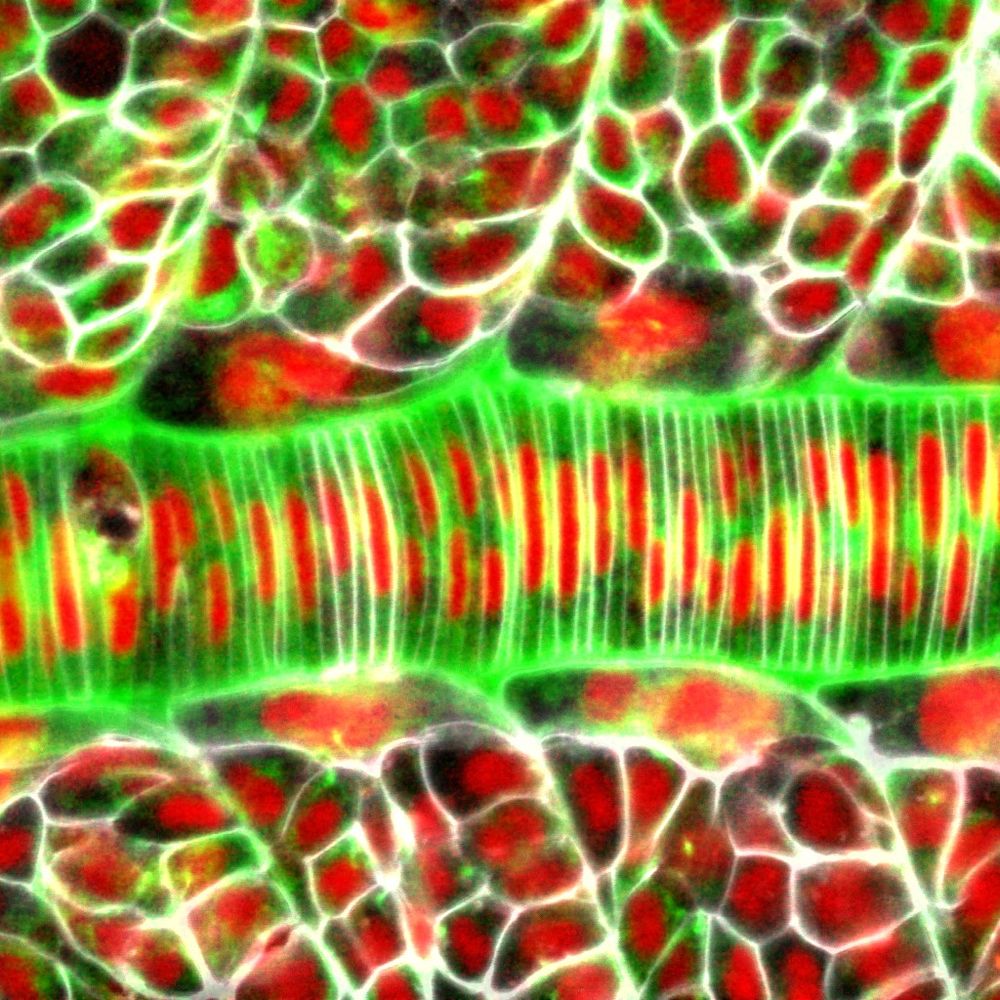
1/5 Lab's first manuscript 🎉 is out @biorxivpreprint.bsky.social today! Beautifully, it is performed by a senior undergraduate thesis student, Mohammed! We developed a 3-D printed #zebrafish embryo imaging chamber 🔬and connected it to syringe pumps to be able to perfuse drugs in a timely fashion. 🧪
October 2, 2025 at 2:27 AM
1/5 Lab's first manuscript 🎉 is out @biorxivpreprint.bsky.social today! Beautifully, it is performed by a senior undergraduate thesis student, Mohammed! We developed a 3-D printed #zebrafish embryo imaging chamber 🔬and connected it to syringe pumps to be able to perfuse drugs in a timely fashion. 🧪
Reposted by Dmitry Kretov

RNA-binding proteins provide specificity to the PAN2-PAN3 mRNA deadenylation complex https://www.biorxiv.org/content/10.1101/2025.09.27.678968v1
September 27, 2025 at 8:17 PM
RNA-binding proteins provide specificity to the PAN2-PAN3 mRNA deadenylation complex https://www.biorxiv.org/content/10.1101/2025.09.27.678968v1
Congratulations Markus! Really cool work!👏
www.biorxiv.org/content/10.1...
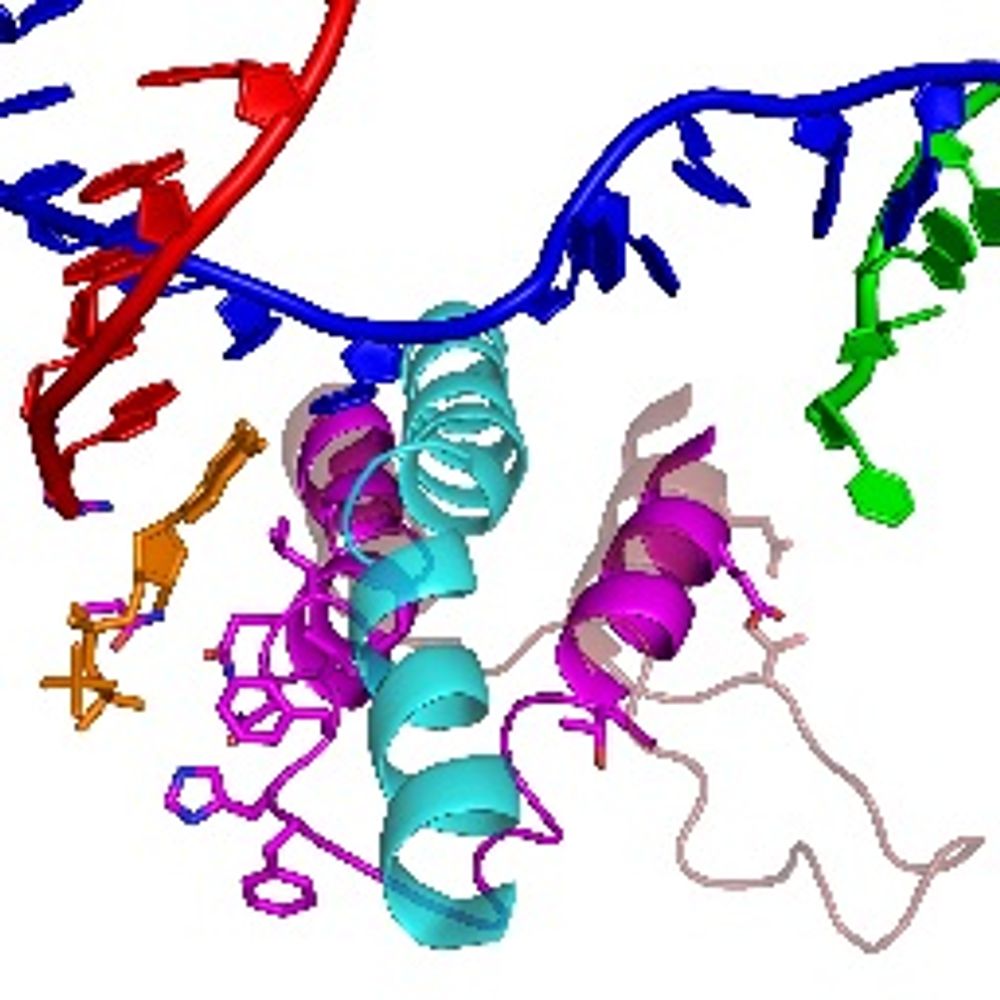
Delighted to share the story of two germline RBPs - one with little (DND1) and one with no (NANOS3) intrinsic sequence-specificity - that together build a continuous RNA binding surface recognizing a 7-mer (AUGAAUU) in target mRNA 3’UTRs, leading to deadenylation.
Delighted to share the story of two germline RBPs - one with little (DND1) and one with no (NANOS3) intrinsic sequence-specificity - that together build a continuous RNA binding surface recognizing a 7-mer (AUGAAUU) in target mRNA 3’UTRs, leading to deadenylation.

The DND1-NANOS3 complex shapes the primordial germ cell transcriptome via a heptanucleotide sequence in mRNA 3'UTRs
The RNA-binding proteins DND1 and NANOS3 are essential for primordial germ cell survival. Their co-immunoprecipitation and overlapping loss-of-function phenotypes suggest joint function, yet how they ...
www.biorxiv.org
September 27, 2025 at 3:56 PM
Congratulations Markus! Really cool work!👏
Reposted by Dmitry Kretov
This is a fascinating paper that particular types of RNA binding proteins with IDRs that target nuclear speckles also can recruit their own RNAs to nuclear speckles as a negative feedback mechanism for condensation the authors call "interstasis" www.nature.com/articles/s41...

Collective homeostasis of condensation-prone proteins via their mRNAs - Nature
The authors discover a homeostatic process termed interstasis, in which an increased concentration of proteins within RNA–protein condensates induces the sequestration of their own mRNAs.
www.nature.com
September 25, 2025 at 8:24 PM
This is a fascinating paper that particular types of RNA binding proteins with IDRs that target nuclear speckles also can recruit their own RNAs to nuclear speckles as a negative feedback mechanism for condensation the authors call "interstasis" www.nature.com/articles/s41...
Reposted by Dmitry Kretov

🚀 Our new paper is out @natmethods.nature.com!
Kuffer & Marzilli engineered conditionally stable MS2 & PP7 coat proteins (dMCP & dPCP) that degrade unless bound to RNA, enabling ultra–low-background, single-mRNA imaging in live cells.
🔗 www.nature.com/articles/s41...
🧬 www.addgene.org/John_Ngo/
Kuffer & Marzilli engineered conditionally stable MS2 & PP7 coat proteins (dMCP & dPCP) that degrade unless bound to RNA, enabling ultra–low-background, single-mRNA imaging in live cells.
🔗 www.nature.com/articles/s41...
🧬 www.addgene.org/John_Ngo/
September 22, 2025 at 6:27 PM
🚀 Our new paper is out @natmethods.nature.com!
Kuffer & Marzilli engineered conditionally stable MS2 & PP7 coat proteins (dMCP & dPCP) that degrade unless bound to RNA, enabling ultra–low-background, single-mRNA imaging in live cells.
🔗 www.nature.com/articles/s41...
🧬 www.addgene.org/John_Ngo/
Kuffer & Marzilli engineered conditionally stable MS2 & PP7 coat proteins (dMCP & dPCP) that degrade unless bound to RNA, enabling ultra–low-background, single-mRNA imaging in live cells.
🔗 www.nature.com/articles/s41...
🧬 www.addgene.org/John_Ngo/