




Miranda
@mfn42.bsky.social
PhD student working on avian influenza | Interested in all things viruses & antiviral immunity | she/her 🔬🧬🦠
Reposted by Miranda

Great thread on why hepatitis B is such an issue and why the vaccine at birth was SO important.

Why do babies need the hepatitis B vaccine if they aren’t high-risk?
Short answer: Because hepatitis B is a tricky virus.
Longer answer: Continue reading ⬇️
🧵1/9 @kkjetelina.bsky.social @meganranney.bsky.social @jasonlschwartz.bsky.social @enirenberg.bsky.social
Short answer: Because hepatitis B is a tricky virus.
Longer answer: Continue reading ⬇️
🧵1/9 @kkjetelina.bsky.social @meganranney.bsky.social @jasonlschwartz.bsky.social @enirenberg.bsky.social
December 5, 2025 at 8:36 PM
Great thread on why hepatitis B is such an issue and why the vaccine at birth was SO important.
Reposted by Miranda

How an influenza virus infects a human cell [via ETH Zurich] 🧪🥼🦠😷⚕️
"Researchers were surprised by one thing: the cells are not passive, simply allowing themselves to be invaded by the influenza virus. Rather, they actively attempt to capture it."
ethz.ch/en/news-and-...
#flu #virus #human #cell
"Researchers were surprised by one thing: the cells are not passive, simply allowing themselves to be invaded by the influenza virus. Rather, they actively attempt to capture it."
ethz.ch/en/news-and-...
#flu #virus #human #cell

How influenza viruses enter our cells
For the first time, researchers have observed live and in high resolution how influenza viruses infect living cells. This was possible thanks to a new microscopy technique, which could now help to dev...
ethz.ch
December 5, 2025 at 8:28 PM
How an influenza virus infects a human cell [via ETH Zurich] 🧪🥼🦠😷⚕️
"Researchers were surprised by one thing: the cells are not passive, simply allowing themselves to be invaded by the influenza virus. Rather, they actively attempt to capture it."
ethz.ch/en/news-and-...
#flu #virus #human #cell
"Researchers were surprised by one thing: the cells are not passive, simply allowing themselves to be invaded by the influenza virus. Rather, they actively attempt to capture it."
ethz.ch/en/news-and-...
#flu #virus #human #cell
Reposted by Miranda
@biorxivpreprint.bsky.social Dissecting type I and II interferon impacts on human immune cells in disease by a cell type-specific interferon response atlas
www.biorxiv.org/content/10.6... @alleninstitute.org
www.biorxiv.org/content/10.6... @alleninstitute.org

December 6, 2025 at 4:20 AM
@biorxivpreprint.bsky.social Dissecting type I and II interferon impacts on human immune cells in disease by a cell type-specific interferon response atlas
www.biorxiv.org/content/10.6... @alleninstitute.org
www.biorxiv.org/content/10.6... @alleninstitute.org
Reposted by Miranda

Another new preprint! This time looking at flavivirus NS5 interactions with our collaborator Armando Arias - www.biorxiv.org/content/10.6...

Mitophagy-related prohibitin 2 is an orthoflavivirus restriction factor targeted for degradation during infection
Mitophagy selectively removes depolarised and damaged mitochondria, promoting cell viability. Some members of the Orthoflavivirus genus activate mitophagy to allow extended replication times in a surv...
www.biorxiv.org
December 6, 2025 at 11:21 AM
Another new preprint! This time looking at flavivirus NS5 interactions with our collaborator Armando Arias - www.biorxiv.org/content/10.6...
Reposted by Miranda
ADAR1 editing is necessary for only a small subset of cytosolic dsRNAs to evade MDA5-mediated autoimmunity @natgenet.nature.com @stanforduniversity.bsky.social
www.nature.com/articles/s41...
www.nature.com/articles/s41...

December 3, 2025 at 8:47 PM
ADAR1 editing is necessary for only a small subset of cytosolic dsRNAs to evade MDA5-mediated autoimmunity @natgenet.nature.com @stanforduniversity.bsky.social
www.nature.com/articles/s41...
www.nature.com/articles/s41...
Reposted by Miranda
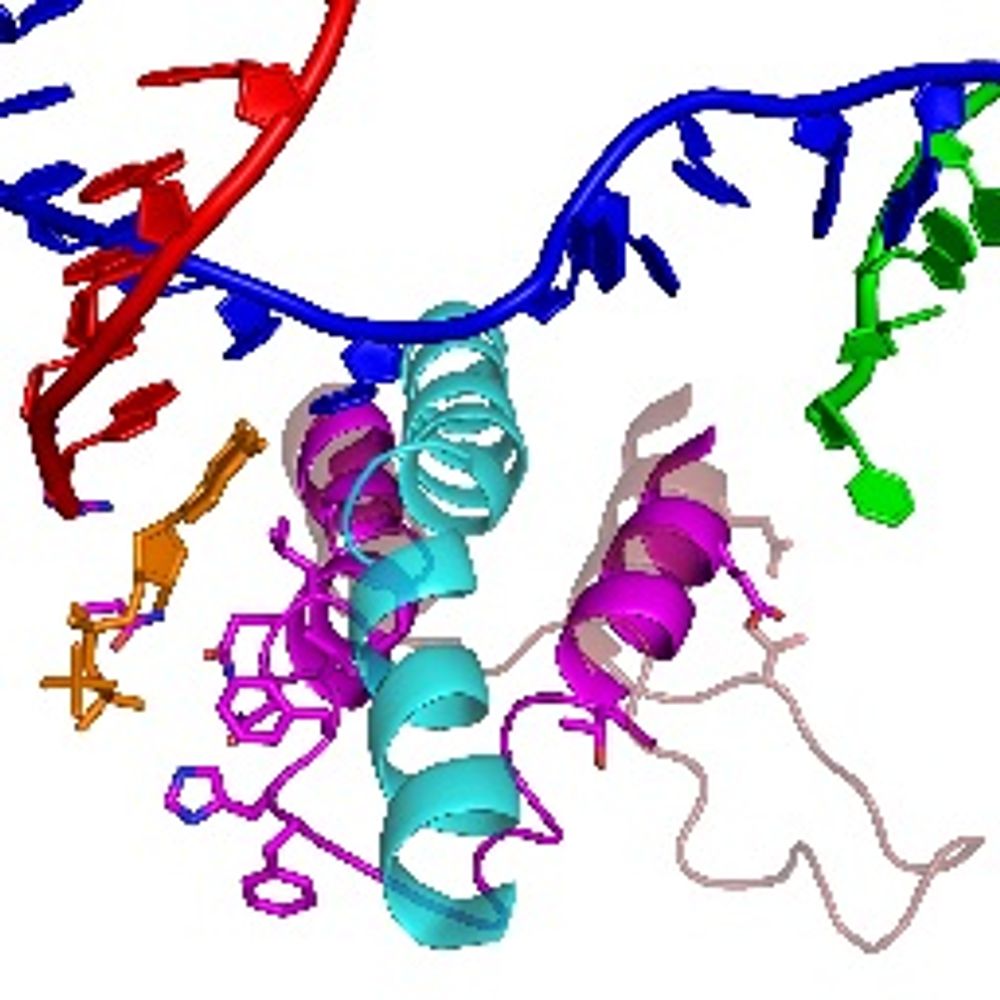
Very interesting paper from Yi Liu's lab. Translation initiation regulation through 5' UTR can turn off codon usage effects in viruses. Adds to previous work in field that codon usage control feeds back to translation initiation www.nature.com/articles/s41...

Viral RNA blocks circularization to evade host codon usage control - Nature
Rather than adapting to the codon usage of their host, viruses use viral 5′ untranslated regions to initiate translation, which allows them to produce viral proteins in host cells efficiently despite ...
www.nature.com
December 3, 2025 at 7:40 PM
Very interesting paper from Yi Liu's lab. Translation initiation regulation through 5' UTR can turn off codon usage effects in viruses. Adds to previous work in field that codon usage control feeds back to translation initiation www.nature.com/articles/s41...
Reposted by Miranda

18 Fully Funded PhD Studentships – October 2026 Start
Join our BBSRC-funded doctoral programme in Infection Biosciences, tackling global challenges like emerging infections, antimicrobial resistance, and food insecurity.
Learn more & apply: www.surrey.ac.uk/wessex-one-h...
Join our BBSRC-funded doctoral programme in Infection Biosciences, tackling global challenges like emerging infections, antimicrobial resistance, and food insecurity.
Learn more & apply: www.surrey.ac.uk/wessex-one-h...

November 27, 2025 at 9:52 AM
18 Fully Funded PhD Studentships – October 2026 Start
Join our BBSRC-funded doctoral programme in Infection Biosciences, tackling global challenges like emerging infections, antimicrobial resistance, and food insecurity.
Learn more & apply: www.surrey.ac.uk/wessex-one-h...
Join our BBSRC-funded doctoral programme in Infection Biosciences, tackling global challenges like emerging infections, antimicrobial resistance, and food insecurity.
Learn more & apply: www.surrey.ac.uk/wessex-one-h...
Reposted by Miranda
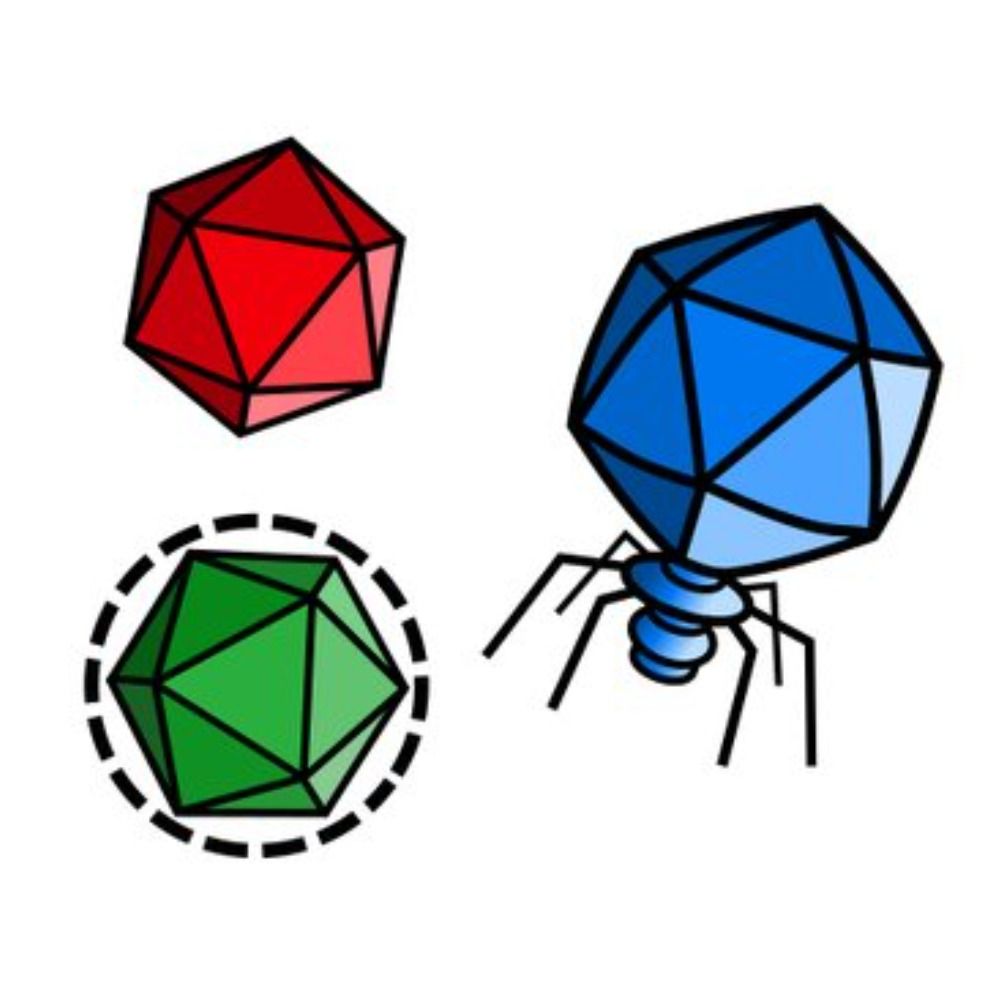
🦠🧪🧬🚨 New paper and database alert: the new IMG/VR release is now MetaVR ! We have a new website - meta-virome.org - with quick search capabilities for the >24M viruses, >12M vOTUs, and >42M protein clusters (including >790k with predicted structures !). academic.oup.com/nar/advance-...

Meta-virus resource (MetaVR): expanding the frontiers of viral diversity with 24 million uncultivated virus genomes
Abstract. Viruses are ubiquitous in all environments and impact host metabolism, evolution, and ecology, although our knowledge of their biodiversity is st
academic.oup.com
December 3, 2025 at 2:34 AM
🦠🧪🧬🚨 New paper and database alert: the new IMG/VR release is now MetaVR ! We have a new website - meta-virome.org - with quick search capabilities for the >24M viruses, >12M vOTUs, and >42M protein clusters (including >790k with predicted structures !). academic.oup.com/nar/advance-...
Reposted by Miranda
New preprint from the lab, and joint first authors @biomarkella.bsky.social and @stephenholmes.bsky.social!
Single-cell phenotypic analysis and multiplet detection through incorporation of microscopy data into cellenONE-based single-cell proteomic data analysis
www.biorxiv.org/content/10.6...
Single-cell phenotypic analysis and multiplet detection through incorporation of microscopy data into cellenONE-based single-cell proteomic data analysis
www.biorxiv.org/content/10.6...
Single-cell phenotypic analysis and multiplet detection through incorporation of microscopy data into cellenONE-based single-cell proteomic data analysis
The reliability of single-cell proteomics (SCP) is intrinsically linked to the fidelity of cell isolation; however, the identification of co-isolated cells (doublets or multiplets) remains a persisten...
www.biorxiv.org
December 3, 2025 at 5:53 AM
New preprint from the lab, and joint first authors @biomarkella.bsky.social and @stephenholmes.bsky.social!
Single-cell phenotypic analysis and multiplet detection through incorporation of microscopy data into cellenONE-based single-cell proteomic data analysis
www.biorxiv.org/content/10.6...
Single-cell phenotypic analysis and multiplet detection through incorporation of microscopy data into cellenONE-based single-cell proteomic data analysis
www.biorxiv.org/content/10.6...
Reposted by Miranda

This isn't *why* we should encourage scientists to have interests outside of the lab (they are their own reward), but it's an excellent demonstration of the inspiration that can happen when you do


December 2, 2025 at 5:29 PM
This isn't *why* we should encourage scientists to have interests outside of the lab (they are their own reward), but it's an excellent demonstration of the inspiration that can happen when you do
Reposted by Miranda

Lenacapavir-induced capsid damage uncovers HIV-1 genomes emanating from nuclear speckles
By exposing integration-competent genomes, Müller, Kräusslich et al find that reverse transcription can be completed in closed viral capsids without directly inducing uncoating
www.embopress.org/doi/full/10....
By exposing integration-competent genomes, Müller, Kräusslich et al find that reverse transcription can be completed in closed viral capsids without directly inducing uncoating
www.embopress.org/doi/full/10....

December 2, 2025 at 10:47 AM
Lenacapavir-induced capsid damage uncovers HIV-1 genomes emanating from nuclear speckles
By exposing integration-competent genomes, Müller, Kräusslich et al find that reverse transcription can be completed in closed viral capsids without directly inducing uncoating
www.embopress.org/doi/full/10....
By exposing integration-competent genomes, Müller, Kräusslich et al find that reverse transcription can be completed in closed viral capsids without directly inducing uncoating
www.embopress.org/doi/full/10....
Reposted by Miranda

🚨👇One week left to apply for this fully-funded PhD project to study RNA-protein complexes regulating enterovirus genome replication:
www.findaphd.com/phds/project...
www.findaphd.com/phds/project...

MRC DiMeN Doctoral Training Partnership: Understanding molecular mechanisms of protein-primed genome replication in enteroviruses at University of York on FindAPhD.com
PhD Project - MRC DiMeN Doctoral Training Partnership: Understanding molecular mechanisms of protein-primed genome replication in enteroviruses at University of York, listed on FindAPhD.com
www.findaphd.com
November 28, 2025 at 12:41 PM
🚨👇One week left to apply for this fully-funded PhD project to study RNA-protein complexes regulating enterovirus genome replication:
www.findaphd.com/phds/project...
www.findaphd.com/phds/project...
Reposted by Miranda

Great obituary for David Baltimore by Stephen P. Goff: www.nature.com/articles/d41...

David Baltimore obituary: virologist whose enzyme discovery transformed understanding of cancer and HIV/AIDS
The protein, reverse transcriptase, has become an essential tool for making DNA copies of RNA.
www.nature.com
December 2, 2025 at 4:52 AM
Great obituary for David Baltimore by Stephen P. Goff: www.nature.com/articles/d41...
Reposted by Miranda

H5N1 NOW ISOLATED IN TICKS
www.biorxiv.org/content/10.1...
www.biorxiv.org/content/10.1...

Detection and isolation of H5N1 clade 2.3.4.4b high pathogenicity avian influenza virus from ticks (Ornithodoros maritimus) recovered from a naturally infected slender-billed gull (Chroicocephalus gen...
Laridae birds, such as gulls, are known reservoirs of H13 and H16 low pathogenic avian influenza subtypes. However, during the recent outbreaks linked to the reemergence of high pathogenicity avian in...
www.biorxiv.org
November 30, 2025 at 11:19 PM
H5N1 NOW ISOLATED IN TICKS
www.biorxiv.org/content/10.1...
www.biorxiv.org/content/10.1...
Reposted by Miranda

Paper for the #Drosophila community on a food recipe that rears dozens of species. This was a full team effort, with key contributions from UG, MSc, and PhD students! 👩🎓🎉
Plus an #infection observation re: Diet x #Microbiota 🦠
www.biorxiv.org/content/10.1...
#EvolBiol #AcademicSky #SymbioSky
1/4
Plus an #infection observation re: Diet x #Microbiota 🦠
www.biorxiv.org/content/10.1...
#EvolBiol #AcademicSky #SymbioSky
1/4


December 1, 2025 at 8:01 AM
Paper for the #Drosophila community on a food recipe that rears dozens of species. This was a full team effort, with key contributions from UG, MSc, and PhD students! 👩🎓🎉
Plus an #infection observation re: Diet x #Microbiota 🦠
www.biorxiv.org/content/10.1...
#EvolBiol #AcademicSky #SymbioSky
1/4
Plus an #infection observation re: Diet x #Microbiota 🦠
www.biorxiv.org/content/10.1...
#EvolBiol #AcademicSky #SymbioSky
1/4
Reposted by Miranda
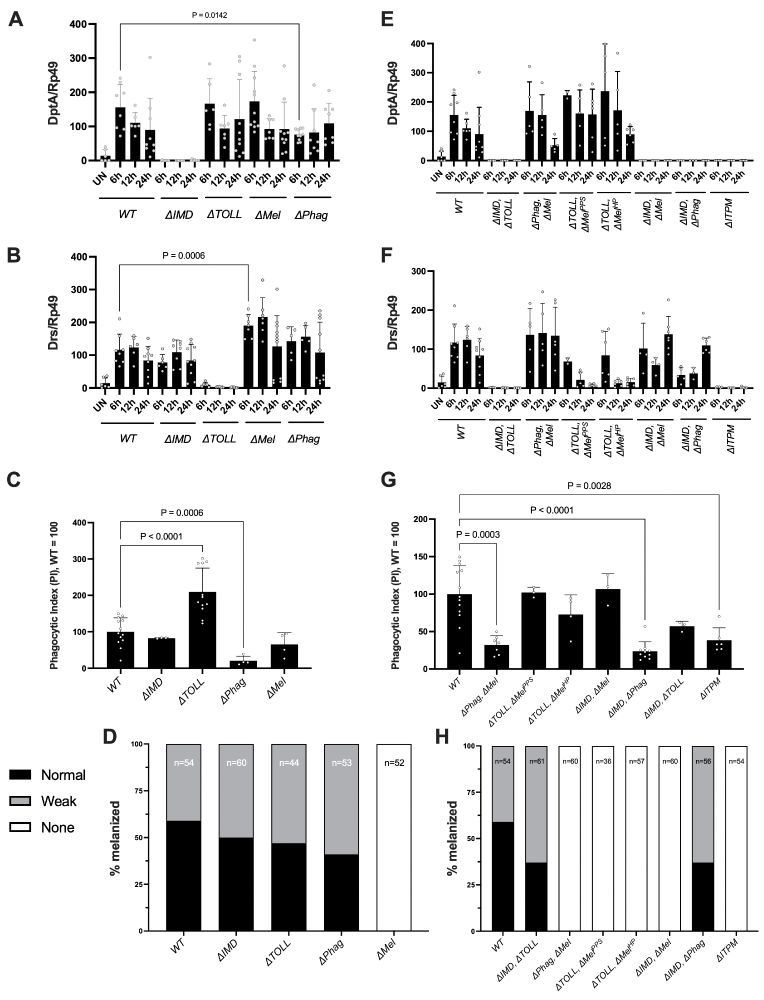
Now published as version of record at @elife.bsky.social !
Layers of Immunity: Deconstructing the Drosophila effector response. The tools are now deposited in the VDRC (link ⬇️)
elifesciences.org/articles/107...
shop.vbc.ac.at/vdrc_store/d...
#Drosophila #IDsky #SymbioSky #Infection #Immunology
Layers of Immunity: Deconstructing the Drosophila effector response. The tools are now deposited in the VDRC (link ⬇️)
elifesciences.org/articles/107...
shop.vbc.ac.at/vdrc_store/d...
#Drosophila #IDsky #SymbioSky #Infection #Immunology



November 28, 2025 at 9:34 PM
Now published as version of record at @elife.bsky.social !
Layers of Immunity: Deconstructing the Drosophila effector response. The tools are now deposited in the VDRC (link ⬇️)
elifesciences.org/articles/107...
shop.vbc.ac.at/vdrc_store/d...
#Drosophila #IDsky #SymbioSky #Infection #Immunology
Layers of Immunity: Deconstructing the Drosophila effector response. The tools are now deposited in the VDRC (link ⬇️)
elifesciences.org/articles/107...
shop.vbc.ac.at/vdrc_store/d...
#Drosophila #IDsky #SymbioSky #Infection #Immunology
Reposted by Miranda
The viral proteins of influenza A virus competitively bind to TRIM31 with MAVS to fine-tune the antiviral innate immunity journals.asm.org/doi/10.1128/...
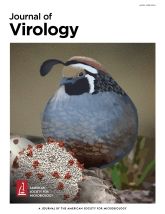
The viral proteins of influenza A virus competitively bind to TRIM31 with MAVS to fine-tune the antiviral innate immunity | Journal of Virology
During the long-term symbiosis with the host, IAVs have evolved a series of unique mechanisms to adapt to the host and support their own replication. The MAVS-mediated IFN-I signaling pathway is crucial for host cells to defend against RNA virus invasion, with TRIM31 functioning as a specific agonist for the activation of IFN-I antiviral response. In the present study, we demonstrated that IAV exploits TRIM31 to promote the stability and activity of viral proteins and reduces the positive effect of TRIM31 on the IFN-I response, thereby preventing TRIM31 from inhibiting IAV replication. Therefore, our results revealed a novel mechanism employed by IAV to adapt to host antiviral response and expanded our understanding of virus–host interactions.
journals.asm.org
November 28, 2025 at 3:46 PM
The viral proteins of influenza A virus competitively bind to TRIM31 with MAVS to fine-tune the antiviral innate immunity journals.asm.org/doi/10.1128/...
Reposted by Miranda
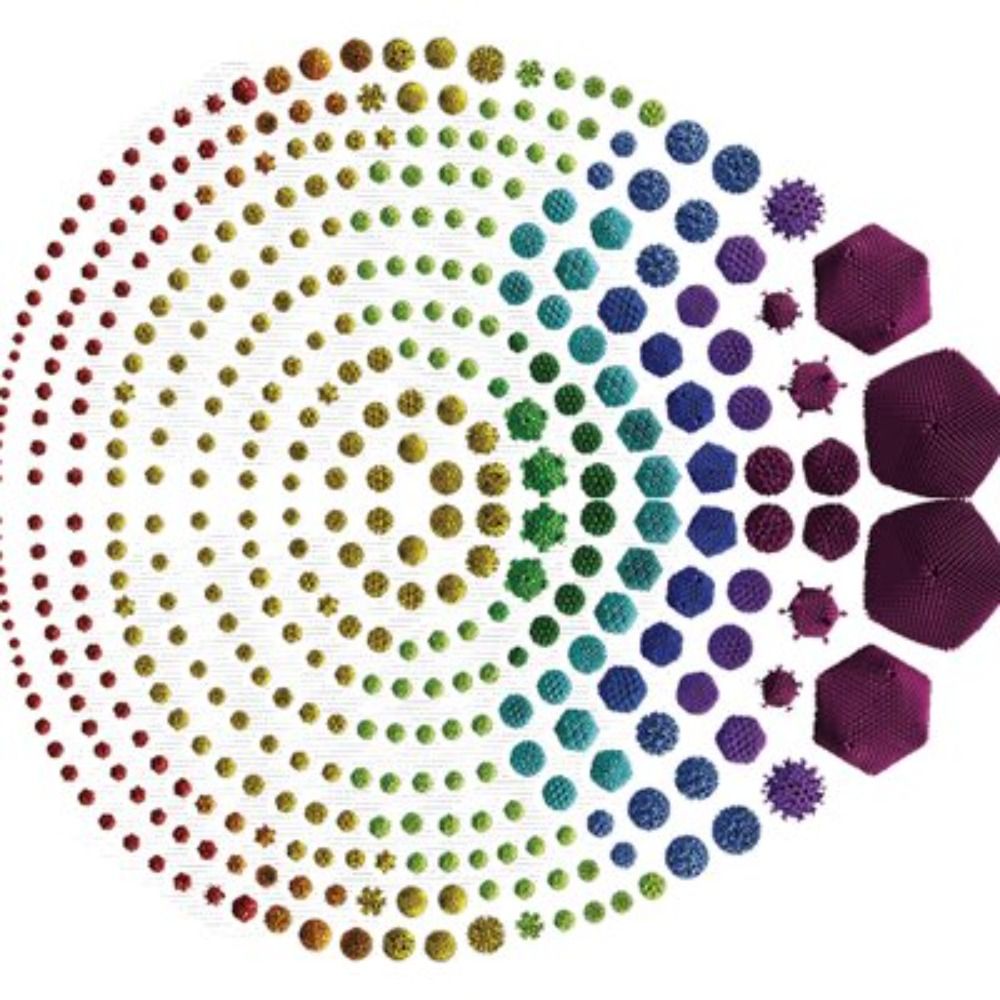
Check out our latest paper on mirusviruses, one of the most remarkable new groups of protist viruses - extremely diverse, carry lots of spliceosomal introns (including new homing introns) and are at the evolutionary crossroads between tailed phages and herpesviruses! www.nature.com/articles/s41...

Widespread and intron-rich mirusviruses are predicted to reproduce in nuclei of unicellular eukaryotes - Nature Microbiology
Environmental metagenomic explorations show that Mirusviricota lineages lack essential replication and transcription genes and contain spliceosomal introns, suggesting nuclear reproduction.
www.nature.com
November 28, 2025 at 4:43 PM
Check out our latest paper on mirusviruses, one of the most remarkable new groups of protist viruses - extremely diverse, carry lots of spliceosomal introns (including new homing introns) and are at the evolutionary crossroads between tailed phages and herpesviruses! www.nature.com/articles/s41...
Reposted by Miranda

Amazing example of influenza cheat/cooperator cycles in this recent paper - the repeatability of the oscillatory cycles is so striking
Congrats to @alnajifg.bsky.social , @christopherbrooke.bsky.social , @vignuzzilab.bsky.social & friends
www.biorxiv.org/content/10.1...
🧪 #socialviruses
Congrats to @alnajifg.bsky.social , @christopherbrooke.bsky.social , @vignuzzilab.bsky.social & friends
www.biorxiv.org/content/10.1...
🧪 #socialviruses

November 28, 2025 at 7:20 PM
Amazing example of influenza cheat/cooperator cycles in this recent paper - the repeatability of the oscillatory cycles is so striking
Congrats to @alnajifg.bsky.social , @christopherbrooke.bsky.social , @vignuzzilab.bsky.social & friends
www.biorxiv.org/content/10.1...
🧪 #socialviruses
Congrats to @alnajifg.bsky.social , @christopherbrooke.bsky.social , @vignuzzilab.bsky.social & friends
www.biorxiv.org/content/10.1...
🧪 #socialviruses
Reposted by Miranda

Are you fascinated by viruses? Would you like to design your own original research project in the UK's largest virology centre? Why not come and do a PhD @cvrinfo.bsky.social - application deadline 6th Jan 2026 (1/1): www.findaphd.com/phds/program...

FindAPhD : The MRC-University of Glasgow Centre for Virus Research (CVR) PhD Funded Programme at University of Glasgow
Apply for a PhD: The MRC-University of Glasgow Centre for Virus Research (CVR) PhD Funded Programme at University of Glasgow
www.findaphd.com
November 27, 2025 at 1:26 PM
Are you fascinated by viruses? Would you like to design your own original research project in the UK's largest virology centre? Why not come and do a PhD @cvrinfo.bsky.social - application deadline 6th Jan 2026 (1/1): www.findaphd.com/phds/program...
Reposted by Miranda
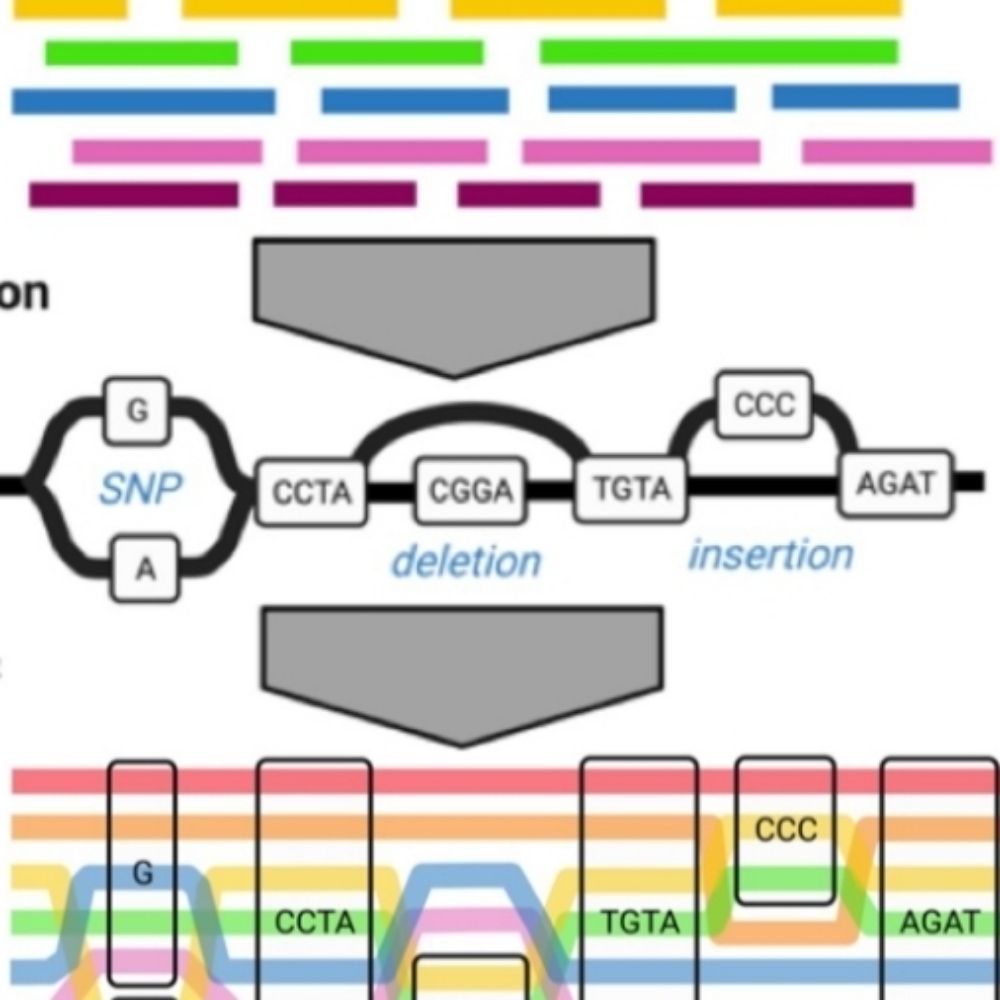
Our work on mapping read libraries to viral #pangenome variation graphs (PVGs) to reduce reference bias
Using lumpy skin disease virus #lsdv (dsDNA #virus) as an example
"Using pangenome variation graphs to improve mutation detection in a large DNA virus"
www.biorxiv.org/content/10.1...
[1/7]
Using lumpy skin disease virus #lsdv (dsDNA #virus) as an example
"Using pangenome variation graphs to improve mutation detection in a large DNA virus"
www.biorxiv.org/content/10.1...
[1/7]

Using pangenome variation graphs to improve mutation detection in a large DNA virus
Accurately quantifying viral genetic diversity is essential for understanding pathogen evolution, transmission, and emergence. However, standard approaches that map sequencing reads to a single linear...
www.biorxiv.org
November 28, 2025 at 5:32 AM
Our work on mapping read libraries to viral #pangenome variation graphs (PVGs) to reduce reference bias
Using lumpy skin disease virus #lsdv (dsDNA #virus) as an example
"Using pangenome variation graphs to improve mutation detection in a large DNA virus"
www.biorxiv.org/content/10.1...
[1/7]
Using lumpy skin disease virus #lsdv (dsDNA #virus) as an example
"Using pangenome variation graphs to improve mutation detection in a large DNA virus"
www.biorxiv.org/content/10.1...
[1/7]
Reposted by Miranda
🚨New Paper!🚨
Some like it hot: Matt Turnbull and @samjwilsonphd.bsky.social collaborated with groups from @cvrinfo.bsky.social, @cam.ac.uk and beyond to show that, while our fevers are hot enough to control human flu, they don't protect against avian influenzas adaptd to the hotter bodies of birds
Some like it hot: Matt Turnbull and @samjwilsonphd.bsky.social collaborated with groups from @cvrinfo.bsky.social, @cam.ac.uk and beyond to show that, while our fevers are hot enough to control human flu, they don't protect against avian influenzas adaptd to the hotter bodies of birds

Avian-origin influenza A viruses tolerate elevated pyrexic temperatures in mammals
Host body temperature can define a virus’s replicative profile—influenza A viruses (IAVs) adapted to 40° to 42°C in birds are less temperature sensitive in vitro compared with human isolates adapted t...
www.science.org
November 28, 2025 at 9:15 AM
🚨New Paper!🚨
Some like it hot: Matt Turnbull and @samjwilsonphd.bsky.social collaborated with groups from @cvrinfo.bsky.social, @cam.ac.uk and beyond to show that, while our fevers are hot enough to control human flu, they don't protect against avian influenzas adaptd to the hotter bodies of birds
Some like it hot: Matt Turnbull and @samjwilsonphd.bsky.social collaborated with groups from @cvrinfo.bsky.social, @cam.ac.uk and beyond to show that, while our fevers are hot enough to control human flu, they don't protect against avian influenzas adaptd to the hotter bodies of birds
Reposted by Miranda

Very happy to have been able to contribute to this study that was published today in Science, which was truly a great collaborative effort. Avian PB1 provides a fitness advantage to IAV at febrile-range temperatures both in vitro and a hyperthermic nouse model 🦠 www.science.org/doi/10.1126/...
#flu
#flu

Avian-origin influenza A viruses tolerate elevated pyrexic temperatures in mammals
Host body temperature can define a virus’s replicative profile—influenza A viruses (IAVs) adapted to 40° to 42°C in birds are less temperature sensitive in vitro compared with human isolates adapted t...
www.science.org
November 27, 2025 at 7:38 PM
Very happy to have been able to contribute to this study that was published today in Science, which was truly a great collaborative effort. Avian PB1 provides a fitness advantage to IAV at febrile-range temperatures both in vitro and a hyperthermic nouse model 🦠 www.science.org/doi/10.1126/...
#flu
#flu
Reposted by Miranda

How does fever work?
Our new Science paper shows how elevated body temperature can protect against severe influenza and that avian-origin viruses escape this defence.
This is likely one reason why bird flus and some pandemic influenzas can be so severe.🧵
www.science.org/doi/10.1126/...
Our new Science paper shows how elevated body temperature can protect against severe influenza and that avian-origin viruses escape this defence.
This is likely one reason why bird flus and some pandemic influenzas can be so severe.🧵
www.science.org/doi/10.1126/...

Avian-origin influenza A viruses tolerate elevated pyrexic temperatures in mammals
Host body temperature can define a virus’s replicative profile—influenza A viruses (IAVs) adapted to 40° to 42°C in birds are less temperature sensitive in vitro compared with human isolates adapted t...
www.science.org
November 27, 2025 at 7:55 PM
How does fever work?
Our new Science paper shows how elevated body temperature can protect against severe influenza and that avian-origin viruses escape this defence.
This is likely one reason why bird flus and some pandemic influenzas can be so severe.🧵
www.science.org/doi/10.1126/...
Our new Science paper shows how elevated body temperature can protect against severe influenza and that avian-origin viruses escape this defence.
This is likely one reason why bird flus and some pandemic influenzas can be so severe.🧵
www.science.org/doi/10.1126/...
Reposted by Miranda

Lots of exciting PhDs here in Biochem/Biomed through the @ukri.org BBSRC Wessex One Health (WOH) DTP.
Projects available with Drs Ben Towler, @francespearl.bsky.social, Mark Paget, Edward Wright, or Leandro Castellano.
Application deadline: 23rd January 2026 👇
www.surrey.ac.uk/wessex-one-h...
Projects available with Drs Ben Towler, @francespearl.bsky.social, Mark Paget, Edward Wright, or Leandro Castellano.
Application deadline: 23rd January 2026 👇
www.surrey.ac.uk/wessex-one-h...
Available studentships| University of Surrey
18 fully funded studentships for October 2026 start: interdisciplinary infection bioscience training to address disease threats to human and animal health.
www.surrey.ac.uk
November 27, 2025 at 11:25 AM
Lots of exciting PhDs here in Biochem/Biomed through the @ukri.org BBSRC Wessex One Health (WOH) DTP.
Projects available with Drs Ben Towler, @francespearl.bsky.social, Mark Paget, Edward Wright, or Leandro Castellano.
Application deadline: 23rd January 2026 👇
www.surrey.ac.uk/wessex-one-h...
Projects available with Drs Ben Towler, @francespearl.bsky.social, Mark Paget, Edward Wright, or Leandro Castellano.
Application deadline: 23rd January 2026 👇
www.surrey.ac.uk/wessex-one-h...