



@suiliangxia.bsky.social
Reposted

Finally out! We studied the retinas of the longest-living vertebrate, the Greenland shark, and found that the retinas remain remarkably healthy in animals around 150 years old. What is the mechanism? It may be a highly efficient DNA repair system. Enjoy!
www.nature.com/articles/s41...
www.nature.com/articles/s41...

January 6, 2026 at 1:40 AM
Finally out! We studied the retinas of the longest-living vertebrate, the Greenland shark, and found that the retinas remain remarkably healthy in animals around 150 years old. What is the mechanism? It may be a highly efficient DNA repair system. Enjoy!
www.nature.com/articles/s41...
www.nature.com/articles/s41...
Reposted

This went under the radar but answers a fundamental question in Epigenetics...
From many hundreds of olfactory receptor genes, each neuron selects expression of only single one (near-randomly). How?
Outstanding work from Mathieu Boulard and colleagues
www.biorxiv.org/content/10.6...
From many hundreds of olfactory receptor genes, each neuron selects expression of only single one (near-randomly). How?
Outstanding work from Mathieu Boulard and colleagues
www.biorxiv.org/content/10.6...

The transcription of a single olfactory receptor per neuron is enforced by epigenetic silencing of their enhancers
The ability to discriminate thousands of odors in our environment requires each olfactory neuron to express a single olfactory receptor from hundreds of available genes. The biochemical mechanism enfo...
www.biorxiv.org
January 5, 2026 at 12:51 PM
This went under the radar but answers a fundamental question in Epigenetics...
From many hundreds of olfactory receptor genes, each neuron selects expression of only single one (near-randomly). How?
Outstanding work from Mathieu Boulard and colleagues
www.biorxiv.org/content/10.6...
From many hundreds of olfactory receptor genes, each neuron selects expression of only single one (near-randomly). How?
Outstanding work from Mathieu Boulard and colleagues
www.biorxiv.org/content/10.6...
Reposted
🚨 New paper out!
A human epiblast model reveals how dynamic TGF‑β signalling controls epithelial identity in early mammalian development
Here is the full paper: rdcu.be/eSWEs
🧵 A twittorial:
THREAD
A human epiblast model reveals how dynamic TGF‑β signalling controls epithelial identity in early mammalian development
Here is the full paper: rdcu.be/eSWEs
🧵 A twittorial:
THREAD

A human epiblast model reveals dynamic TGFβ-mediated control of epithelial identity during mammalian epiblast development
Nature Cell Biology - The authors optimize an in vitro human epiblast model, which they utilize to show that early TGFβ family inhibition prevents epithelial identity, whereas it is...
rdcu.be
December 11, 2025 at 1:32 PM
🚨 New paper out!
A human epiblast model reveals how dynamic TGF‑β signalling controls epithelial identity in early mammalian development
Here is the full paper: rdcu.be/eSWEs
🧵 A twittorial:
THREAD
A human epiblast model reveals how dynamic TGF‑β signalling controls epithelial identity in early mammalian development
Here is the full paper: rdcu.be/eSWEs
🧵 A twittorial:
THREAD
Reposted

Looking for a great first read for 2026? Look no further:
Fantastic work spearheaded by my courageous colleague @changweiyu.bsky.social, with surprising findings not only for small RNA but also for exosome and gene expression aficionados
Fantastic work spearheaded by my courageous colleague @changweiyu.bsky.social, with surprising findings not only for small RNA but also for exosome and gene expression aficionados
Intrigued by a long-standing conundrum in small RNA biology—how nuclear Argonaute proteins silence transposons when they *need* target transcription for their own recruitment—we studied the piRNA pathway.
And found a hidden RNA-decay axis from Piwi to the RNA exosome.
And found a hidden RNA-decay axis from Piwi to the RNA exosome.

RNA decay via the nuclear exosome is essential for piwi-mediated transposon silencing https://www.biorxiv.org/content/10.64898/2025.12.16.694471v1
January 2, 2026 at 8:28 PM
Looking for a great first read for 2026? Look no further:
Fantastic work spearheaded by my courageous colleague @changweiyu.bsky.social, with surprising findings not only for small RNA but also for exosome and gene expression aficionados
Fantastic work spearheaded by my courageous colleague @changweiyu.bsky.social, with surprising findings not only for small RNA but also for exosome and gene expression aficionados
Reposted

Activator-promoter compatibility in mammals - Hcfc1 is a key and intrinsically CGI-promoter-specific co-activator that cannot activate non-CGI promoters. Lead by @nemcko.bsky.social & Kevin Sabath in collab. with @plaschkalab.bsky.social @impvienna.bsky.social www.biorxiv.org/content/10.6... (1/2)

Activator-promoter compatibility in mammals: a CpG-Island-specific co-activator directly bridges transcription factors to TFIID
Transcription from CpG island (CGI) promoters controls the expression of two-thirds of mammalian genes, yet despite their prevalence, it remains unknown whether CGI-specific co-activators with intrins...
www.biorxiv.org
December 30, 2025 at 8:02 AM
Activator-promoter compatibility in mammals - Hcfc1 is a key and intrinsically CGI-promoter-specific co-activator that cannot activate non-CGI promoters. Lead by @nemcko.bsky.social & Kevin Sabath in collab. with @plaschkalab.bsky.social @impvienna.bsky.social www.biorxiv.org/content/10.6... (1/2)
Reposted
🧪 Scientists are learning more about higher levels of emergent interactions between transcription factors- is this a new 🔑 to understanding both primitive and sentient cognition phenotypes in animal neuroscience?

Lee et al. used B-lymphoblastoid cells from three great ape species and humans to show that human ZEB2 is distinct in regulating a larger repertoire of genes implicated in neuronal development.
🔗 doi.org/10.1093/molbev/msaf318
#evobio #molbio
🔗 doi.org/10.1093/molbev/msaf318
#evobio #molbio

Comparing great apes reveals human-specific ZEB2 roles in neural development
Abstract. Humans differ from other primates in various traits, despite nearly identical protein-coding sequences. Understanding the evolution of these diff
doi.org
December 28, 2025 at 6:03 PM
🧪 Scientists are learning more about higher levels of emergent interactions between transcription factors- is this a new 🔑 to understanding both primitive and sentient cognition phenotypes in animal neuroscience?
Reposted

"A mathematical model is a logical machine for converting assumptions into conclusions. If the model is correct and we believe its assumptions then we must, as a matter of logic, believe its conclusions. "
link.springer.com/article/10.1...
link.springer.com/article/10.1...

Models in biology: ‘accurate descriptions of our pathetic thinking’ - BMC Biology
In this essay I will sketch some ideas for how to think about models in biology. I will begin by trying to dispel the myth that quantitative modeling is somehow foreign to biology. I will then point o...
link.springer.com
December 26, 2025 at 1:01 PM
"A mathematical model is a logical machine for converting assumptions into conclusions. If the model is correct and we believe its assumptions then we must, as a matter of logic, believe its conclusions. "
link.springer.com/article/10.1...
link.springer.com/article/10.1...
Reposted
A human embryo implantation model from the @Rugg-Gunn Lab
*key for understanding the early extraembryonic-maternal interactions
Congrats to everyone involved! It’s been great to see this project develop. Huge credit to the @babrahaminst.bsky.social authors 🥂🍾
www.cell.com/cell/fulltex...
*key for understanding the early extraembryonic-maternal interactions
Congrats to everyone involved! It’s been great to see this project develop. Huge credit to the @babrahaminst.bsky.social authors 🥂🍾
www.cell.com/cell/fulltex...
December 24, 2025 at 8:45 AM
A human embryo implantation model from the @Rugg-Gunn Lab
*key for understanding the early extraembryonic-maternal interactions
Congrats to everyone involved! It’s been great to see this project develop. Huge credit to the @babrahaminst.bsky.social authors 🥂🍾
www.cell.com/cell/fulltex...
*key for understanding the early extraembryonic-maternal interactions
Congrats to everyone involved! It’s been great to see this project develop. Huge credit to the @babrahaminst.bsky.social authors 🥂🍾
www.cell.com/cell/fulltex...
Reposted
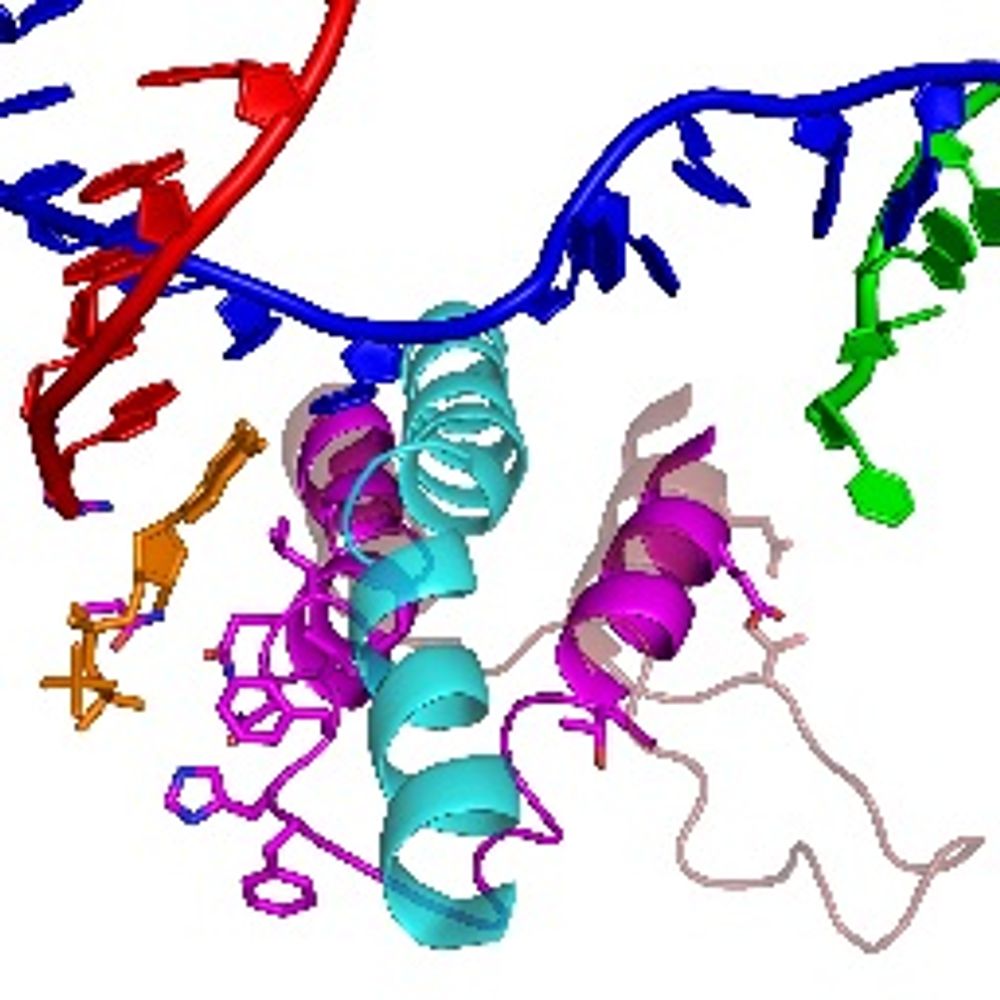
Read our new preprint where we uncover a hierarchy in human PIC assembly and establish a quantitative framework that connects factor exchange kinetics to the regulation of Pol II activity in living human cells. doi: doi.org/10.64898/202...
By A. Oravecz and our collaborators @molinalab.bsky.social
By A. Oravecz and our collaborators @molinalab.bsky.social

RNA polymerase II initiation factors show different dynamic behaviour upon induced transcription in live cells
Transcription by RNA polymerase II (Pol II) requires the ordered action of general transcription factors (GTFs) forming the pre-initiation complex (PIC). How these events unfold kinetically remains un...
doi.org
December 24, 2025 at 1:35 PM
Read our new preprint where we uncover a hierarchy in human PIC assembly and establish a quantitative framework that connects factor exchange kinetics to the regulation of Pol II activity in living human cells. doi: doi.org/10.64898/202...
By A. Oravecz and our collaborators @molinalab.bsky.social
By A. Oravecz and our collaborators @molinalab.bsky.social
Reposted
Our preprint "Predictive design of tissue-specific mammalian enhancers that function in vivo in the mouse embryo" is on bioRxiv: www.biorxiv.org/content/10.6... . Amazing collaboration by @shenzhichen1999.bsky.social, Vincent Loubiere (@impvienna.bsky.social,@viennabiocenter.bsky.social),... (1/2)
Predictive design of tissue-specific mammalian enhancers that function in vivo in the mouse embryo
Enhancers control tissue-specific gene expression across metazoans. Although deep learning has enabled enhancer prediction and design in mammalian cell lines and invertebrate systems, it remains uncle...
www.biorxiv.org
December 24, 2025 at 3:06 PM
Our preprint "Predictive design of tissue-specific mammalian enhancers that function in vivo in the mouse embryo" is on bioRxiv: www.biorxiv.org/content/10.6... . Amazing collaboration by @shenzhichen1999.bsky.social, Vincent Loubiere (@impvienna.bsky.social,@viennabiocenter.bsky.social),... (1/2)
Reposted

1/ 🎄 We got our Christmas present today: "Two distinct chromatin modules regulate proinflammatory gene expression" is now published @natcellbio.nature.com doi.org/10.1038/s415.... Our study introduces a scATAC-seq-based framework for genome-wide analysis of gene regulation features.

December 24, 2025 at 10:44 PM
1/ 🎄 We got our Christmas present today: "Two distinct chromatin modules regulate proinflammatory gene expression" is now published @natcellbio.nature.com doi.org/10.1038/s415.... Our study introduces a scATAC-seq-based framework for genome-wide analysis of gene regulation features.
Reposted

Have you ever wondered what difference it makes to have 1 or 2 X chromosomes in your cells?
✨ I’m excited to share that our paper is now out!
Looking for some X-mas content featuring an actual X? 🎄 Here’s the paper: 👉 www.cell.com/current-biol...
✨ I’m excited to share that our paper is now out!
Looking for some X-mas content featuring an actual X? 🎄 Here’s the paper: 👉 www.cell.com/current-biol...

X chromosome dosage in respiratory stem cells is critical for post-embryonic development and survival
Tournière et al. uncover the biological roles of sex chromosome dosage compensation,
showing it is broadly dispensable except in the respiratory system during metamorphosis,
where X chromosome dose de...
www.cell.com
December 22, 2025 at 4:10 PM
Have you ever wondered what difference it makes to have 1 or 2 X chromosomes in your cells?
✨ I’m excited to share that our paper is now out!
Looking for some X-mas content featuring an actual X? 🎄 Here’s the paper: 👉 www.cell.com/current-biol...
✨ I’m excited to share that our paper is now out!
Looking for some X-mas content featuring an actual X? 🎄 Here’s the paper: 👉 www.cell.com/current-biol...
Reposted

Not that long ago, in vivo mouse enhancer design was a dream. Today, it's a reality! Using transfer deep learning to design de novo synthetic embryonic enhancers active in the heart, limb, and CNS. Great collab with @alex-stark.bsky.social lab! @ucibiosci.bsky.social @impvienna.bsky.social

December 24, 2025 at 3:51 PM
Not that long ago, in vivo mouse enhancer design was a dream. Today, it's a reality! Using transfer deep learning to design de novo synthetic embryonic enhancers active in the heart, limb, and CNS. Great collab with @alex-stark.bsky.social lab! @ucibiosci.bsky.social @impvienna.bsky.social
Reposted

Love this paper from @evahoermanseder.bsky.social and team; great to see it out. This is definitely "epigenetics" by any definition, but I wonder if it's premarking for activation or protecting against stable silence (i.e, DNAme), similar to Dppa2/4 targets in mammals www.nature.com/articles/s41...

Pre-marking chromatin with H3K4 methylation is required for accurate zygotic genome activation and development - Nature Communications
H3K4 methylation is required for defining active chromatin states in Xenopus embryos, ensuring faithful zygotic genome activation and successful embryonic development.
www.nature.com
December 24, 2025 at 12:02 PM
Love this paper from @evahoermanseder.bsky.social and team; great to see it out. This is definitely "epigenetics" by any definition, but I wonder if it's premarking for activation or protecting against stable silence (i.e, DNAme), similar to Dppa2/4 targets in mammals www.nature.com/articles/s41...
Reposted

🚨Our story is published! Same bones but + dissection of MERVL’s role integrating signals from #ZGA factors, & + about pathological DUX4 activation of NOXA #TEsky. Thanks to all revs for their helpful comments improving the ms. Even #rev3 - until they ghosted us 😜
www.science.org/doi/epdf/10....
www.science.org/doi/epdf/10....
December 22, 2025 at 12:32 PM
🚨Our story is published! Same bones but + dissection of MERVL’s role integrating signals from #ZGA factors, & + about pathological DUX4 activation of NOXA #TEsky. Thanks to all revs for their helpful comments improving the ms. Even #rev3 - until they ghosted us 😜
www.science.org/doi/epdf/10....
www.science.org/doi/epdf/10....
Reposted

Cells maintain protein balance through a passive adaptation mechanism, adjusting protein removal rates in response to changes in protein synthesis to keep protein levels within a safe range. doi.org/hbgp8b

Passive adaptation mechanism reveals how cells balance their protein levels
Every cell depends on proteins to function and stay healthy. These proteins are made inside the cell from amino acids, but cannot simply accumulate inside the cell forever.
phys.org
December 23, 2025 at 10:30 AM
Cells maintain protein balance through a passive adaptation mechanism, adjusting protein removal rates in response to changes in protein synthesis to keep protein levels within a safe range. doi.org/hbgp8b
Reposted

Excited to share the final version of our study on Nematostella cell type regulatory programs. Part of our @erc.europa.eu StG project, this was a challenging 5-year effort extraodinarily led by @aelek.bsky.social and @martaig.bsky.social.
www.nature.com/articles/s41...
www.nature.com/articles/s41...

Decoding cnidarian cell type gene regulation - Nature Ecology & Evolution
This study reconstructs the gene regulatory networks that define cell types in the sea anemone Nematostella vectensis, providing a valuable resource for comparative regulatory genomics and the evoluti...
www.nature.com
December 22, 2025 at 10:12 AM
Excited to share the final version of our study on Nematostella cell type regulatory programs. Part of our @erc.europa.eu StG project, this was a challenging 5-year effort extraodinarily led by @aelek.bsky.social and @martaig.bsky.social.
www.nature.com/articles/s41...
www.nature.com/articles/s41...
Reposted
Exciting new paper out! @allanaschooley.bsky.social and Sergey Venev led this project that let to the discovery of two chromosome folding programs: one inherited via mitotic chromosomes and one mitotic inherited through the cytoplasm!
www.nature.com/articles/s41...
www.nature.com/articles/s41...

Interphase chromosome conformation is specified by distinct folding programmes inherited through mitotic chromosomes or the cytoplasm - Nature Cell Biology
Schooley et al. find that mitotically bookmarked loci drive a transient chromosome folding state during G1 entry that is subsequently modulated by factors inherited through the cytoplasm.
www.nature.com
December 22, 2025 at 11:45 AM
Exciting new paper out! @allanaschooley.bsky.social and Sergey Venev led this project that let to the discovery of two chromosome folding programs: one inherited via mitotic chromosomes and one mitotic inherited through the cytoplasm!
www.nature.com/articles/s41...
www.nature.com/articles/s41...
Reposted
doi.org/10.1126/scia... very happy to have contributed with @bryonyleeke.bsky.social to this fascinating study from Jesus Gil’s lab @mrc-lms.bsky.social. SMARCA4 inhibition leads to repeat element dysregulation, cGAS/STING activation and enhances immune cell clearance of senescent cells
January 16, 2025 at 6:00 PM
doi.org/10.1126/scia... very happy to have contributed with @bryonyleeke.bsky.social to this fascinating study from Jesus Gil’s lab @mrc-lms.bsky.social. SMARCA4 inhibition leads to repeat element dysregulation, cGAS/STING activation and enhances immune cell clearance of senescent cells
Reposted
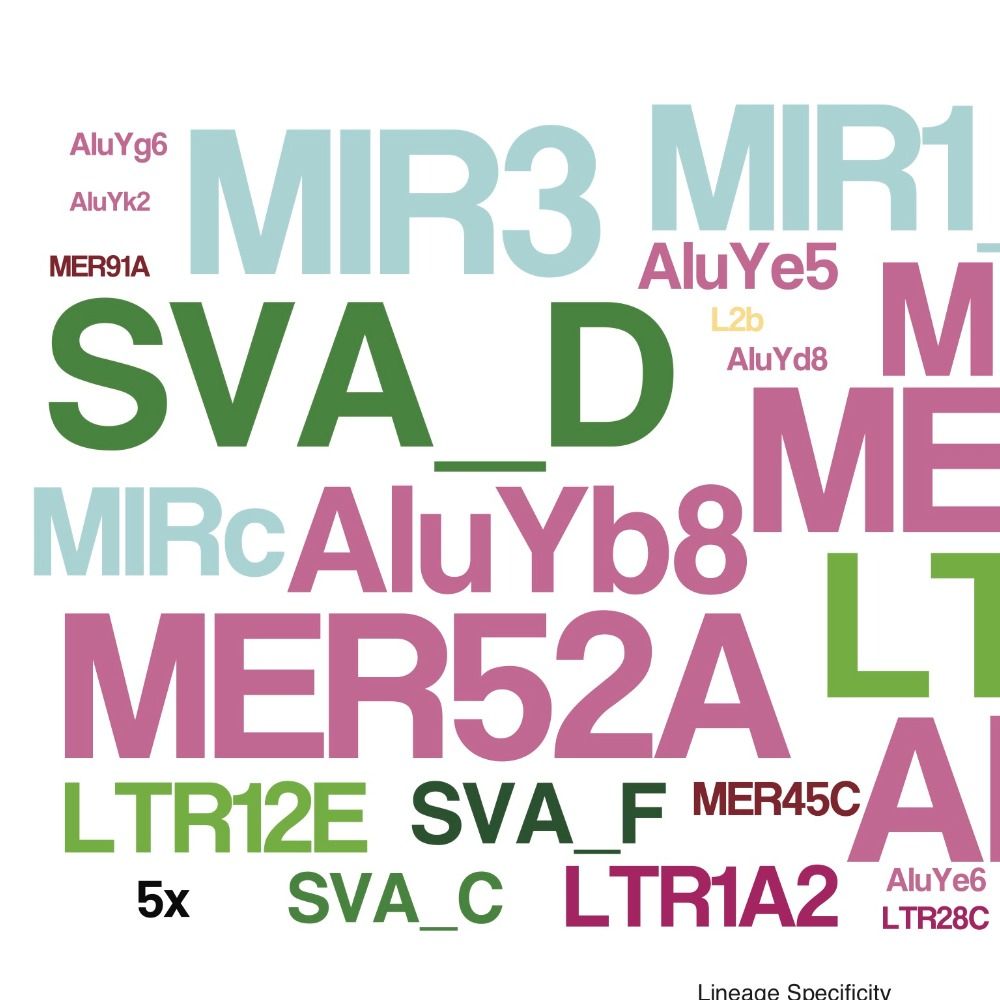
New preprint from my group! Here we studied the contribution of a subset of human- and hominoid-specific transposons (SVA, LTR5HS) to the evolution of human craniofacial development. We specifically focussed on cranial neural crest (CNCC) formation and migration 1/n
www.biorxiv.org/content/10.1...
www.biorxiv.org/content/10.1...

Human-specific transposable elements shaped the evolution of craniofacial development through regulation of neural crest migration
Craniofacial development and neural crest specification are evolutionarily conserved processes, yet subtle modifications to their gene regulatory networks drive species-specific craniofacial diversity...
www.biorxiv.org
April 7, 2025 at 1:26 PM
New preprint from my group! Here we studied the contribution of a subset of human- and hominoid-specific transposons (SVA, LTR5HS) to the evolution of human craniofacial development. We specifically focussed on cranial neural crest (CNCC) formation and migration 1/n
www.biorxiv.org/content/10.1...
www.biorxiv.org/content/10.1...
Reposted
Happy to share our first #bluetorial & our latest #preprint, lead by postdoc @paulchammas.bsky.social. We used CRISPRa to disentangle the close relationship between Dux and MERVL elements in the induction of the 2-cell like state: #TEsky #MERVL www.biorxiv.org/content/10.1... (1/8)

November 26, 2024 at 1:45 PM
Happy to share our first #bluetorial & our latest #preprint, lead by postdoc @paulchammas.bsky.social. We used CRISPRa to disentangle the close relationship between Dux and MERVL elements in the induction of the 2-cell like state: #TEsky #MERVL www.biorxiv.org/content/10.1... (1/8)
Reposted
"We find that while TAD boundaries pair more frequently than non-boundary regions, these interactions are infrequent and are uncorrelated with transcriptional activity of genes within the TAD. (...) These results suggest that TAD boundary architecture and gene activity are largely uncoupled"

TAD boundary architecture and gene activity are uncoupled
Topologically associating domains (TADs) are prominent features of genome organization. A proposed function of TADs is to contribute to gene regulation by promoting chromatin interactions within a TAD...
www.biorxiv.org
December 18, 2025 at 11:43 AM
"We find that while TAD boundaries pair more frequently than non-boundary regions, these interactions are infrequent and are uncorrelated with transcriptional activity of genes within the TAD. (...) These results suggest that TAD boundary architecture and gene activity are largely uncoupled"
Reposted
I’ve been wondering more and more if TADs are about limiting recombination search and less about gene expression?
"We find that while TAD boundaries pair more frequently than non-boundary regions, these interactions are infrequent and are uncorrelated with transcriptional activity of genes within the TAD. (...) These results suggest that TAD boundary architecture and gene activity are largely uncoupled"
TAD boundary architecture and gene activity are uncoupled
Topologically associating domains (TADs) are prominent features of genome organization. A proposed function of TADs is to contribute to gene regulation by promoting chromatin interactions within a TAD...
www.biorxiv.org
December 18, 2025 at 1:04 PM
I’ve been wondering more and more if TADs are about limiting recombination search and less about gene expression?
Reposted
Unpopular opinion: biologists are still the ones who understand biology best
December 18, 2025 at 6:09 PM
Unpopular opinion: biologists are still the ones who understand biology best
Reposted

It is my pleasure to share with you the latest from @jsvejstrup.bsky.social lab, where we look at how the reduction of RNAPII levels has a severe, yet organized transcriptional response in the cell.

September 19, 2025 at 9:15 AM
It is my pleasure to share with you the latest from @jsvejstrup.bsky.social lab, where we look at how the reduction of RNAPII levels has a severe, yet organized transcriptional response in the cell.