




Isha Walawalkar, MPH
@walawalki.bsky.social
I’m just a girl in an RNA world
[alternative splicing]
MD-PhD student @jacksonlab.bsky.social, @uconnresearch.bsky.social
[alternative splicing]
MD-PhD student @jacksonlab.bsky.social, @uconnresearch.bsky.social
Reposted by Isha Walawalkar, MPH


Reposted by Isha Walawalkar, MPH

"Beyond the Gene: Decoding Alternative Isoforms"
by Kaia Mattioli (@kaiamattioli.bsky.social) & Martha Bulyk
"The degree to which alternative isoforms actually contribute to the complexity of the human proteome in their endogenous contexts has been the subject of much debate..."
shorturl.at/YbNoB
by Kaia Mattioli (@kaiamattioli.bsky.social) & Martha Bulyk
"The degree to which alternative isoforms actually contribute to the complexity of the human proteome in their endogenous contexts has been the subject of much debate..."
shorturl.at/YbNoB

December 11, 2025 at 1:47 PM
"Beyond the Gene: Decoding Alternative Isoforms"
by Kaia Mattioli (@kaiamattioli.bsky.social) & Martha Bulyk
"The degree to which alternative isoforms actually contribute to the complexity of the human proteome in their endogenous contexts has been the subject of much debate..."
shorturl.at/YbNoB
by Kaia Mattioli (@kaiamattioli.bsky.social) & Martha Bulyk
"The degree to which alternative isoforms actually contribute to the complexity of the human proteome in their endogenous contexts has been the subject of much debate..."
shorturl.at/YbNoB
Reposted by Isha Walawalkar, MPH
I heard this story from Scott Kennedy a few years back. This is very cool. The war between TEs and host genomes continues!


December 12, 2025 at 2:32 PM
I heard this story from Scott Kennedy a few years back. This is very cool. The war between TEs and host genomes continues!
Reposted by Isha Walawalkar, MPH


Reposted by Isha Walawalkar, MPH

If you’re into RBPs, miRNAs, RNA regulation, or love cool new tech in biology…You don’t want to miss the talk of @dmitry-kretov.bsky.social (@ulaval.ca) the creator of RBPscan, a powerful method to quantitatively map RNA–protein interactions inside living cells; Wed 10th at 16:30 online.
December 5, 2025 at 1:46 PM
If you’re into RBPs, miRNAs, RNA regulation, or love cool new tech in biology…You don’t want to miss the talk of @dmitry-kretov.bsky.social (@ulaval.ca) the creator of RBPscan, a powerful method to quantitatively map RNA–protein interactions inside living cells; Wed 10th at 16:30 online.
Reposted by Isha Walawalkar, MPH
Very interesting paper from Yi Liu's lab. Translation initiation regulation through 5' UTR can turn off codon usage effects in viruses. Adds to previous work in field that codon usage control feeds back to translation initiation www.nature.com/articles/s41...

Viral RNA blocks circularization to evade host codon usage control - Nature
Rather than adapting to the codon usage of their host, viruses use viral 5′ untranslated regions to initiate translation, which allows them to produce viral proteins in host cells efficiently despite ...
www.nature.com
December 3, 2025 at 7:40 PM
Very interesting paper from Yi Liu's lab. Translation initiation regulation through 5' UTR can turn off codon usage effects in viruses. Adds to previous work in field that codon usage control feeds back to translation initiation www.nature.com/articles/s41...
Reposted by Isha Walawalkar, MPH

How does messenger RNA (mRNA) get out of the nucleus to become a protein? Eukaryotic mRNA is packaged, exported, and then translated in the cytoplasm. But how do these steps work? And what are open questions? Check out our new review for our take: www.annualreviews.org/content/jour... (1/3)

November 21, 2025 at 5:37 PM
How does messenger RNA (mRNA) get out of the nucleus to become a protein? Eukaryotic mRNA is packaged, exported, and then translated in the cytoplasm. But how do these steps work? And what are open questions? Check out our new review for our take: www.annualreviews.org/content/jour... (1/3)
Reposted by Isha Walawalkar, MPH
Our pre-print on the evolution of nucleotide content at the start of human protein-coding genes is finally out!
In this paper we demonstrate that the nucleotide content at the beginning of human protein-coding genes is greatly impacted by non-adaptive evolution.
www.biorxiv.org/content/10.1...
In this paper we demonstrate that the nucleotide content at the beginning of human protein-coding genes is greatly impacted by non-adaptive evolution.
www.biorxiv.org/content/10.1...

Transcription-induced mutation and gBGC at the Transcriptional Start Site impact the evolution of human protein-coding genes
In the human genome, mutation rates vary along genes, yet their fine-scale structure and causes have remained largely unexplored. Here, we map mutations at single-nucleotide resolution, and uncover a ...
www.biorxiv.org
November 29, 2025 at 6:27 PM
Our pre-print on the evolution of nucleotide content at the start of human protein-coding genes is finally out!
In this paper we demonstrate that the nucleotide content at the beginning of human protein-coding genes is greatly impacted by non-adaptive evolution.
www.biorxiv.org/content/10.1...
In this paper we demonstrate that the nucleotide content at the beginning of human protein-coding genes is greatly impacted by non-adaptive evolution.
www.biorxiv.org/content/10.1...
Reposted by Isha Walawalkar, MPH

Teaching people how mRNA vaccines actually work protects against misconceptions about mRNA vaccination changing the recipient's DNA, without the need to repeat the false claims, according to experiments with over 3,500 participants. In PNAS: https://ow.ly/sVwH50Xzutc

November 29, 2025 at 8:00 PM
Teaching people how mRNA vaccines actually work protects against misconceptions about mRNA vaccination changing the recipient's DNA, without the need to repeat the false claims, according to experiments with over 3,500 participants. In PNAS: https://ow.ly/sVwH50Xzutc
Reposted by Isha Walawalkar, MPH


Reposted by Isha Walawalkar, MPH

KATMAP infers splicing factor activity and regulatory targets from knockdown data - @daspliceisright.bsky.social go.nature.com/47ycrMJ

KATMAP infers splicing factor activity and regulatory targets from knockdown data - Nature Biotechnology
A biophysical model uses knockdown or overexpression data to infer splicing factor activity.
go.nature.com
November 4, 2025 at 3:13 PM
KATMAP infers splicing factor activity and regulatory targets from knockdown data - @daspliceisright.bsky.social go.nature.com/47ycrMJ
Reposted by Isha Walawalkar, MPH

🧬 Translating lab discoveries into patient care is complex. Early-career scientists often lack access to clinical context, making it challenging to connect research w/ patient outcomes.
Our virtual course offers exposure to clinical decision-making in #PrecisionOncology: www.jax.org/news-and-ins...
Our virtual course offers exposure to clinical decision-making in #PrecisionOncology: www.jax.org/news-and-ins...

New JAX-led course gives early career researchers a front-row seat to personalized cancer care
Genomic tumor boards connect early career researchers with real-world cancer cases and clinical decision-making
www.jax.org
October 29, 2025 at 12:17 PM
🧬 Translating lab discoveries into patient care is complex. Early-career scientists often lack access to clinical context, making it challenging to connect research w/ patient outcomes.
Our virtual course offers exposure to clinical decision-making in #PrecisionOncology: www.jax.org/news-and-ins...
Our virtual course offers exposure to clinical decision-making in #PrecisionOncology: www.jax.org/news-and-ins...
Reposted by Isha Walawalkar, MPH

A fun little side project I've been working on with @stepadenisov.bsky.social , Mato Lagator, and Andreas Wagner: "Strong promoters are mutationally robust". Briefly...
www.biorxiv.org/content/10.1...
www.biorxiv.org/content/10.1...

Strong promoters are mutationally robust
Mutational robustness is the persistence of a phenotype upon mutation. It facilitates molecular evolution and has been characterized in a variety of biological systems, but studies of prokaryotic prom...
www.biorxiv.org
October 21, 2025 at 8:02 AM
A fun little side project I've been working on with @stepadenisov.bsky.social , Mato Lagator, and Andreas Wagner: "Strong promoters are mutationally robust". Briefly...
www.biorxiv.org/content/10.1...
www.biorxiv.org/content/10.1...
Reposted by Isha Walawalkar, MPH
Connecting research and clinical practice: training the next generation of translational scientists - @jacksonlab.bsky.social @jaxeducation.bsky.social go.nature.com/4qlnjEI

Connecting research and clinical practice: training the next generation of translational scientists - Nature Biotechnology
A virtual course provides an opportunity for early-career researchers to witness the translation of basic and preclinical research to inform clinical decisions related to precision oncology.
go.nature.com
October 21, 2025 at 1:58 PM
Connecting research and clinical practice: training the next generation of translational scientists - @jacksonlab.bsky.social @jaxeducation.bsky.social go.nature.com/4qlnjEI
Reposted by Isha Walawalkar, MPH

Check out the latest work from our lab, led by Arash Latifkar @ara-latifkar.bsky.social , www.biorxiv.org/content/10.1...

mRNA poly(A)-tail length is a battleground for coronavirus–host competition
Most eukaryotic mRNAs contain a poly(A) tail, which in post-embryonic cells enhances their stability. Many cytoplasmic RNA viruses also harbor poly(A) tails on their genomic RNA and mRNAs. Here, we re...
www.biorxiv.org
October 13, 2025 at 7:44 PM
Check out the latest work from our lab, led by Arash Latifkar @ara-latifkar.bsky.social , www.biorxiv.org/content/10.1...
Reposted by Isha Walawalkar, MPH

Multiplexed cytokine and antigen mRNA administration generates durable anti-tumor immunity against #PancreaticCancer 🧪 www.biorxiv.org/content/10.1...

Multiplexed cytokine and antigen mRNA administration generates durable anti-tumor immunity against pancreatic cancer
Pancreatic ductal adenocarcinoma (PDAC) remains a devastating malignancy characterized by limited therapeutic options for advanced disease. Immunotherapy, in particular, has had dismal success rates i...
www.biorxiv.org
October 15, 2025 at 7:17 PM
Multiplexed cytokine and antigen mRNA administration generates durable anti-tumor immunity against #PancreaticCancer 🧪 www.biorxiv.org/content/10.1...
Reposted by Isha Walawalkar, MPH

They have fired the staff of the CDC’s Morbidity and Mortality Weekly Report and 70 Epidemic Intelligence Service officers, who are disease detectives that respond to outbreaks around the world.
I cannot emphasize enough how dangerous it is to dismantle our disease surveillance infrastructure.
I cannot emphasize enough how dangerous it is to dismantle our disease surveillance infrastructure.
October 11, 2025 at 5:21 PM
They have fired the staff of the CDC’s Morbidity and Mortality Weekly Report and 70 Epidemic Intelligence Service officers, who are disease detectives that respond to outbreaks around the world.
I cannot emphasize enough how dangerous it is to dismantle our disease surveillance infrastructure.
I cannot emphasize enough how dangerous it is to dismantle our disease surveillance infrastructure.
Reposted by Isha Walawalkar, MPH
Reposted by Isha Walawalkar, MPH

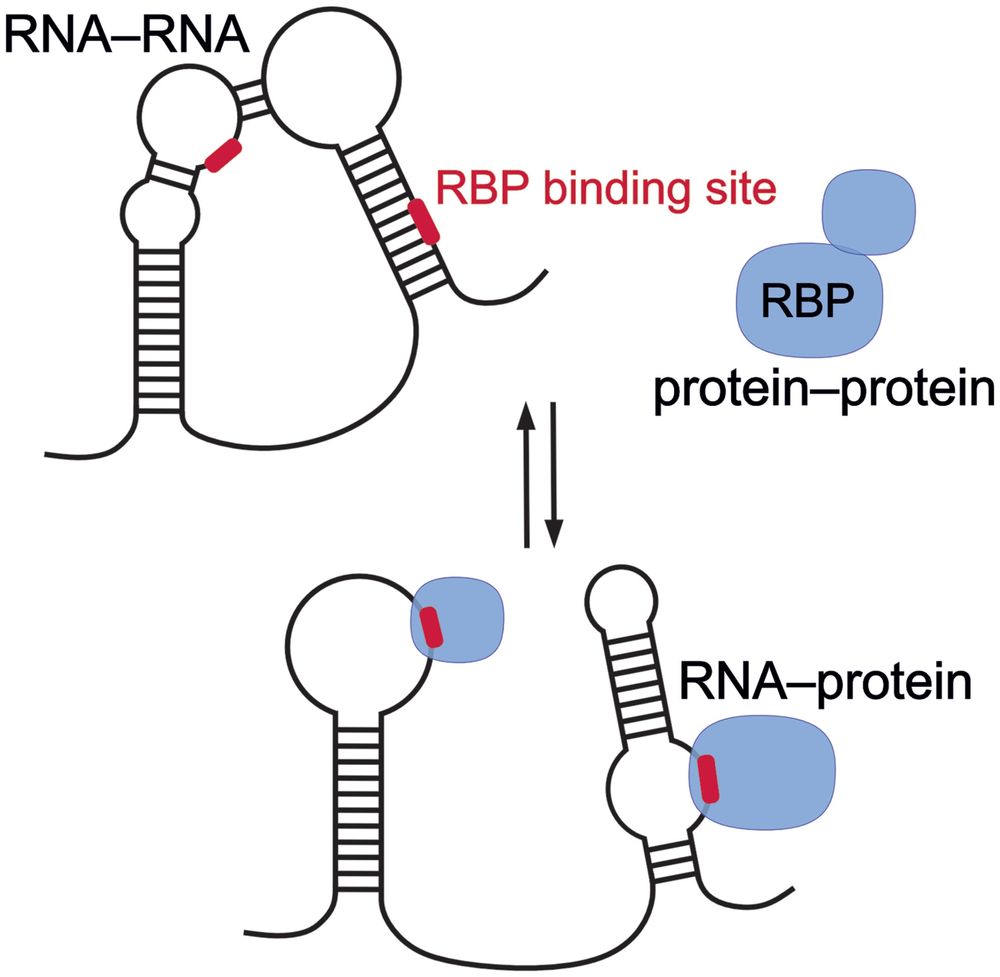
Happy to share our review on the Interplay between RNA-protein interactions and RNA structures. The open access article can be accessed here: doi.org/10.1002/2211...
FEBS Press
Methodological advances in mapping transcriptome-wide RNA-protein interactions and RNA structures have started to uncover the potential of RNP conformations in gene regulation. Competing RNA–RNA, RNA...
doi.org
September 12, 2025 at 8:30 AM
Happy to share our review on the Interplay between RNA-protein interactions and RNA structures. The open access article can be accessed here: doi.org/10.1002/2211...
Reposted by Isha Walawalkar, MPH

Polysomes and mRNA control the biophysical properties of the eukaryotic cytoplasm. A recent study by the Weis lab shows that intracellular diffusion is enhanced when polysomes are disassembled or when mRNA levels are reduced in eukaryotic cells. More: biol.ethz.ch/en/news-and-...

October 1, 2025 at 10:13 AM
Polysomes and mRNA control the biophysical properties of the eukaryotic cytoplasm. A recent study by the Weis lab shows that intracellular diffusion is enhanced when polysomes are disassembled or when mRNA levels are reduced in eukaryotic cells. More: biol.ethz.ch/en/news-and-...
Reposted by Isha Walawalkar, MPH

Embryonic signatures of intergenerational epigenetic inheritance across paternal environment & genetic background
@jamiehackett.bsky.social et al @embl.org see transcriptome changes in offspring after fertilisation by fathers exposed to gut dysbiosis or western diet
www.embopress.org/doi/full/10....
@jamiehackett.bsky.social et al @embl.org see transcriptome changes in offspring after fertilisation by fathers exposed to gut dysbiosis or western diet
www.embopress.org/doi/full/10....

September 29, 2025 at 10:25 AM
Embryonic signatures of intergenerational epigenetic inheritance across paternal environment & genetic background
@jamiehackett.bsky.social et al @embl.org see transcriptome changes in offspring after fertilisation by fathers exposed to gut dysbiosis or western diet
www.embopress.org/doi/full/10....
@jamiehackett.bsky.social et al @embl.org see transcriptome changes in offspring after fertilisation by fathers exposed to gut dysbiosis or western diet
www.embopress.org/doi/full/10....
Reposted by Isha Walawalkar, MPH

How do cells sort which RNAs to keep or destroy? New preprint from THJ, Brenneke and Plaschka labs shows that export and decay machineries (TREX2/PAXT) both recognise UAP56-bound RNAs. Whether they’re exported or degraded depends on where in the nucleus this happens.
www.biorxiv.org/content/10.1...
www.biorxiv.org/content/10.1...

Molecular basis of polyadenylated RNA fate determination in the nucleus
Eukaryotic genomes generate a plethora of polyadenylated (pA+) RNAs, that are packaged into ribonucleoprotein particles (RNPs). To ensure faithful gene expression, functional pA+ RNPs, including prote...
www.biorxiv.org
September 17, 2025 at 10:31 AM
How do cells sort which RNAs to keep or destroy? New preprint from THJ, Brenneke and Plaschka labs shows that export and decay machineries (TREX2/PAXT) both recognise UAP56-bound RNAs. Whether they’re exported or degraded depends on where in the nucleus this happens.
www.biorxiv.org/content/10.1...
www.biorxiv.org/content/10.1...
Reposted by Isha Walawalkar, MPH
We quantified mRNA abundance, translation, protein abundance, protein degradation and cell growth across thousands of single cells from a mammalian tissue.
The results revealed 𝐜𝐨𝐦𝐩𝐥𝐞𝐱 regulation & 𝐬𝐢𝐦𝐩𝐥𝐞 organizing principles:
www.biorxiv.org/content/10.1...
🧵
The results revealed 𝐜𝐨𝐦𝐩𝐥𝐞𝐱 regulation & 𝐬𝐢𝐦𝐩𝐥𝐞 organizing principles:
www.biorxiv.org/content/10.1...
🧵

September 21, 2025 at 11:07 AM
We quantified mRNA abundance, translation, protein abundance, protein degradation and cell growth across thousands of single cells from a mammalian tissue.
The results revealed 𝐜𝐨𝐦𝐩𝐥𝐞𝐱 regulation & 𝐬𝐢𝐦𝐩𝐥𝐞 organizing principles:
www.biorxiv.org/content/10.1...
🧵
The results revealed 𝐜𝐨𝐦𝐩𝐥𝐞𝐱 regulation & 𝐬𝐢𝐦𝐩𝐥𝐞 organizing principles:
www.biorxiv.org/content/10.1...
🧵
Reposted by Isha Walawalkar, MPH
This is a fascinating paper that particular types of RNA binding proteins with IDRs that target nuclear speckles also can recruit their own RNAs to nuclear speckles as a negative feedback mechanism for condensation the authors call "interstasis" www.nature.com/articles/s41...

Collective homeostasis of condensation-prone proteins via their mRNAs - Nature
The authors discover a homeostatic process termed interstasis, in which an increased concentration of proteins within RNA–protein condensates induces the sequestration of their own mRNAs.
www.nature.com
September 25, 2025 at 8:24 PM
This is a fascinating paper that particular types of RNA binding proteins with IDRs that target nuclear speckles also can recruit their own RNAs to nuclear speckles as a negative feedback mechanism for condensation the authors call "interstasis" www.nature.com/articles/s41...
Reposted by Isha Walawalkar, MPH
www.biorxiv.org/content/10.1...
Delighted to share the story of two germline RBPs - one with little (DND1) and one with no (NANOS3) intrinsic sequence-specificity - that together build a continuous RNA binding surface recognizing a 7-mer (AUGAAUU) in target mRNA 3’UTRs, leading to deadenylation.
Delighted to share the story of two germline RBPs - one with little (DND1) and one with no (NANOS3) intrinsic sequence-specificity - that together build a continuous RNA binding surface recognizing a 7-mer (AUGAAUU) in target mRNA 3’UTRs, leading to deadenylation.

The DND1-NANOS3 complex shapes the primordial germ cell transcriptome via a heptanucleotide sequence in mRNA 3'UTRs
The RNA-binding proteins DND1 and NANOS3 are essential for primordial germ cell survival. Their co-immunoprecipitation and overlapping loss-of-function phenotypes suggest joint function, yet how they ...
www.biorxiv.org
September 27, 2025 at 3:39 PM
www.biorxiv.org/content/10.1...
Delighted to share the story of two germline RBPs - one with little (DND1) and one with no (NANOS3) intrinsic sequence-specificity - that together build a continuous RNA binding surface recognizing a 7-mer (AUGAAUU) in target mRNA 3’UTRs, leading to deadenylation.
Delighted to share the story of two germline RBPs - one with little (DND1) and one with no (NANOS3) intrinsic sequence-specificity - that together build a continuous RNA binding surface recognizing a 7-mer (AUGAAUU) in target mRNA 3’UTRs, leading to deadenylation.