


Banana slugs (Gastropoda: Stylommatophora: Ariolimacidae: Ariolimax spp.) inhabit coniferous rainforests along the Pacific coast of North America. They feed on plant material, moss, fungi, and animal droppings and help disperse seeds and spores. Redwood National Park, California, 26 Apr 2013.

February 12, 2026 at 2:38 PM
Banana slugs (Gastropoda: Stylommatophora: Ariolimacidae: Ariolimax spp.) inhabit coniferous rainforests along the Pacific coast of North America. They feed on plant material, moss, fungi, and animal droppings and help disperse seeds and spores. Redwood National Park, California, 26 Apr 2013.
Un des organismes les plus "joueurs" avec les #plongeurs bio << c'est un vers tubicole ?! hé bé non :-P ! >> : le vermet géant a sa fiche !
MÜLLER Yves, LE GRANCHÉ Philippe in: #DORIS, 11/02/2026:
Thylacodes grandis (Gray, 1842), doris.ffessm.fr/ref/specie/3...
#biodiversite #Mollusca #gastropoda
MÜLLER Yves, LE GRANCHÉ Philippe in: #DORIS, 11/02/2026:
Thylacodes grandis (Gray, 1842), doris.ffessm.fr/ref/specie/3...
#biodiversite #Mollusca #gastropoda


February 11, 2026 at 7:13 PM
Un des organismes les plus "joueurs" avec les #plongeurs bio << c'est un vers tubicole ?! hé bé non :-P ! >> : le vermet géant a sa fiche !
MÜLLER Yves, LE GRANCHÉ Philippe in: #DORIS, 11/02/2026:
Thylacodes grandis (Gray, 1842), doris.ffessm.fr/ref/specie/3...
#biodiversite #Mollusca #gastropoda
MÜLLER Yves, LE GRANCHÉ Philippe in: #DORIS, 11/02/2026:
Thylacodes grandis (Gray, 1842), doris.ffessm.fr/ref/specie/3...
#biodiversite #Mollusca #gastropoda
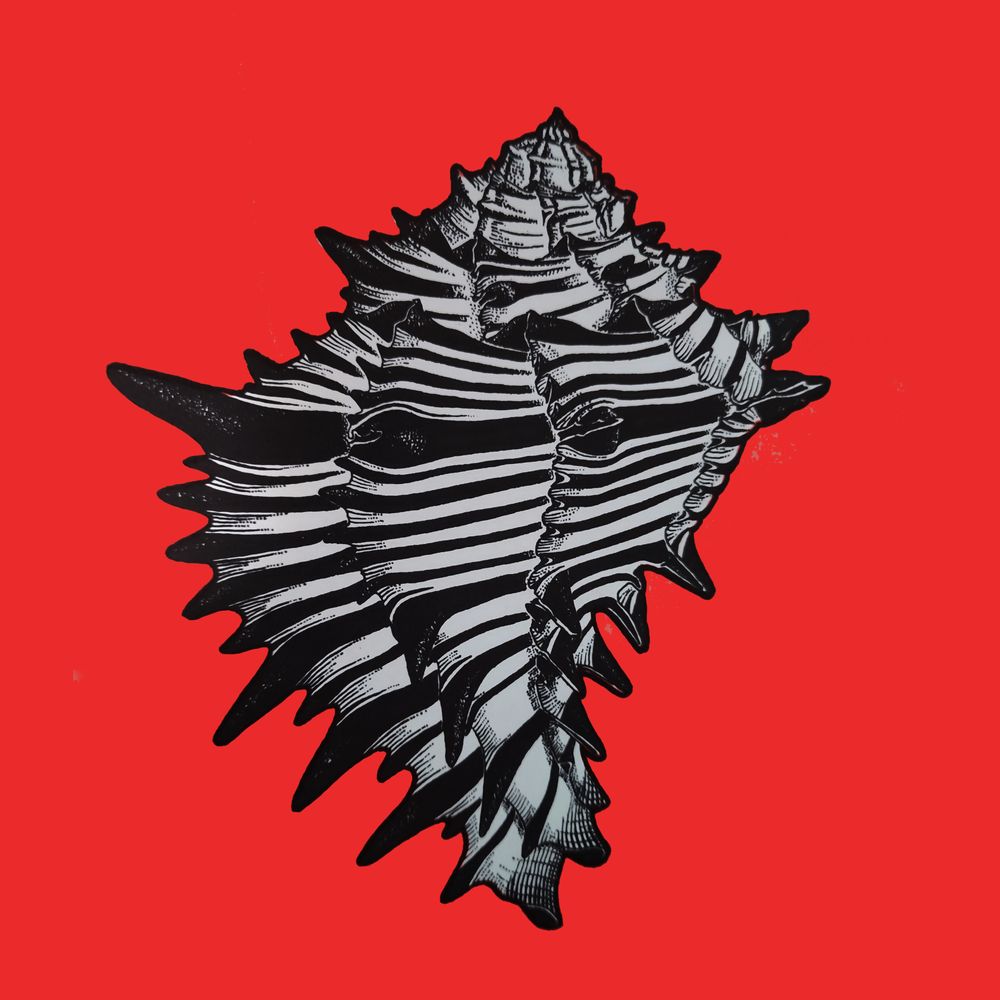
"New species of Moellendorffia Ancey, 1887 and Trichelix Ancey, 1887 from China (Gastropoda: Eupulmonata: Camaenidae)" has been published in #JournalofConchology #jconch @conchsoc #newSpecies #landsnail #malacology doi.org/10.61733/jco...

February 8, 2026 at 4:37 PM
"New species of Moellendorffia Ancey, 1887 and Trichelix Ancey, 1887 from China (Gastropoda: Eupulmonata: Camaenidae)" has been published in #JournalofConchology #jconch @conchsoc #newSpecies #landsnail #malacology doi.org/10.61733/jco...
#FossilFriday
A Middle Devonian gastropod in thin section, from Northern France.
The Gastropoda are the most diverse group of shelly animals alive today, with >35k described species (>60k estimated). They have appeared in the Cambrian and have left an excellent fossil record.
A Middle Devonian gastropod in thin section, from Northern France.
The Gastropoda are the most diverse group of shelly animals alive today, with >35k described species (>60k estimated). They have appeared in the Cambrian and have left an excellent fossil record.

February 6, 2026 at 5:19 PM
#FossilFriday
A Middle Devonian gastropod in thin section, from Northern France.
The Gastropoda are the most diverse group of shelly animals alive today, with >35k described species (>60k estimated). They have appeared in the Cambrian and have left an excellent fossil record.
A Middle Devonian gastropod in thin section, from Northern France.
The Gastropoda are the most diverse group of shelly animals alive today, with >35k described species (>60k estimated). They have appeared in the Cambrian and have left an excellent fossil record.
Molecular data and museum collections reframe Pleuroceridae (Gastropoda: Cerithioidea) diversity and conservation priorities in an overlooked freshwater biodiversity hotspot https://pubmed.ncbi.nlm.nih.gov/41638323/
February 6, 2026 at 8:58 AM
Molecular data and museum collections reframe Pleuroceridae (Gastropoda: Cerithioidea) diversity and conservation priorities in an overlooked freshwater biodiversity hotspot https://pubmed.ncbi.nlm.nih.gov/41638323/
Nouvelle fiche : un petit #nudibranche, mais bien visible, à chercher dans les #hydraires de l'Atlantique Nord : le doto à picots.
MÜLLER Yves, SITTLER Alain-Pierre in : #DORIS, 03/02/2026 :
Doto pinnatifida (Montagu, 1804), doris.ffessm.fr/ref/specie/3...
#biodiversite #Gastropoda #Dendronotina
MÜLLER Yves, SITTLER Alain-Pierre in : #DORIS, 03/02/2026 :
Doto pinnatifida (Montagu, 1804), doris.ffessm.fr/ref/specie/3...
#biodiversite #Gastropoda #Dendronotina

February 3, 2026 at 7:29 PM
Nouvelle fiche : un petit #nudibranche, mais bien visible, à chercher dans les #hydraires de l'Atlantique Nord : le doto à picots.
MÜLLER Yves, SITTLER Alain-Pierre in : #DORIS, 03/02/2026 :
Doto pinnatifida (Montagu, 1804), doris.ffessm.fr/ref/specie/3...
#biodiversite #Gastropoda #Dendronotina
MÜLLER Yves, SITTLER Alain-Pierre in : #DORIS, 03/02/2026 :
Doto pinnatifida (Montagu, 1804), doris.ffessm.fr/ref/specie/3...
#biodiversite #Gastropoda #Dendronotina

➡Comptes Rendus #Palevol 25 (1) #openaccessjournal
📰Published on 14/01/2026
#FossilFriday New campanilids (Mollusca: Gastropoda) from the Ranikot Group (upper Paleocene/early Eocene, Sindh, Pakistan)
✒Didier MERLE et al.
🔗https://doi.org/10.5852/cr-palevol2026v25a1
#fossilmolluscs #newspecies
📰Published on 14/01/2026
#FossilFriday New campanilids (Mollusca: Gastropoda) from the Ranikot Group (upper Paleocene/early Eocene, Sindh, Pakistan)
✒Didier MERLE et al.
🔗https://doi.org/10.5852/cr-palevol2026v25a1
#fossilmolluscs #newspecies

February 2, 2026 at 1:46 PM
➡Comptes Rendus #Palevol 25 (1) #openaccessjournal
📰Published on 14/01/2026
#FossilFriday New campanilids (Mollusca: Gastropoda) from the Ranikot Group (upper Paleocene/early Eocene, Sindh, Pakistan)
✒Didier MERLE et al.
🔗https://doi.org/10.5852/cr-palevol2026v25a1
#fossilmolluscs #newspecies
📰Published on 14/01/2026
#FossilFriday New campanilids (Mollusca: Gastropoda) from the Ranikot Group (upper Paleocene/early Eocene, Sindh, Pakistan)
✒Didier MERLE et al.
🔗https://doi.org/10.5852/cr-palevol2026v25a1
#fossilmolluscs #newspecies
"First record of Melanoides tuberculata in Rhodes, Greece: a new invader or a failed introduction?" has been published in #JournalofConchology #jconch @conchsoc #Mollusca #gastropoda #conchsoc doi.org/10.61733/jco...

February 1, 2026 at 10:31 PM
"First record of Melanoides tuberculata in Rhodes, Greece: a new invader or a failed introduction?" has been published in #JournalofConchology #jconch @conchsoc #Mollusca #gastropoda #conchsoc doi.org/10.61733/jco...
#OpenAccess
Between Droughts and Floods: The Seasonal Response of Freshwater Snails in Artificial Reservoirs in the Brazilian Semiarid Region
Lucas Henrique Sousa da Silva et al
doi.org/10.1002/1438...
caatinga/ dry forests/ Gastropoda/ invasive species/ seasonality
Between Droughts and Floods: The Seasonal Response of Freshwater Snails in Artificial Reservoirs in the Brazilian Semiarid Region
Lucas Henrique Sousa da Silva et al
doi.org/10.1002/1438...
caatinga/ dry forests/ Gastropoda/ invasive species/ seasonality

January 31, 2026 at 7:16 AM
#OpenAccess
Between Droughts and Floods: The Seasonal Response of Freshwater Snails in Artificial Reservoirs in the Brazilian Semiarid Region
Lucas Henrique Sousa da Silva et al
doi.org/10.1002/1438...
caatinga/ dry forests/ Gastropoda/ invasive species/ seasonality
Between Droughts and Floods: The Seasonal Response of Freshwater Snails in Artificial Reservoirs in the Brazilian Semiarid Region
Lucas Henrique Sousa da Silva et al
doi.org/10.1002/1438...
caatinga/ dry forests/ Gastropoda/ invasive species/ seasonality

Word of the Hour: Gastropodous - Of or pertaining to the Gastropoda. #WordOfTheHour #WordOfTheDay
January 30, 2026 at 5:30 PM
Word of the Hour: Gastropodous - Of or pertaining to the Gastropoda. #WordOfTheHour #WordOfTheDay
"Drymaeus ribeiroi (Ihering, 1915) (Gastropoda: Bulimulidae) is a synonym of Drymaeus nigrogularis (Dohrn, 1882) …" has been published in #JournalofConchology #landsnail #mollusca @conchsoc doi.org/10.61733/jco...

January 30, 2026 at 5:10 PM
"Drymaeus ribeiroi (Ihering, 1915) (Gastropoda: Bulimulidae) is a synonym of Drymaeus nigrogularis (Dohrn, 1882) …" has been published in #JournalofConchology #landsnail #mollusca @conchsoc doi.org/10.61733/jco...
Direct observation of feeding #behavior in the kleptoplastic sea slug Plakobranchus ocellatus type black (Gastropoda, Sacoglossa) bioRxivpreprint

Direct observation of feeding #behavior in the kleptoplastic sea slug Plakobranchus ocellatus type black (Gastropoda, Sacoglossa)
The feeding ecology of sacoglossans, an exceptionally stenophagous group among marine animals, has been extensively studied because these organisms exhibit kleptoplasty, a phenomenon in which chloroplasts derived from ingested algae are sequestered and functionally maintained within animal cells. The genus Plakobranchus is notable for its exceptional capacity to retain photosynthetically active chloroplasts for prolonged periods. Nevertheless, direct observations of its feeding behavior have remained limited, largely due to subsequent taxonomic revisions and its cryptic, benthic lifestyle. In the present study, we focus on Plakobranchus ocellatus type black (PoB). Using high-resolution macro videography, we obtained, for the first time, video recordings that directly document the feeding behavior of this lineage. Under illuminated conditions, we demonstrate active feeding on the fan-shaped fronds of udoteacean algae, clarify which algal life-history stages serve as food, and identify Ventalia sp. 4 as a previously unrecognized dietary component. We further describe a characteristic inverted headstand posture adopted during feeding and discuss this behavior in relation to the species benthic and semi-burrowing lifestyle, proposing that it may partly explain the historical rarity of feeding observations in the field. The confirmation of feeding behavior represents a critical step toward establishing a stable laboratory culture system essential for experimental studies of kleptoplasty.
dlvr.it
January 28, 2026 at 8:17 AM
Direct observation of feeding #behavior in the kleptoplastic sea slug Plakobranchus ocellatus type black (Gastropoda, Sacoglossa) bioRxivpreprint
Direct observation of feeding #behavior in the kleptoplastic sea slug Plakobranchus ocellatus type black (Gastropoda, Sacoglossa) bioRxivpreprint
Direct observation of feeding #behavior in the kleptoplastic sea slug Plakobranchus ocellatus type black (Gastropoda, Sacoglossa)
The feeding ecology of sacoglossans, an exceptionally stenophagous group among marine animals, has been extensively studied because these organisms exhibit kleptoplasty, a phenomenon in which chloroplasts derived from ingested algae are sequestered and functionally maintained within animal cells. The genus Plakobranchus is notable for its exceptional capacity to retain photosynthetically active chloroplasts for prolonged periods. Nevertheless, direct observations of its feeding behavior have remained limited, largely due to subsequent taxonomic revisions and its cryptic, benthic lifestyle. In the present study, we focus on Plakobranchus ocellatus type black (PoB). Using high-resolution macro videography, we obtained, for the first time, video recordings that directly document the feeding behavior of this lineage. Under illuminated conditions, we demonstrate active feeding on the fan-shaped fronds of udoteacean algae, clarify which algal life-history stages serve as food, and identify Ventalia sp. 4 as a previously unrecognized dietary component. We further describe a characteristic inverted headstand posture adopted during feeding and discuss this behavior in relation to the species benthic and semi-burrowing lifestyle, proposing that it may partly explain the historical rarity of feeding observations in the field. The confirmation of feeding behavior represents a critical step toward establishing a stable laboratory culture system essential for experimental studies of kleptoplasty.
dlvr.it
January 27, 2026 at 1:16 AM
Direct observation of feeding #behavior in the kleptoplastic sea slug Plakobranchus ocellatus type black (Gastropoda, Sacoglossa) bioRxivpreprint

Direct observation of feeding behavior in the kleptoplastic sea slug Plakobranchus ocellatus type black (Gastropoda, Sacoglossa) https://www.biorxiv.org/content/10.64898/2026.01.23.701294v1
January 26, 2026 at 7:45 PM
Direct observation of feeding behavior in the kleptoplastic sea slug Plakobranchus ocellatus type black (Gastropoda, Sacoglossa) https://www.biorxiv.org/content/10.64898/2026.01.23.701294v1

Direct observation of feeding behavior in the kleptoplastic sea slug Plakobranchus ocellatus type black (Gastropoda, Sacoglossa) https://www.biorxiv.org/content/10.64898/2026.01.23.701294v1
January 26, 2026 at 7:45 PM
Direct observation of feeding behavior in the kleptoplastic sea slug Plakobranchus ocellatus type black (Gastropoda, Sacoglossa) https://www.biorxiv.org/content/10.64898/2026.01.23.701294v1
You don't hear much about him, presumably due to his uncharismatic subject matter (fossil gastropods, graptolites, etc.), but Georg Liljevall was a reliably exceptional artist. '[S]cientific draughtsman to the Riksmuseum, Stockholm, from 1873 till 1919', as his Museums Journal obituary states.

January 21, 2026 at 2:07 PM
You don't hear much about him, presumably due to his uncharismatic subject matter (fossil gastropods, graptolites, etc.), but Georg Liljevall was a reliably exceptional artist. '[S]cientific draughtsman to the Riksmuseum, Stockholm, from 1873 till 1919', as his Museums Journal obituary states.

How do the tiny teeth in land snails adapt to challenging diets? Read 'Convergent #evolution of failure- and wear-prevention in radulae of rock-scraping land snails (Chondrinidae, Gastropoda)': doi.org/10.1098/rsos... #RSOS

January 16, 2026 at 5:05 PM
How do the tiny teeth in land snails adapt to challenging diets? Read 'Convergent #evolution of failure- and wear-prevention in radulae of rock-scraping land snails (Chondrinidae, Gastropoda)': doi.org/10.1098/rsos... #RSOS

Trump, as classy as always (if the class is gastropoda).

Trump mouths "F you" and gives the middle finger after a heckler at the Ford factory calls him "Pedophile Protector."
The White House has confirmed this.
The White House has confirmed this.
January 14, 2026 at 12:42 AM
Trump, as classy as always (if the class is gastropoda).
And thus Gary foolishly wandered into the Upside Down …
#StrangerThings Gastropoda Edition
#StrangerThings Gastropoda Edition

January 10, 2026 at 7:35 PM
And thus Gary foolishly wandered into the Upside Down …
#StrangerThings Gastropoda Edition
#StrangerThings Gastropoda Edition
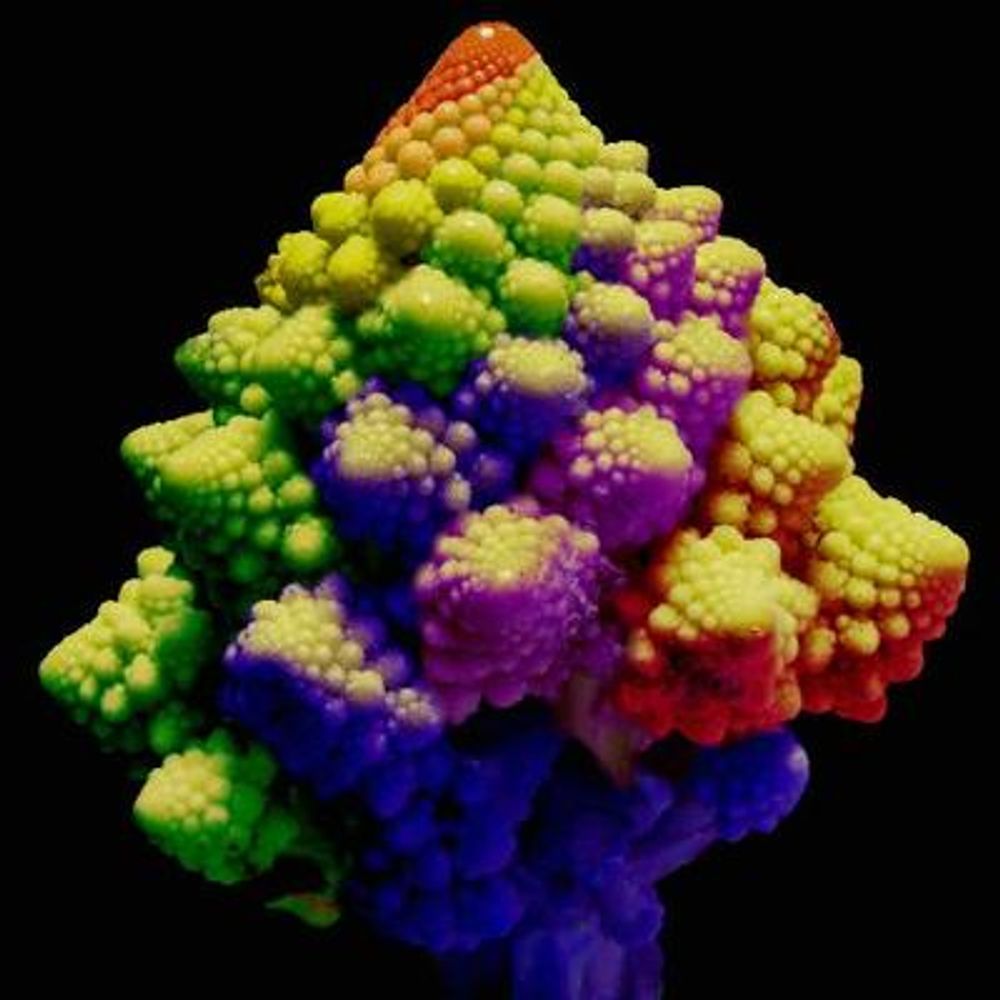
A tiny Gastropoda located in the walls of @cbgpmadrid.bsky.social for #FossilFriday

January 9, 2026 at 7:08 PM
A tiny Gastropoda located in the walls of @cbgpmadrid.bsky.social for #FossilFriday

Gastropoda (Snails & Slugs)
Bivalvia (Clams)
Cephalopoda (Octopus & Squids)
Polyplacophora (Chitons)
Bivalvia (Clams)
Cephalopoda (Octopus & Squids)
Polyplacophora (Chitons)


January 7, 2026 at 5:58 PM
Gastropoda (Snails & Slugs)
Bivalvia (Clams)
Cephalopoda (Octopus & Squids)
Polyplacophora (Chitons)
Bivalvia (Clams)
Cephalopoda (Octopus & Squids)
Polyplacophora (Chitons)
"First interception of Xeropicta derbentina in the Benelux (Gastropoda: Geomitridae)" has been published in #JournalofConchology #jconch #conchologicalSociety #gastropoda #mollusca #landsnail doi.org/10.61733/jco...

January 4, 2026 at 5:02 PM
"First interception of Xeropicta derbentina in the Benelux (Gastropoda: Geomitridae)" has been published in #JournalofConchology #jconch #conchologicalSociety #gastropoda #mollusca #landsnail doi.org/10.61733/jco...
I once freelanced a food story for NYT magazine about traveling on my stomach & some reader sent me a postcard calling me a gastropod. That word was already taken in the dot com craziness, so I went for Gastropoda. 22 years now.

EXPLAIN YOUR USERNAME
In 2004 I needed a URL for my blog. I showed my mom a tiny jar of sand I'd collected from the beach and she said "but that's stealing!"... and it's been my username ever since.
In 2004 I needed a URL for my blog. I showed my mom a tiny jar of sand I'd collected from the beach and she said "but that's stealing!"... and it's been my username ever since.

Story: in Sept 2020, various folks decided to mock the tankie Qiao Collective on Twitter. Since it was just 3 know-nothing clowns in a trench coat, we decided it shouldn't be that difficult for us. In the course of 24 hours, Niao, Ciao, Liao, Miao, Biao, Jiao, Xiao, Diao Collectives were born.
December 30, 2025 at 6:07 PM
I once freelanced a food story for NYT magazine about traveling on my stomach & some reader sent me a postcard calling me a gastropod. That word was already taken in the dot com craziness, so I went for Gastropoda. 22 years now.
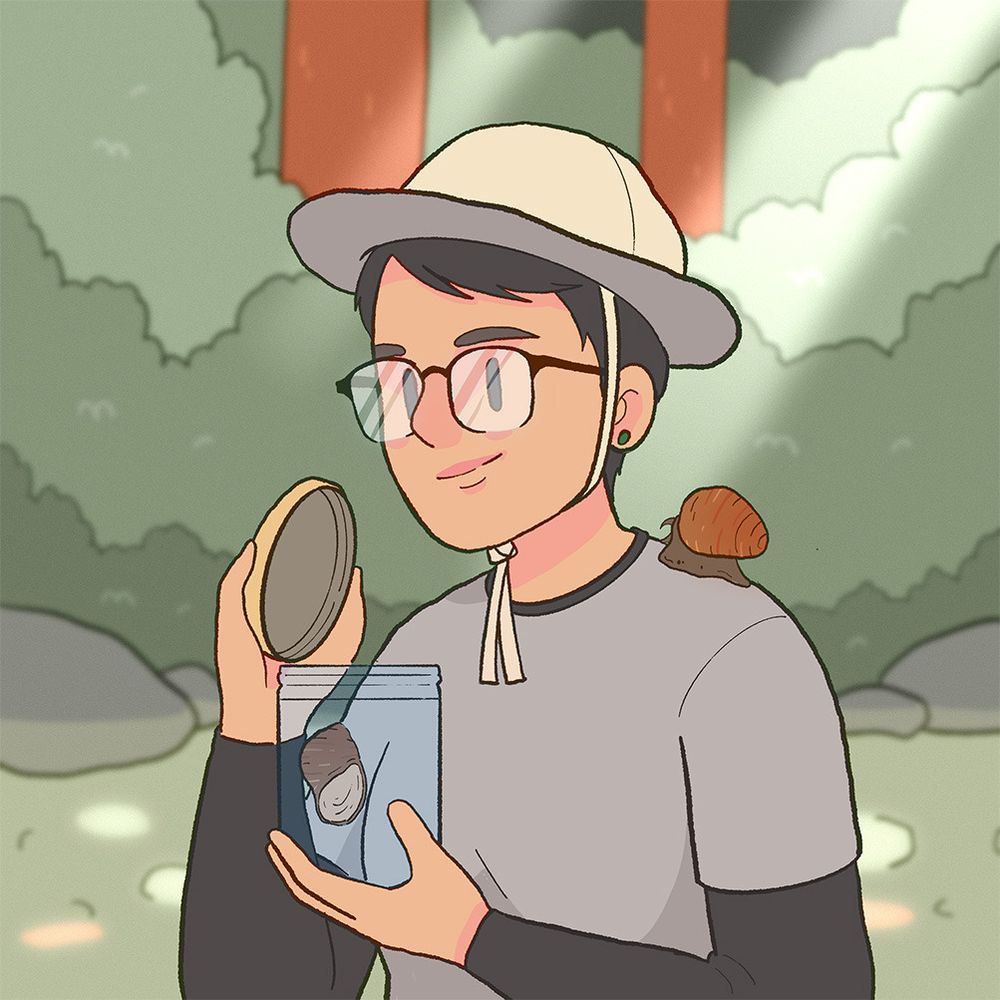
Hanuninda, Dewi, Ambarwati, Reni, Isnaningsih, Nur Rohmatin (2025) Morphological and Morphometric Study of Pila celebensis ( #Gastropoda : Ampullariidae) from Madura Island, #Indonesia. 🔓 via Jurnal Riset Biologi Dan Aplikasinya journal.unesa.ac.id/index.php/ri...
#freshwater #snails🍎🐌🌏🧪
#freshwater #snails🍎🐌🌏🧪
Morphological and Morphometric Study of Pila celebensis (Gastropoda: Ampullariidae) from Madura Island, Indonesia
| Jurnal Riset Biologi dan Aplikasinya
journal.unesa.ac.id
December 29, 2025 at 12:58 AM
Hanuninda, Dewi, Ambarwati, Reni, Isnaningsih, Nur Rohmatin (2025) Morphological and Morphometric Study of Pila celebensis ( #Gastropoda : Ampullariidae) from Madura Island, #Indonesia. 🔓 via Jurnal Riset Biologi Dan Aplikasinya journal.unesa.ac.id/index.php/ri...
#freshwater #snails🍎🐌🌏🧪
#freshwater #snails🍎🐌🌏🧪
Mais qui est ce Richard auquel a été dédié le #coquillage de la nlle fiche : la #troque de Richard ?
Pour le savoir :
MATEJCEKOVA Miroslava, LE GRANCHÉ Philippe, ANDRÉ Frédéric in : #DORIS, 23/12/2025 :
Phorcus richardi (Payraudeau, 1826), doris.ffessm.fr/ref/specie/5...
#biodiversite #gastropoda
Pour le savoir :
MATEJCEKOVA Miroslava, LE GRANCHÉ Philippe, ANDRÉ Frédéric in : #DORIS, 23/12/2025 :
Phorcus richardi (Payraudeau, 1826), doris.ffessm.fr/ref/specie/5...
#biodiversite #gastropoda


December 23, 2025 at 9:24 AM
Mais qui est ce Richard auquel a été dédié le #coquillage de la nlle fiche : la #troque de Richard ?
Pour le savoir :
MATEJCEKOVA Miroslava, LE GRANCHÉ Philippe, ANDRÉ Frédéric in : #DORIS, 23/12/2025 :
Phorcus richardi (Payraudeau, 1826), doris.ffessm.fr/ref/specie/5...
#biodiversite #gastropoda
Pour le savoir :
MATEJCEKOVA Miroslava, LE GRANCHÉ Philippe, ANDRÉ Frédéric in : #DORIS, 23/12/2025 :
Phorcus richardi (Payraudeau, 1826), doris.ffessm.fr/ref/specie/5...
#biodiversite #gastropoda