



I need to see accurate Hittite cuneiform writing on screen or I riot.
February 3, 2026 at 8:16 AM
I need to see accurate Hittite cuneiform writing on screen or I riot.
Vessel terminating in the forepart of a stag, ca. 14th–13th century BCE
Culture: Hittite
Medium: Silver, gold inlay
https://www.metmuseum.org/art/collection/search/327399
Culture: Hittite
Medium: Silver, gold inlay
https://www.metmuseum.org/art/collection/search/327399


February 3, 2026 at 7:03 AM
Vessel terminating in the forepart of a stag, ca. 14th–13th century BCE
Culture: Hittite
Medium: Silver, gold inlay
https://www.metmuseum.org/art/collection/search/327399
Culture: Hittite
Medium: Silver, gold inlay
https://www.metmuseum.org/art/collection/search/327399

"could simply be normal about a thing instead"
Why on earth would one do that?
(And Hittite literacy sounds interesting!)
Why on earth would one do that?
(And Hittite literacy sounds interesting!)
February 2, 2026 at 9:17 PM
"could simply be normal about a thing instead"
Why on earth would one do that?
(And Hittite literacy sounds interesting!)
Why on earth would one do that?
(And Hittite literacy sounds interesting!)

cool when are they going to shoot it with a script entirely in reconstructed Mycenean Greek and Luwian/Hittite? i need to hear these descriptions in the original language (not Homer's barbaric Ionic-Aeolic patois, thank you very much). otherwise i'm not sure what the point is tbh
February 2, 2026 at 9:14 PM
cool when are they going to shoot it with a script entirely in reconstructed Mycenean Greek and Luwian/Hittite? i need to hear these descriptions in the original language (not Homer's barbaric Ionic-Aeolic patois, thank you very much). otherwise i'm not sure what the point is tbh

Subtitles available, but only in Akkadian, Hittite and Elamite.
February 2, 2026 at 9:06 PM
Subtitles available, but only in Akkadian, Hittite and Elamite.
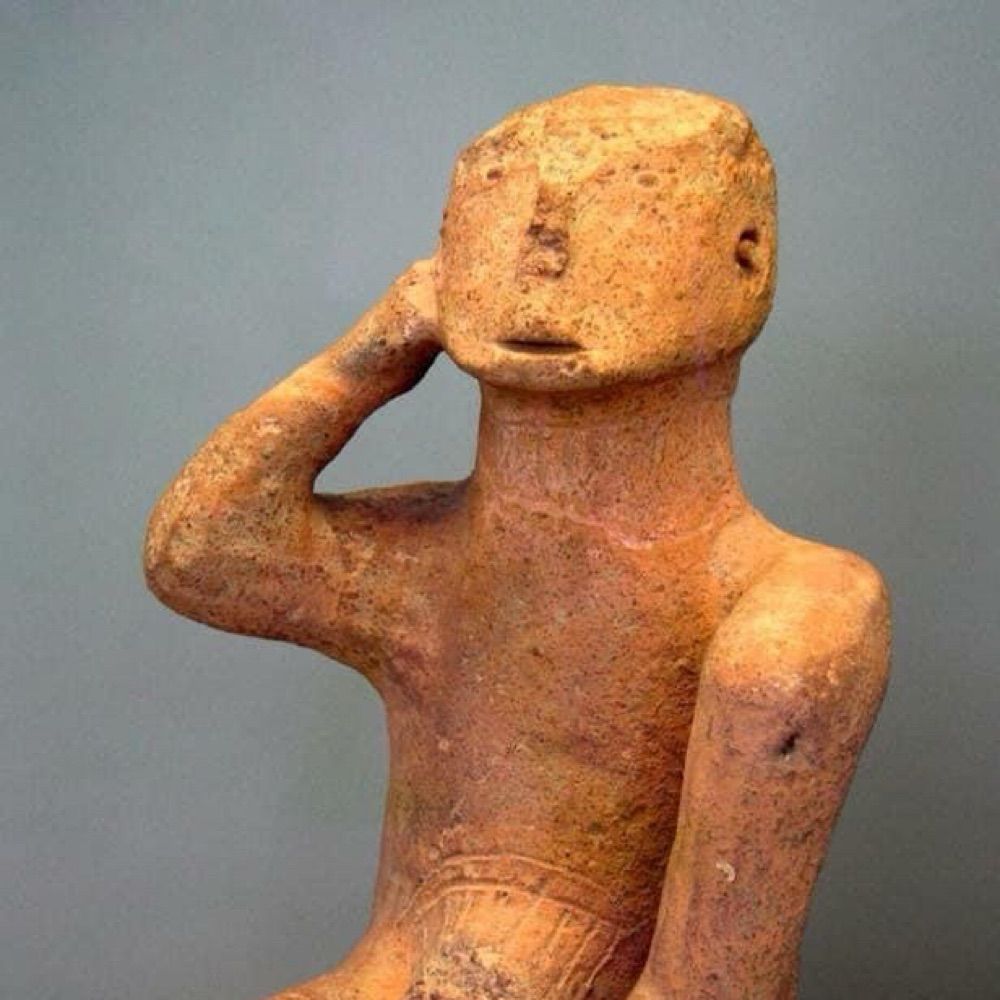
The oldest known pebble mosaic was found in Uşakli Höyük, the Hittite Zippolanda, in 2018 and is from the late Bronze Age ca 1500bc. Quite amazing
www.cambridge.org/core/journal...
www.cambridge.org/core/journal...

A mosaic floor from the Late Bronze Age building II of Uşaklı Höyük, central Turkey | Antiquity | Cambridge Core
A mosaic floor from the Late Bronze Age building II of Uşaklı Höyük, central Turkey - Volume 93 Issue 372
www.cambridge.org
February 2, 2026 at 7:48 PM
The oldest known pebble mosaic was found in Uşakli Höyük, the Hittite Zippolanda, in 2018 and is from the late Bronze Age ca 1500bc. Quite amazing
www.cambridge.org/core/journal...
www.cambridge.org/core/journal...

Maybe I split the difference and take the book about Hittite literacy on holiday with me.
February 2, 2026 at 7:36 PM
Maybe I split the difference and take the book about Hittite literacy on holiday with me.

In lieu of dunking on idiots, how about everyone post your favorite ancient Mediterranean history fact?
Mine is that there is a letter from one of the Hittite emperors in which he listed the other leaders he considered his equals. He initially included the Mycenaean king, then _crossed him out!_
Mine is that there is a letter from one of the Hittite emperors in which he listed the other leaders he considered his equals. He initially included the Mycenaean king, then _crossed him out!_

a group of girls are sitting at a table in a cafeteria eating food .
Alt: Gif from Mean Girls of the Plastics sitting at a cafeteria table. Text reads "You can't sit with us."
media.tenor.com
February 2, 2026 at 7:19 PM
In lieu of dunking on idiots, how about everyone post your favorite ancient Mediterranean history fact?
Mine is that there is a letter from one of the Hittite emperors in which he listed the other leaders he considered his equals. He initially included the Mycenaean king, then _crossed him out!_
Mine is that there is a letter from one of the Hittite emperors in which he listed the other leaders he considered his equals. He initially included the Mycenaean king, then _crossed him out!_
Every single Hittite Emperor shot out of their graves at that one lmao
February 2, 2026 at 7:03 PM
Every single Hittite Emperor shot out of their graves at that one lmao

Can someone please start teaching Americans history?
Troy was - famously - a city-state in Anatolia with a mixed influence of Hittite (Anatolian, not Greek), Balkan (not Greek), Levantine (not Greek) & Mycenian Greeks at various eras.
Also, the Odyssey is a myth.
Troy was - famously - a city-state in Anatolia with a mixed influence of Hittite (Anatolian, not Greek), Balkan (not Greek), Levantine (not Greek) & Mycenian Greeks at various eras.
Also, the Odyssey is a myth.
February 2, 2026 at 6:46 PM
Can someone please start teaching Americans history?
Troy was - famously - a city-state in Anatolia with a mixed influence of Hittite (Anatolian, not Greek), Balkan (not Greek), Levantine (not Greek) & Mycenian Greeks at various eras.
Also, the Odyssey is a myth.
Troy was - famously - a city-state in Anatolia with a mixed influence of Hittite (Anatolian, not Greek), Balkan (not Greek), Levantine (not Greek) & Mycenian Greeks at various eras.
Also, the Odyssey is a myth.

This is really so thoroughly wrong
Helen was, in fact, Greek, but that's because she was from Sparta
If she had been from Troy, she wouldn't have been Greek because Troy was not a Greek city
Historically it was probably Hittite
In terms of the poem it is also not Greek
They were fighting the Greeks
Helen was, in fact, Greek, but that's because she was from Sparta
If she had been from Troy, she wouldn't have been Greek because Troy was not a Greek city
Historically it was probably Hittite
In terms of the poem it is also not Greek
They were fighting the Greeks
February 2, 2026 at 6:20 PM
This is really so thoroughly wrong
Helen was, in fact, Greek, but that's because she was from Sparta
If she had been from Troy, she wouldn't have been Greek because Troy was not a Greek city
Historically it was probably Hittite
In terms of the poem it is also not Greek
They were fighting the Greeks
Helen was, in fact, Greek, but that's because she was from Sparta
If she had been from Troy, she wouldn't have been Greek because Troy was not a Greek city
Historically it was probably Hittite
In terms of the poem it is also not Greek
They were fighting the Greeks

So while "Priam" is a Luwian name, his father has the Greek name Laomedon, and he gives his children Greek names.
Then there's the Hittite letter to Alaksandu (Alexandros), king of Wilusa (Ilion/Troy), who is implied not to have been the son or heir of the previous king.
2/2
Then there's the Hittite letter to Alaksandu (Alexandros), king of Wilusa (Ilion/Troy), who is implied not to have been the son or heir of the previous king.
2/2
February 2, 2026 at 5:57 PM
So while "Priam" is a Luwian name, his father has the Greek name Laomedon, and he gives his children Greek names.
Then there's the Hittite letter to Alaksandu (Alexandros), king of Wilusa (Ilion/Troy), who is implied not to have been the son or heir of the previous king.
2/2
Then there's the Hittite letter to Alaksandu (Alexandros), king of Wilusa (Ilion/Troy), who is implied not to have been the son or heir of the previous king.
2/2

The Avestan or similar source form is one of several cognate forms of Indo-Europea *kʷséps 'night' in mostly eastern branches, including:
Hittite: 𒅖𒉺𒀭𒍝 ispanza
Sanskrit: क्ष॒पा kṣapā́
Bactrian: χαβ
Yaghnobi: хишап
So the word for 'night' was borrowed meaning 'night meal'.
Hittite: 𒅖𒉺𒀭𒍝 ispanza
Sanskrit: क्ष॒पा kṣapā́
Bactrian: χαβ
Yaghnobi: хишап
So the word for 'night' was borrowed meaning 'night meal'.
February 2, 2026 at 11:39 AM
The Avestan or similar source form is one of several cognate forms of Indo-Europea *kʷséps 'night' in mostly eastern branches, including:
Hittite: 𒅖𒉺𒀭𒍝 ispanza
Sanskrit: क्ष॒पा kṣapā́
Bactrian: χαβ
Yaghnobi: хишап
So the word for 'night' was borrowed meaning 'night meal'.
Hittite: 𒅖𒉺𒀭𒍝 ispanza
Sanskrit: क्ष॒पा kṣapā́
Bactrian: χαβ
Yaghnobi: хишап
So the word for 'night' was borrowed meaning 'night meal'.
A small ceramic vessel unearthed at Eskiyapar now offers a rare and tangible glimpse into Hittite ritual practices. The object dates to the Old Hittite period and comes from Eskiyapar, near modern-day Alaca in central Türkiye.
www.anatolianarchaeology.net/a-hittite-go...
www.anatolianarchaeology.net/a-hittite-go...

A Hittite Goddess Vessel from Eskiyapar and the Ritual of “Drinking the God” - Anatolian Archaeology
An Old Hittite goddess vessel from Eskiyapar sheds light on the ritual of “drinking the god,” offering rare insight into Hittite religion
www.anatolianarchaeology.net
February 2, 2026 at 9:40 AM
A small ceramic vessel unearthed at Eskiyapar now offers a rare and tangible glimpse into Hittite ritual practices. The object dates to the Old Hittite period and comes from Eskiyapar, near modern-day Alaca in central Türkiye.
www.anatolianarchaeology.net/a-hittite-go...
www.anatolianarchaeology.net/a-hittite-go...

"Helen of Troy can't be black!!!! The historical inaccuracy!"
This new movie's probably gonna have all the characters speaking English, too... not the lore-accurate, canonical Archaic Myceanean/Luwian/Hittite.
I bet that'll equally be a problem for these brainlords.
This new movie's probably gonna have all the characters speaking English, too... not the lore-accurate, canonical Archaic Myceanean/Luwian/Hittite.
I bet that'll equally be a problem for these brainlords.
February 2, 2026 at 7:15 AM
"Helen of Troy can't be black!!!! The historical inaccuracy!"
This new movie's probably gonna have all the characters speaking English, too... not the lore-accurate, canonical Archaic Myceanean/Luwian/Hittite.
I bet that'll equally be a problem for these brainlords.
This new movie's probably gonna have all the characters speaking English, too... not the lore-accurate, canonical Archaic Myceanean/Luwian/Hittite.
I bet that'll equally be a problem for these brainlords.

Also Greeks would've objected to Helen portrayed as being genuinely in love with Paris rather than divinely brainwashed, and Trojans portrayed as equals rather than quasi-Hittite foreigners.
February 1, 2026 at 10:56 PM
Also Greeks would've objected to Helen portrayed as being genuinely in love with Paris rather than divinely brainwashed, and Trojans portrayed as equals rather than quasi-Hittite foreigners.

I bet he'll film it in English rather than the Luwian Hittite dialect as well. What a sellout. Still, better than being a racist CSAM peddler, I guess.
February 1, 2026 at 9:19 PM
I bet he'll film it in English rather than the Luwian Hittite dialect as well. What a sellout. Still, better than being a racist CSAM peddler, I guess.

Just to explain: my thinking behind that family metaphor is that if Anatolian and Indo-Iranian are 'sisters' with respect to the big PIE, then Hittite would be a niece to the latter. This of course is upset by fact that the daughters branched off at different times, with Anatolian first as you say
February 1, 2026 at 8:31 PM
Just to explain: my thinking behind that family metaphor is that if Anatolian and Indo-Iranian are 'sisters' with respect to the big PIE, then Hittite would be a niece to the latter. This of course is upset by fact that the daughters branched off at different times, with Anatolian first as you say

Pourquoi Çorum? C’est intéressant. Ce matin, Özel et certains maires d’Istanbul ont inauguré Centre culturel hittite de Mecitözü, à Çorum, dont la construction a été achevée par la municipalité métropolitaine d'Istanbul. La gestion rationnelle d’Istanbul a permis de mettre des fonds de côté +

February 1, 2026 at 6:07 PM
Pourquoi Çorum? C’est intéressant. Ce matin, Özel et certains maires d’Istanbul ont inauguré Centre culturel hittite de Mecitözü, à Çorum, dont la construction a été achevée par la municipalité métropolitaine d'Istanbul. La gestion rationnelle d’Istanbul a permis de mettre des fonds de côté +
“Show me one Hittite in New York City!”
- Walker Percy
- Walker Percy
February 1, 2026 at 5:26 PM
“Show me one Hittite in New York City!”
- Walker Percy
- Walker Percy

Jabba The Hittite
January 31, 2026 at 10:37 PM
Jabba The Hittite

Something fun I learned today. The UN has a replica on its wall of the Egyptian-Hittite peace treaty after the Battle of Kadesh. It's the oldest surviving peace treaty we know about.
January 31, 2026 at 6:14 AM
Something fun I learned today. The UN has a replica on its wall of the Egyptian-Hittite peace treaty after the Battle of Kadesh. It's the oldest surviving peace treaty we know about.

The Diomedeia: Diomedes, the Peoples of the Sea, and the Fall of the Hittite Empire
by Gregory Michael Nixon
Vigorous Preview—but ignore the anachronisms & the unexplainable presence of warrior Samurai!—only 1:42min
drive.google.com/file/d/1gFym...
by Gregory Michael Nixon
Vigorous Preview—but ignore the anachronisms & the unexplainable presence of warrior Samurai!—only 1:42min
drive.google.com/file/d/1gFym...
The.mp4
drive.google.com
January 30, 2026 at 11:42 PM
The Diomedeia: Diomedes, the Peoples of the Sea, and the Fall of the Hittite Empire
by Gregory Michael Nixon
Vigorous Preview—but ignore the anachronisms & the unexplainable presence of warrior Samurai!—only 1:42min
drive.google.com/file/d/1gFym...
by Gregory Michael Nixon
Vigorous Preview—but ignore the anachronisms & the unexplainable presence of warrior Samurai!—only 1:42min
drive.google.com/file/d/1gFym...

amber.of.the.sea
The Hittite Sun’s God’s chariot is drawn by bulls, but bulls are also harnessed to the chariot of the Weather God and his queen.
The bull cult appears extensively in Sumero-Semitic religions as a sacred fertilising power.
The Hittite Sun’s God’s chariot is drawn by bulls, but bulls are also harnessed to the chariot of the Weather God and his queen.
The bull cult appears extensively in Sumero-Semitic religions as a sacred fertilising power.

January 30, 2026 at 11:26 PM
amber.of.the.sea
The Hittite Sun’s God’s chariot is drawn by bulls, but bulls are also harnessed to the chariot of the Weather God and his queen.
The bull cult appears extensively in Sumero-Semitic religions as a sacred fertilising power.
The Hittite Sun’s God’s chariot is drawn by bulls, but bulls are also harnessed to the chariot of the Weather God and his queen.
The bull cult appears extensively in Sumero-Semitic religions as a sacred fertilising power.

My first steps in Hittite were taken under the tutelage of Prof. Folke Josephson; but not as an actual official university course – I doubt they would have paid for that ;) . That's the way it goes: one has to find ways.
January 30, 2026 at 6:09 PM
My first steps in Hittite were taken under the tutelage of Prof. Folke Josephson; but not as an actual official university course – I doubt they would have paid for that ;) . That's the way it goes: one has to find ways.