



Content warning: shark reproduction, cannibalism
-
-
-
-
Some sharks are ovoviviparous (they make eggs, but they have the eggs hatch inside their reproductive tracts). The inner turmoil is real. Imagine your offspring eating each other before they leave your body! Mom deserves a break
-
-
-
-
Some sharks are ovoviviparous (they make eggs, but they have the eggs hatch inside their reproductive tracts). The inner turmoil is real. Imagine your offspring eating each other before they leave your body! Mom deserves a break
January 19, 2026 at 1:24 AM
Content warning: shark reproduction, cannibalism
-
-
-
-
Some sharks are ovoviviparous (they make eggs, but they have the eggs hatch inside their reproductive tracts). The inner turmoil is real. Imagine your offspring eating each other before they leave your body! Mom deserves a break
-
-
-
-
Some sharks are ovoviviparous (they make eggs, but they have the eggs hatch inside their reproductive tracts). The inner turmoil is real. Imagine your offspring eating each other before they leave your body! Mom deserves a break

Lizard of the day: Limpopo girdled lizard!
A Southern African species! They are arboreal and are pretty good at climbing despite their rather tiny hands! They're ovoviviparous and feed mostly on winged insects, including winged termites and ants!
A Southern African species! They are arboreal and are pretty good at climbing despite their rather tiny hands! They're ovoviviparous and feed mostly on winged insects, including winged termites and ants!

January 12, 2026 at 12:59 PM
Lizard of the day: Limpopo girdled lizard!
A Southern African species! They are arboreal and are pretty good at climbing despite their rather tiny hands! They're ovoviviparous and feed mostly on winged insects, including winged termites and ants!
A Southern African species! They are arboreal and are pretty good at climbing despite their rather tiny hands! They're ovoviviparous and feed mostly on winged insects, including winged termites and ants!

Song linked in post: www.youtube.com/watch?v=uTEh...


January 9, 2026 at 4:49 AM
Song linked in post: www.youtube.com/watch?v=uTEh...

🐍Desert rosy boa (Lichanura trivirgata).
Max. size 112 cm (44.1").
Ovoviviparous - gives birth to live young.
Found in California and Arizona in the southwestern US, and in Baja California and Sonora in northwestern Mexico.
Considered Least Concern by the IUCN.
📷 by gayleenfroese2 on Pixabay.
Max. size 112 cm (44.1").
Ovoviviparous - gives birth to live young.
Found in California and Arizona in the southwestern US, and in Baja California and Sonora in northwestern Mexico.
Considered Least Concern by the IUCN.
📷 by gayleenfroese2 on Pixabay.

January 6, 2026 at 2:32 AM
🐍Desert rosy boa (Lichanura trivirgata).
Max. size 112 cm (44.1").
Ovoviviparous - gives birth to live young.
Found in California and Arizona in the southwestern US, and in Baja California and Sonora in northwestern Mexico.
Considered Least Concern by the IUCN.
📷 by gayleenfroese2 on Pixabay.
Max. size 112 cm (44.1").
Ovoviviparous - gives birth to live young.
Found in California and Arizona in the southwestern US, and in Baja California and Sonora in northwestern Mexico.
Considered Least Concern by the IUCN.
📷 by gayleenfroese2 on Pixabay.

@catwif3.bsky.social "ovo" is a pretty good approximation of my face perking up reading this about ovoviviparous mermaid bio
January 3, 2026 at 11:40 PM
@catwif3.bsky.social "ovo" is a pretty good approximation of my face perking up reading this about ovoviviparous mermaid bio

......... also the implications of the amount of species difference of xie lian having an ovipositor is. like that seems to imply a sort of seahorse-like ovoviviparous approach to breeding whereby his species might have a "womb"/pouch/chamber for holding eggs until they hatch for live birth,
January 3, 2026 at 11:07 PM
......... also the implications of the amount of species difference of xie lian having an ovipositor is. like that seems to imply a sort of seahorse-like ovoviviparous approach to breeding whereby his species might have a "womb"/pouch/chamber for holding eggs until they hatch for live birth,

Damn, in Vertebrate Reproduction it was always something like "Ovoviviparous". You were tough on us older siblings.
December 25, 2025 at 3:26 AM
Damn, in Vertebrate Reproduction it was always something like "Ovoviviparous". You were tough on us older siblings.
Lizard of the day: Mayan tropical night lizard!
A Mexican species! They're called nocturnal scorpions in Spanish, although they don't sting with their tails at all. Like other night lizards, they're ovoviviparous and nocturnal!
A Mexican species! They're called nocturnal scorpions in Spanish, although they don't sting with their tails at all. Like other night lizards, they're ovoviviparous and nocturnal!

December 3, 2025 at 6:13 PM
Lizard of the day: Mayan tropical night lizard!
A Mexican species! They're called nocturnal scorpions in Spanish, although they don't sting with their tails at all. Like other night lizards, they're ovoviviparous and nocturnal!
A Mexican species! They're called nocturnal scorpions in Spanish, although they don't sting with their tails at all. Like other night lizards, they're ovoviviparous and nocturnal!

𝐎𝐕𝐎𝐕𝐈𝐕𝐈𝐏𝐀𝐑𝐎𝐔𝐒 · 𝐏&𝐆
music video · visualizer 2K
youtu.be/ZuGvR5lUwsU
#Indie #Music #Ambient #Animation #SideProject
music video · visualizer 2K
youtu.be/ZuGvR5lUwsU
#Indie #Music #Ambient #Animation #SideProject

OVOVIVIPAROUS · P&G | music video 2025 | animation | 2K
YouTube video by Gregory Engler
youtu.be
December 1, 2025 at 3:17 AM
𝐎𝐕𝐎𝐕𝐈𝐕𝐈𝐏𝐀𝐑𝐎𝐔𝐒 · 𝐏&𝐆
music video · visualizer 2K
youtu.be/ZuGvR5lUwsU
#Indie #Music #Ambient #Animation #SideProject
music video · visualizer 2K
youtu.be/ZuGvR5lUwsU
#Indie #Music #Ambient #Animation #SideProject
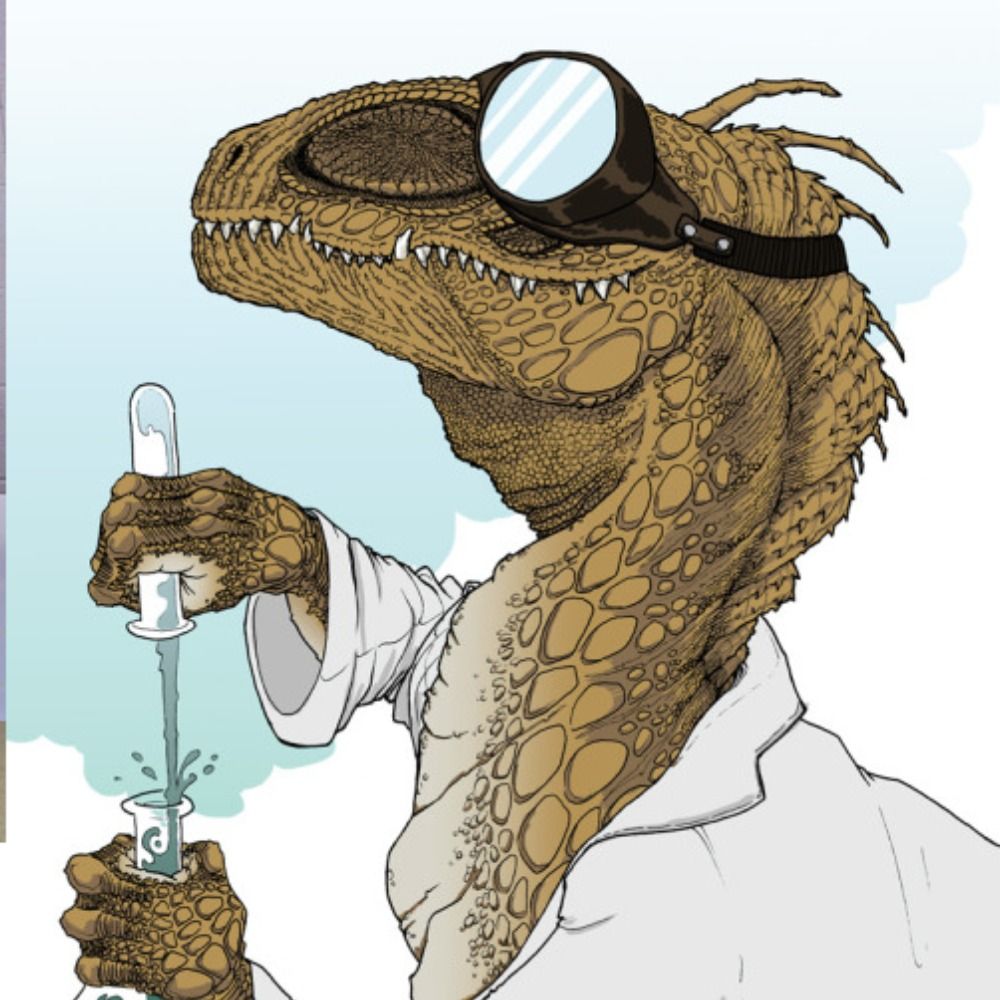
If you're referring to internal development of embryos, that's MUCH earlier than mammals. It's evolved >150 times, in sharks, reptiles, sort of all over the animal world. It's just a sort of delayed egg laying in most of those species (oviviviparity).
There's also various forms of 'matrotrophy'..
There's also various forms of 'matrotrophy'..

November 29, 2025 at 10:45 PM
If you're referring to internal development of embryos, that's MUCH earlier than mammals. It's evolved >150 times, in sharks, reptiles, sort of all over the animal world. It's just a sort of delayed egg laying in most of those species (oviviviparity).
There's also various forms of 'matrotrophy'..
There's also various forms of 'matrotrophy'..

Scaly Sunday
This western blue-tongued skink was spotted on a recent field trip in the AW region. Blue-tongues are among the largest members of the skink family. They are ovoviviparous – their young develop in eggs and hatch inside the mother’s body and are then born live.
#wildoz #reptiles #lizard
This western blue-tongued skink was spotted on a recent field trip in the AW region. Blue-tongues are among the largest members of the skink family. They are ovoviviparous – their young develop in eggs and hatch inside the mother’s body and are then born live.
#wildoz #reptiles #lizard

November 22, 2025 at 11:19 PM

Oh, right- you’re probably not familiar with the American Ovoviviparous Pigeon. They’re very common in certain parts of the country…
November 20, 2025 at 8:07 PM
Oh, right- you’re probably not familiar with the American Ovoviviparous Pigeon. They’re very common in certain parts of the country…

Fun fact about hissing cockroaches is that they are ovoviviparous, which means they lay eggs that they incubate in their bodies until the young hatches, at which point they’re born live
November 14, 2025 at 4:39 PM
Fun fact about hissing cockroaches is that they are ovoviviparous, which means they lay eggs that they incubate in their bodies until the young hatches, at which point they’re born live

OVOVIVIPAROUS SNAIL????????????????
November 9, 2025 at 7:16 AM
OVOVIVIPAROUS SNAIL????????????????

Ovoviviparous reproduction is when embryos develop inside eggs that remain within the mother’s body.
This type of birth occurs in a few chameleon species, such as the Jackson’s chameleon (Trioceros jacksoni) from East Africa.
This type of birth occurs in a few chameleon species, such as the Jackson’s chameleon (Trioceros jacksoni) from East Africa.
October 26, 2025 at 6:36 AM
Ovoviviparous reproduction is when embryos develop inside eggs that remain within the mother’s body.
This type of birth occurs in a few chameleon species, such as the Jackson’s chameleon (Trioceros jacksoni) from East Africa.
This type of birth occurs in a few chameleon species, such as the Jackson’s chameleon (Trioceros jacksoni) from East Africa.
Lizard of the day: Peers's girdled lizard!
A South African species! They have a pretty well armored skin! They mostly feed on caterpillars and other insects, and are ovoviviparous. Their skin tone may vary from grey to black.
A South African species! They have a pretty well armored skin! They mostly feed on caterpillars and other insects, and are ovoviviparous. Their skin tone may vary from grey to black.

October 25, 2025 at 6:20 PM
Lizard of the day: Peers's girdled lizard!
A South African species! They have a pretty well armored skin! They mostly feed on caterpillars and other insects, and are ovoviviparous. Their skin tone may vary from grey to black.
A South African species! They have a pretty well armored skin! They mostly feed on caterpillars and other insects, and are ovoviviparous. Their skin tone may vary from grey to black.
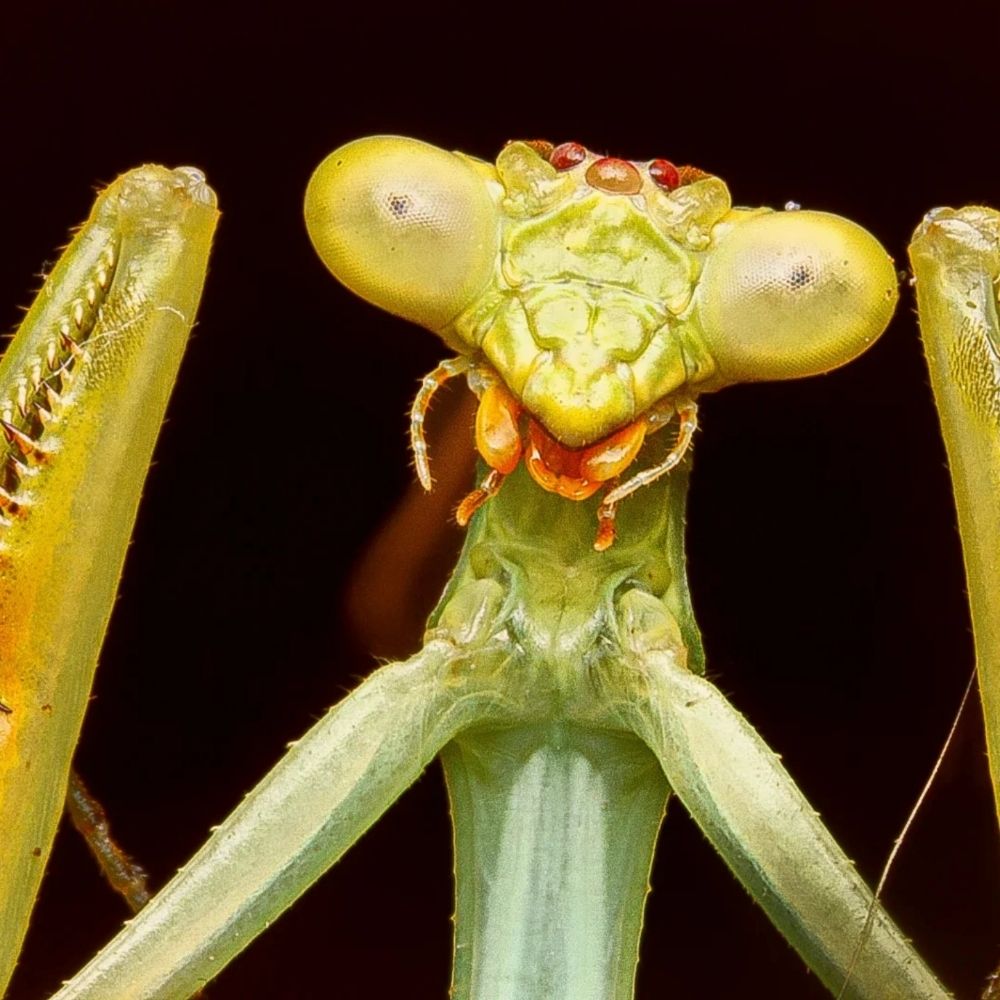
Family Sarcophagidae (Diptera): ovoviviparous flesh flies with gray-black thoracic stripes and a checkerboard abdomen, whose larvae develop in carrion, decaying matter or as arthropod parasitoids—key decomposers in ecosystems. 🧪


October 12, 2025 at 2:53 PM
Family Sarcophagidae (Diptera): ovoviviparous flesh flies with gray-black thoracic stripes and a checkerboard abdomen, whose larvae develop in carrion, decaying matter or as arthropod parasitoids—key decomposers in ecosystems. 🧪
Lizard of the day: Sungazer!
They owe their name to their peculiar pose when basking in the sun! Their scientific name, Smaug Giganteus, was taken from the legendary dragon from TLotR! They're South African, dig their own burrows and are ovoviviparous!
They owe their name to their peculiar pose when basking in the sun! Their scientific name, Smaug Giganteus, was taken from the legendary dragon from TLotR! They're South African, dig their own burrows and are ovoviviparous!

October 11, 2025 at 7:21 PM
Lizard of the day: Sungazer!
They owe their name to their peculiar pose when basking in the sun! Their scientific name, Smaug Giganteus, was taken from the legendary dragon from TLotR! They're South African, dig their own burrows and are ovoviviparous!
They owe their name to their peculiar pose when basking in the sun! Their scientific name, Smaug Giganteus, was taken from the legendary dragon from TLotR! They're South African, dig their own burrows and are ovoviviparous!
It was not easy to remember viparous, ovoviparous and ovoviviparous.
Snakes do it several ways.
www.zmescience.com/feature-post...
Snakes do it several ways.
www.zmescience.com/feature-post...

Do All Snakes Lay Eggs? It's Actually Pretty Complicated
A third of all snakes don't actually lay eggs.
www.zmescience.com
October 10, 2025 at 9:22 PM
It was not easy to remember viparous, ovoviparous and ovoviviparous.
Snakes do it several ways.
www.zmescience.com/feature-post...
Snakes do it several ways.
www.zmescience.com/feature-post...

Word of the Hour: Ovoviviparous - Oviparous but hatching the egg while it is within the body as some fishes and reptiles. #WordOfTheHour #WordOfTheDay
October 10, 2025 at 6:30 PM
Word of the Hour: Ovoviviparous - Oviparous but hatching the egg while it is within the body as some fishes and reptiles. #WordOfTheHour #WordOfTheDay
Ooh, I didn't know it about garter snakes either (despite them being the main native snek around my home), I just knew about boas being ovoviviparous from when I did reptile handling at the zoo. Learning lotsa cool snake facts today, thanks!
October 9, 2025 at 10:46 PM
Ooh, I didn't know it about garter snakes either (despite them being the main native snek around my home), I just knew about boas being ovoviviparous from when I did reptile handling at the zoo. Learning lotsa cool snake facts today, thanks!

Tiger sharks are the only sharks in the family Carcharhinidae that are ovoviviparous, which means they grow their embryos internally and nourish them from a yolk sac before giving birth to live, independent young.
📷: Chris Vaughan-Jones
📷: Chris Vaughan-Jones

October 9, 2025 at 5:13 PM
Tiger sharks are the only sharks in the family Carcharhinidae that are ovoviviparous, which means they grow their embryos internally and nourish them from a yolk sac before giving birth to live, independent young.
📷: Chris Vaughan-Jones
📷: Chris Vaughan-Jones

Today's aquatic friend is: Lamna ditropis, the Salmon Shark! these ~7' weigh around 400lbs on average. They are also ovoviviparous, which means they give live birth! They are capable of temp. regulation, a rarity among fish. Cold blood from their gills is heated by warm blood from their body. #fish

September 30, 2025 at 6:40 PM
Today's aquatic friend is: Lamna ditropis, the Salmon Shark! these ~7' weigh around 400lbs on average. They are also ovoviviparous, which means they give live birth! They are capable of temp. regulation, a rarity among fish. Cold blood from their gills is heated by warm blood from their body. #fish

Pretty guy and a nice fly...
A the noon fly, Mesembrina meridiana.
It lays eggs in cow dung, feeds on nectar and pollen, and is ovoviviparous.
It contributes to controlling the populations of other coprophagous insects.
#mesembrinameridiana #noonfly #muscidae #biodiversity #TG6 #naturephotography
A the noon fly, Mesembrina meridiana.
It lays eggs in cow dung, feeds on nectar and pollen, and is ovoviviparous.
It contributes to controlling the populations of other coprophagous insects.
#mesembrinameridiana #noonfly #muscidae #biodiversity #TG6 #naturephotography

September 22, 2025 at 10:02 PM
Pretty guy and a nice fly...
A the noon fly, Mesembrina meridiana.
It lays eggs in cow dung, feeds on nectar and pollen, and is ovoviviparous.
It contributes to controlling the populations of other coprophagous insects.
#mesembrinameridiana #noonfly #muscidae #biodiversity #TG6 #naturephotography
A the noon fly, Mesembrina meridiana.
It lays eggs in cow dung, feeds on nectar and pollen, and is ovoviviparous.
It contributes to controlling the populations of other coprophagous insects.
#mesembrinameridiana #noonfly #muscidae #biodiversity #TG6 #naturephotography
Do you plan to hatch them internally an ovoviviparous manner like many snakes and sharks or do you plan on laying them once they’re ready?
September 18, 2025 at 1:19 PM
Do you plan to hatch them internally an ovoviviparous manner like many snakes and sharks or do you plan on laying them once they’re ready?