



@badivad.bsky.social
American in Japan. Observer of things.
"Free your mind of the idea of deserving, the idea of earning, and you will begin to be able to think." –Ursula K. Le Guin
"Free your mind of the idea of deserving, the idea of earning, and you will begin to be able to think." –Ursula K. Le Guin
Reposted
We can live without billionaires but billionaires cannot live without us, in the same way that a body can live without cancer, but cancer cannot live without a body.
December 27, 2025 at 11:27 PM
We can live without billionaires but billionaires cannot live without us, in the same way that a body can live without cancer, but cancer cannot live without a body.
Reposted
Despite threats, billionaires don't leave the largest population centers, because it's where there is the most money to be had from the collective value generated by human beings, and despite what they insist, they don't generate wealth; they collect it.

“California is on a path to self-destruction,” wrote Bill Ackman, joining opposition to a tax proposal alongside Google’s cofounder and more.

Possible California Wealth Tax Causes Billionaire Freakout: Page, Thiel Threaten To Leave
“California is on a path to self-destruction,” wrote Bill Ackman, joining opposition to a tax proposal alongside Google’s cofounder and more.
www.forbes.com
December 27, 2025 at 11:26 PM
Despite threats, billionaires don't leave the largest population centers, because it's where there is the most money to be had from the collective value generated by human beings, and despite what they insist, they don't generate wealth; they collect it.
Reposted

They’re offering sparkling white supremacy same as they were when they called themselves “Western chauvinists” and “free speech absolutists” and “classical liberals” and and and

So what he's saying here is that Roger Taney is part of that adoptive family which must be worshipped but Frederick Douglass and David Walker and and William Lloyd Garrison and other fantastic spewers of venom against the founders were not

December 27, 2025 at 12:00 PM
They’re offering sparkling white supremacy same as they were when they called themselves “Western chauvinists” and “free speech absolutists” and “classical liberals” and and and
Reposted

more confirmation that lurking clearly behind this idea of the “heritage american” is a straightforward contempt for the actual history and tradition of this country, such that vermeule has to hallucinate a framework to justify his desire to jettison the clear meaning of the 14th amendment

I had missed this latest delirium by Adrian Vermeule on birthright citizenship
'Common law?! NAH, it's the Roman law of adoption that should govern the interpretation of the 14th Amendment of the US Constitution!'
thenewdigest.substack.com/p/immigratio...
'Common law?! NAH, it's the Roman law of adoption that should govern the interpretation of the 14th Amendment of the US Constitution!'
thenewdigest.substack.com/p/immigratio...


December 27, 2025 at 12:01 AM
more confirmation that lurking clearly behind this idea of the “heritage american” is a straightforward contempt for the actual history and tradition of this country, such that vermeule has to hallucinate a framework to justify his desire to jettison the clear meaning of the 14th amendment
Reposted

It doesn’t fix things, but it really does bring me comfort to know how miserable some of the worst people are. Donald Trump tweeting over 200 times on Christmas. Billionaires fighting with strangers online during the holidays. Everything about Elon Musk
December 26, 2025 at 5:25 AM
It doesn’t fix things, but it really does bring me comfort to know how miserable some of the worst people are. Donald Trump tweeting over 200 times on Christmas. Billionaires fighting with strangers online during the holidays. Everything about Elon Musk
Reposted

obviously the DOJ is chargeable with knowing what the SDNY does or doesnt have, and obviously this is a regime full of incompetent liars, but if you took this as true and pretended this was a normal world, everything said a few months ago about there being nothing to see is now definitionally a lie

December 25, 2025 at 3:40 AM
obviously the DOJ is chargeable with knowing what the SDNY does or doesnt have, and obviously this is a regime full of incompetent liars, but if you took this as true and pretended this was a normal world, everything said a few months ago about there being nothing to see is now definitionally a lie
Reposted
The Dunning-Kruger Effect and the Streisand Effect, when merged, become the Bari Weiss Effect
December 22, 2025 at 8:27 PM
The Dunning-Kruger Effect and the Streisand Effect, when merged, become the Bari Weiss Effect
Reposted

It’s one big grift and you’re not in it

NEW: Riley Gaines, the former collegiate swimmer turned right-wing media figure, made $474,313 last year from the conservative nonprofit org, the Leadership Institute. More striking than her total comp was the way it was structured.
For @sportico.bsky.social 👇
www.sportico.com/business/med...
For @sportico.bsky.social 👇
www.sportico.com/business/med...

Leadership Perks: Riley Gaines Scored Big Bonus From Nonprofit
Gaines, the former Kentucky swimmer turned OutKick commentator, banked $474,313 from the conservative political organization in 2024.
www.sportico.com
December 24, 2025 at 3:58 PM
It’s one big grift and you’re not in it
Reposted

If tech had "created riches on an unprecedented scale" we'd have much bigger productivity increases than in the past. We don't. So it's more accurate to say tech *captured* wealth on an unprecedented scale than created it. washingtonpost.com/politics/int...

December 24, 2025 at 5:30 PM
If tech had "created riches on an unprecedented scale" we'd have much bigger productivity increases than in the past. We don't. So it's more accurate to say tech *captured* wealth on an unprecedented scale than created it. washingtonpost.com/politics/int...
Reposted

This is some seriously disgusting and vile rhetoric.

“.. We need to get better at treating this like a business,” ICE acting director Todd M. Lyons said .. as efficiently as Amazon moves packages: “Like Prime, but with human beings.”
@washingtonpost.com
www.washingtonpost.com/business/202...
@washingtonpost.com
www.washingtonpost.com/business/202...

December 24, 2025 at 7:26 PM
This is some seriously disgusting and vile rhetoric.
Reposted

The people who profited most from the cancel culture/free speech panic were less interested in actual freedom of speech than establishing their own control over public discourse. You don't even have to take my word for it. www.theatlantic.com/ideas/2025/1...


December 23, 2025 at 6:17 PM
The people who profited most from the cancel culture/free speech panic were less interested in actual freedom of speech than establishing their own control over public discourse. You don't even have to take my word for it. www.theatlantic.com/ideas/2025/1...
Reposted

Don't you know that evangelicals are allowed to just vaguely hand-wave at the Bible to support whatever ridiculous, stupid, and bigoted opinions they want to have? It is the universal get out of jail free card.
As in "I have a religious objection to vaccines"
Really? Can you articulate it?
As in "I have a religious objection to vaccines"
Really? Can you articulate it?
December 24, 2025 at 9:08 PM
Don't you know that evangelicals are allowed to just vaguely hand-wave at the Bible to support whatever ridiculous, stupid, and bigoted opinions they want to have? It is the universal get out of jail free card.
As in "I have a religious objection to vaccines"
Really? Can you articulate it?
As in "I have a religious objection to vaccines"
Really? Can you articulate it?
Reposted
one little thing that really rankles about the reporting on this story is how they say she "cited" the bible. no she didn't! she alluded to it at best

The University of Oklahoma has removed an instructor who was accused by a student of religious discrimination over a failing grade on a psychology paper in which she cited the Bible and argued that promoting a “belief in multiple genders” was “demonic.” https://cnn.it/4b6g3rd

Oklahoma instructor removed from teaching for failing a Bible-based gender essay | CNN
The University of Oklahoma has removed an instructor who was accused by a student of religious discrimination over a failing grade on a psychology paper in which she cited the Bible and argued that promoting a “belief in multiple genders” was “demonic.”
cnn.it
December 24, 2025 at 8:45 PM
one little thing that really rankles about the reporting on this story is how they say she "cited" the bible. no she didn't! she alluded to it at best
Reposted
It was an unforgivable dereliction of duty that the majority of elected congressional Republican office holders were not in prison for open insurrection by March 2021.

I think it’s a reflection of their own attitudes. Both Biden and they were trying to live in a fantasy where those 4 years were a return to normalcy as opposed to the most urgent moment in American history to preserve what was left of democracy.
December 24, 2025 at 4:35 AM
It was an unforgivable dereliction of duty that the majority of elected congressional Republican office holders were not in prison for open insurrection by March 2021.
Reposted
really cannot be emphasized enough that bari weiss has literally never done journalism. i don’t mean that in the pejorative sense. i mean that in the “has never performed the job she was hired to do” sense

One explanation for Bari killing the story is that she did so as a public act of fealty to the administration. But another is that, as an inexperienced journalist, she doesn’t understand that a refusal to go on the record is a kind of comment in and of itself

December 22, 2025 at 2:19 PM
really cannot be emphasized enough that bari weiss has literally never done journalism. i don’t mean that in the pejorative sense. i mean that in the “has never performed the job she was hired to do” sense
Reposted

Year 1 data on congestion pricing in Manhattan…
* Vehicle traffic: -11%
* Foot traffic: +3.4%
* Storefront vacancy: -0.9%
* Pollution: -22%
* Revenue for mass transit: $548M
So YES this has been a huge success.
* Vehicle traffic: -11%
* Foot traffic: +3.4%
* Storefront vacancy: -0.9%
* Pollution: -22%
* Revenue for mass transit: $548M
So YES this has been a huge success.


December 23, 2025 at 2:00 PM
Year 1 data on congestion pricing in Manhattan…
* Vehicle traffic: -11%
* Foot traffic: +3.4%
* Storefront vacancy: -0.9%
* Pollution: -22%
* Revenue for mass transit: $548M
So YES this has been a huge success.
* Vehicle traffic: -11%
* Foot traffic: +3.4%
* Storefront vacancy: -0.9%
* Pollution: -22%
* Revenue for mass transit: $548M
So YES this has been a huge success.
Reposted

"the researchers found that withdrawing support for rapidly advancing mRNA vaccine technology could result in over 49,000 preventable deaths annually among patients diagnosed with four major cancers"

A new report from researchers at the Yale School of Public Health warns that the U.S. government’s abrupt cancellation of funding for mRNA vaccine research could have devastating health and economic consequences for the nation.

New report sounds alarm on health fallout from mRNA vaccine funding cuts
A new report from the Yale School of Public Health warns that the U.S. government’s abrupt cancellation of funding for mRNA vaccine research could have
ysph.yale.edu
December 23, 2025 at 2:50 AM
"the researchers found that withdrawing support for rapidly advancing mRNA vaccine technology could result in over 49,000 preventable deaths annually among patients diagnosed with four major cancers"
Reposted
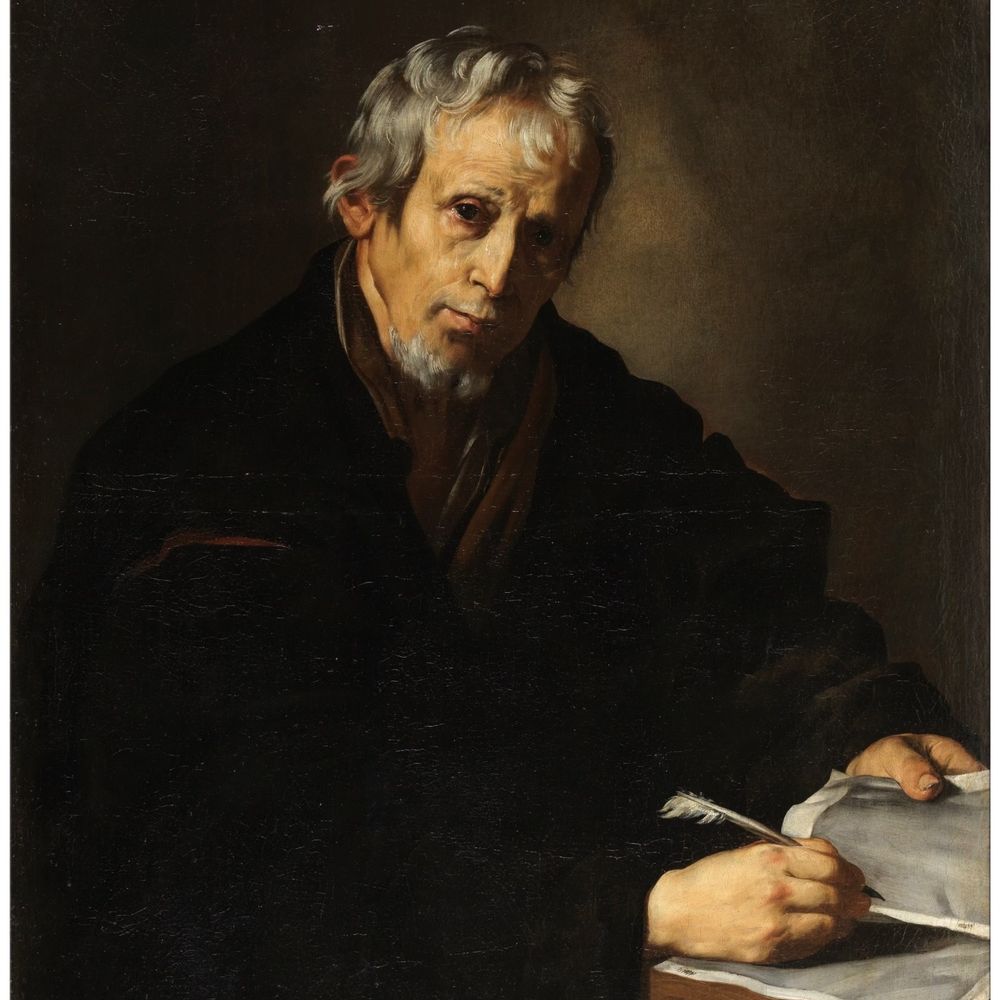
Under the immigration standards embraced by Stephen Miller, Stephen Miller and most of his family would have perished in the Holocaust.
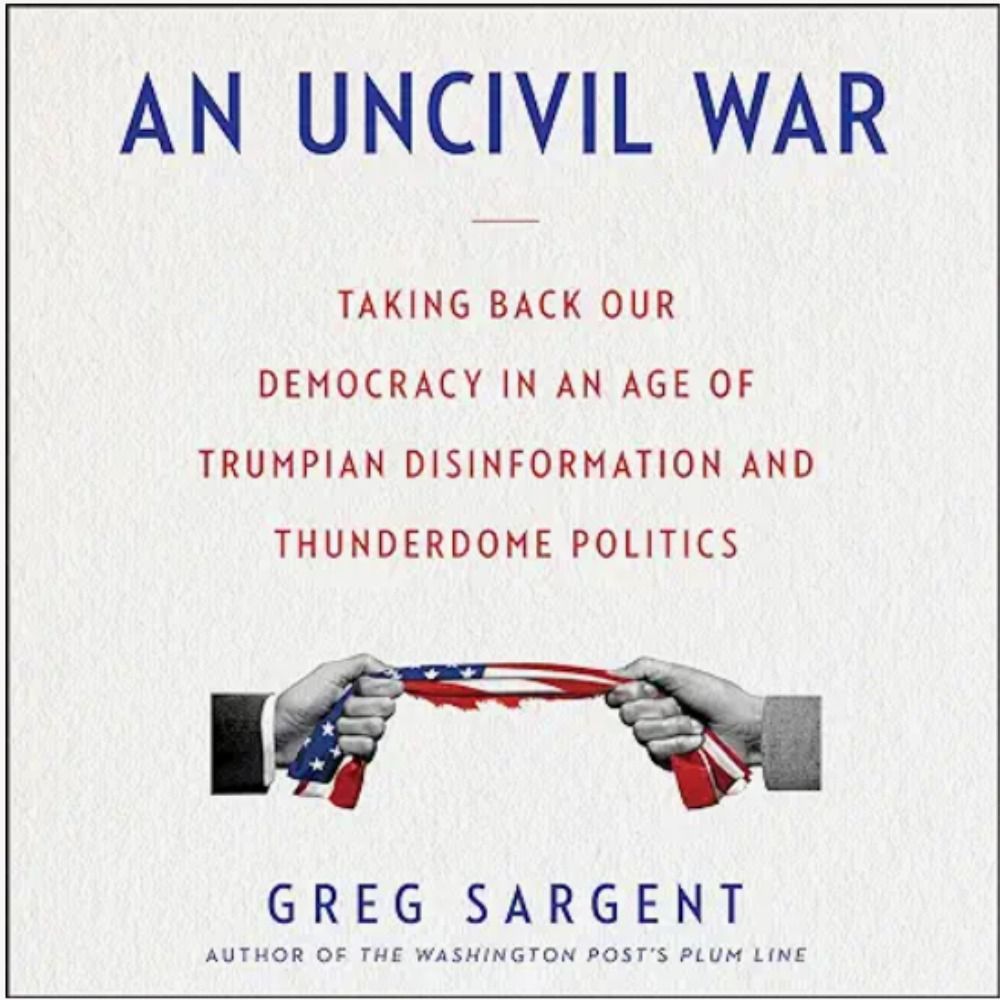
In our deep dive into Stephen Miller, we report that Miller praised Coolidge's 1924 restrictions even though an unpublished history of Miller's ancestry authored by his grandmother explicitly talked about how it closed the door on people like Miller's relatives:
newrepublic.com/article/2041...
newrepublic.com/article/2041...
December 23, 2025 at 2:25 PM
Under the immigration standards embraced by Stephen Miller, Stephen Miller and most of his family would have perished in the Holocaust.
Reposted
Mystified by Dems worriedly telling everyone to be careful because the letter is probably fake. There's no proof it's fake. Just take the win! Act like Republicans for once and run with it. Assume it's real. Donald Trump is a pedophile. Make headlines. Do TikTok videos. Shove it down their throats.
December 23, 2025 at 3:36 PM
Mystified by Dems worriedly telling everyone to be careful because the letter is probably fake. There's no proof it's fake. Just take the win! Act like Republicans for once and run with it. Assume it's real. Donald Trump is a pedophile. Make headlines. Do TikTok videos. Shove it down their throats.
Reposted

we, in the United States, through Trump’s mass deportation scheme, have engaged in abductions and torture for the past year, none of it in secret, much of it attested to in legal documents. there is nothing to expose, only to face.
December 22, 2025 at 11:10 PM
we, in the United States, through Trump’s mass deportation scheme, have engaged in abductions and torture for the past year, none of it in secret, much of it attested to in legal documents. there is nothing to expose, only to face.
Reposted

DOJ briefly uploaded this letter from Jeff Epstein to serial child molester Larry Nassar:
"Our president shares our love of young, nubile girls. When a young beauty walked by he loved to 'grab snatch,' whereas we ended up snatching grub in the mess halls of the system."
"Our president shares our love of young, nubile girls. When a young beauty walked by he loved to 'grab snatch,' whereas we ended up snatching grub in the mess halls of the system."

December 23, 2025 at 6:03 AM
DOJ briefly uploaded this letter from Jeff Epstein to serial child molester Larry Nassar:
"Our president shares our love of young, nubile girls. When a young beauty walked by he loved to 'grab snatch,' whereas we ended up snatching grub in the mess halls of the system."
"Our president shares our love of young, nubile girls. When a young beauty walked by he loved to 'grab snatch,' whereas we ended up snatching grub in the mess halls of the system."
Reposted

The full spiked 60 Minutes CECOT package, clean & subtitled. 1/5
December 23, 2025 at 1:28 AM
The full spiked 60 Minutes CECOT package, clean & subtitled. 1/5
Reposted

"Whit" is semi-fossilized in phrases like "I don't give a whit," but it's also lurking in "naught" and "naughty."
In Old English, the word for "nothing" was nawiht (na + wiht = "no thing" or "no amount").
(Wiht was used in the same general way we would use "thing" today. More on that in a sec.)
In Old English, the word for "nothing" was nawiht (na + wiht = "no thing" or "no amount").
(Wiht was used in the same general way we would use "thing" today. More on that in a sec.)
December 22, 2025 at 8:58 PM
"Whit" is semi-fossilized in phrases like "I don't give a whit," but it's also lurking in "naught" and "naughty."
In Old English, the word for "nothing" was nawiht (na + wiht = "no thing" or "no amount").
(Wiht was used in the same general way we would use "thing" today. More on that in a sec.)
In Old English, the word for "nothing" was nawiht (na + wiht = "no thing" or "no amount").
(Wiht was used in the same general way we would use "thing" today. More on that in a sec.)
Reposted
Nawiht became "naught." Naughty, therefore, literally means "nothingy."
It originally meant "poor" or "having nothing," which came to describe ill intent/bad behavior thanks to classism (poor people = vagabonds, criminals) plus a dash of the notion as we see in the modern phrase "moral bankruptcy."
It originally meant "poor" or "having nothing," which came to describe ill intent/bad behavior thanks to classism (poor people = vagabonds, criminals) plus a dash of the notion as we see in the modern phrase "moral bankruptcy."
December 22, 2025 at 8:58 PM
Nawiht became "naught." Naughty, therefore, literally means "nothingy."
It originally meant "poor" or "having nothing," which came to describe ill intent/bad behavior thanks to classism (poor people = vagabonds, criminals) plus a dash of the notion as we see in the modern phrase "moral bankruptcy."
It originally meant "poor" or "having nothing," which came to describe ill intent/bad behavior thanks to classism (poor people = vagabonds, criminals) plus a dash of the notion as we see in the modern phrase "moral bankruptcy."