




Jikkey
@jikkey.bsky.social
A Japanese political scientist migrated to Bluesky recently.
Thank You (Falettinme Be Mice Elf Agin)!
Thank You (Falettinme Be Mice Elf Agin)!
Reposted by Jikkey

Building on this work, I just published a new post on baby-name polarization: Is it politics … or just place? I dig into a core methodological concern: maybe what looks like partisan naming patterns are just urban-vs-rural sorting. inequalitybyinteriordesign.wordpress.com/2025/11/30/i...
November 30, 2025 at 3:56 PM
Building on this work, I just published a new post on baby-name polarization: Is it politics … or just place? I dig into a core methodological concern: maybe what looks like partisan naming patterns are just urban-vs-rural sorting. inequalitybyinteriordesign.wordpress.com/2025/11/30/i...
Reposted by Jikkey

Thanks to the authors for compiling this information; this view on our science is truly fascinating.
2023: 40% design-based, 40% model-based, 20% other, among quantitative studies aimed at "explanation" which I understand to mean causal inference.
Where we will be in 2043?
2023: 40% design-based, 40% model-based, 20% other, among quantitative studies aimed at "explanation" which I understand to mean causal inference.
Where we will be in 2043?

December 2, 2025 at 9:54 PM
Thanks to the authors for compiling this information; this view on our science is truly fascinating.
2023: 40% design-based, 40% model-based, 20% other, among quantitative studies aimed at "explanation" which I understand to mean causal inference.
Where we will be in 2043?
2023: 40% design-based, 40% model-based, 20% other, among quantitative studies aimed at "explanation" which I understand to mean causal inference.
Where we will be in 2043?
Reposted by Jikkey
I’ve been writing about political polarization in U.S. baby names, but kept running into a possible ecological fallacy: Are these political patterns or just urban v. rural geography?
So I tried to answer it definitively. inequalitybyinteriordesign.wordpress.com/2025/12/02/w...
So I tried to answer it definitively. inequalitybyinteriordesign.wordpress.com/2025/12/02/w...

Where Names Live: Mapping Baby Name Geography and Political Culture
Over the past few months, I’ve been writing about political polarization and baby naming practices in the United States (see HERE for the most recent piece). A consistent pattern kept showing up: s…
inequalitybyinteriordesign.wordpress.com
December 2, 2025 at 11:16 PM
I’ve been writing about political polarization in U.S. baby names, but kept running into a possible ecological fallacy: Are these political patterns or just urban v. rural geography?
So I tried to answer it definitively. inequalitybyinteriordesign.wordpress.com/2025/12/02/w...
So I tried to answer it definitively. inequalitybyinteriordesign.wordpress.com/2025/12/02/w...
Reposted by Jikkey

„the importance of sample size stemmed from small effect sizes across studies (perhaps smaller than researchers may have anticipated), highlighting a tension between commonly used power calculi and determining what constitutes a “meaningful effect.“

Needed - larger samples, more realism about (the lack of) heterogeneous treatment effects:
-"less than a third of proposed hypotheses were supported... the largest predictor of positive exp. results was sample size"
-"moderation hypotheses were rarely significant"
academic.oup.com/poq/advance-...
-"less than a third of proposed hypotheses were supported... the largest predictor of positive exp. results was sample size"
-"moderation hypotheses were rarely significant"
academic.oup.com/poq/advance-...

An Audit of Social Science Survey Experiments
Abstract. Survey experiments have become a popular methodology for causal inference across the social sciences. We study the efficacy of survey experiment
academic.oup.com
November 30, 2025 at 3:57 PM
„the importance of sample size stemmed from small effect sizes across studies (perhaps smaller than researchers may have anticipated), highlighting a tension between commonly used power calculi and determining what constitutes a “meaningful effect.“
Reposted by Jikkey
Sorry this is coming so late. Here are links to the articles made available 11/18/25
Carpenter: doi.org/10.1093/psqu...
Lee: doi.org/10.1093/psqu...
Schickler: doi.org/10.1093/psqu...
King: doi.org/10.1093/psqu...
Hutchings: doi.org/10.1093/psqu...
Bartels: doi.org/10.1093/psqu...
Carpenter: doi.org/10.1093/psqu...
Lee: doi.org/10.1093/psqu...
Schickler: doi.org/10.1093/psqu...
King: doi.org/10.1093/psqu...
Hutchings: doi.org/10.1093/psqu...
Bartels: doi.org/10.1093/psqu...

Authoritarian State Conversion: America's Past and the Trumpian Future
Abstract. Is American government becoming authoritarian, and if so, how? Converting a nonautocratic state to authoritarian ends requires at least three tra
doi.org
November 20, 2025 at 10:58 PM
Sorry this is coming so late. Here are links to the articles made available 11/18/25
Carpenter: doi.org/10.1093/psqu...
Lee: doi.org/10.1093/psqu...
Schickler: doi.org/10.1093/psqu...
King: doi.org/10.1093/psqu...
Hutchings: doi.org/10.1093/psqu...
Bartels: doi.org/10.1093/psqu...
Carpenter: doi.org/10.1093/psqu...
Lee: doi.org/10.1093/psqu...
Schickler: doi.org/10.1093/psqu...
King: doi.org/10.1093/psqu...
Hutchings: doi.org/10.1093/psqu...
Bartels: doi.org/10.1093/psqu...
Reposted by Jikkey

The Eric Schickler essay in Larry Bartel's symposium on "What Trump Has Taught Us About Political Science" is one of the most insightful pieces I've read in 2025.
US institutions turned out to be weak, and we have to rethink conventional wisdom.
open access: academic.oup.com/psq/advance-...
US institutions turned out to be weak, and we have to rethink conventional wisdom.
open access: academic.oup.com/psq/advance-...

November 19, 2025 at 8:08 PM
The Eric Schickler essay in Larry Bartel's symposium on "What Trump Has Taught Us About Political Science" is one of the most insightful pieces I've read in 2025.
US institutions turned out to be weak, and we have to rethink conventional wisdom.
open access: academic.oup.com/psq/advance-...
US institutions turned out to be weak, and we have to rethink conventional wisdom.
open access: academic.oup.com/psq/advance-...
Reposted by Jikkey

Post-liberalism’s finest
See also Curtis Yarvin's remarks in a recent Oxford lecture:
"Say what you want about MBS, he's quite an effective king I think in a lot of different ways. Um love the Ritz thing, the whole Saudi embassy thing, I don't know, but I mean he was a journalist". [Giggles]
www.youtube.com/watch?v=zXYl...
"Say what you want about MBS, he's quite an effective king I think in a lot of different ways. Um love the Ritz thing, the whole Saudi embassy thing, I don't know, but I mean he was a journalist". [Giggles]
www.youtube.com/watch?v=zXYl...
November 18, 2025 at 10:37 PM
Post-liberalism’s finest
Reposted by Jikkey

There is very little evidence that “moderate” candidates do better in general (though there may be specific districts where it’s an advantage
bsky.app/profile/dave...
bsky.app/profile/dave...
The next section is them pounding the table, insisting that moderate candidates do better than progressive candidates.
SMH. I'm just gonna link to @adambonica.bsky.social and @jakemgrumbach.bsky.social on this one. They've done the work already.
data4democracy.substack.com/p/do-moderat...
SMH. I'm just gonna link to @adambonica.bsky.social and @jakemgrumbach.bsky.social on this one. They've done the work already.
data4democracy.substack.com/p/do-moderat...

Do Moderates Do Better?
Uncovering Bias in Split Ticket’s WAR Scores
data4democracy.substack.com
October 28, 2025 at 10:01 PM
There is very little evidence that “moderate” candidates do better in general (though there may be specific districts where it’s an advantage
bsky.app/profile/dave...
bsky.app/profile/dave...
Reposted by Jikkey

Nothing is inevitable. In either direction. Hope and work.

“52% of all autocratization episodes become U-Turns, which increases to 73% when focusing on the last 30 years. The vast majority of U-Turns (90%) lead to restored or even improved levels of democracy”
V-Dem data
V-Dem data

When autocratization is reversed: episodes of U-Turns since 1900
The world is in a “wave of autocratization.” Yet, recent events in Brazil, the Maldives, and Zambia demonstrate that autocratization can be halted and reversed. This article introduces “U-Turn” as ...
www.tandfonline.com
September 20, 2025 at 7:22 PM
Nothing is inevitable. In either direction. Hope and work.
Reposted by Jikkey

This is a fantastic and much needed contribution. Highly recommend to anyone interested in building strong designs for rigorous empirical work with networks.

Designing Empirical Social Networks Research by Jennifer M. Larson
An introduction to the study of social networks, with a focus on theory-building to guide empirical research design.
New in the Methods for Social Inquiry series #ResearchMethods
📚 cup.org/3VDut9L
An introduction to the study of social networks, with a focus on theory-building to guide empirical research design.
New in the Methods for Social Inquiry series #ResearchMethods
📚 cup.org/3VDut9L

Designing Empirical Social Networks Research
Cambridge Core - Research Methods In Politics - Designing Empirical Social Networks Research
cup.org
September 17, 2025 at 6:30 PM
This is a fantastic and much needed contribution. Highly recommend to anyone interested in building strong designs for rigorous empirical work with networks.
Reposted by Jikkey

Thanks to @jpeaceresearch.bsky.social for giving us the possibility to guest edit a special issue on "Political violence in democracies". Ursula Daxecker, @neerajprsd.bsky.social and I wrote an open access introduction: journals.sagepub.com/doi/full/10....
Thanks to all authors of 14 articles!
Thanks to all authors of 14 articles!

Political violence in democracies: An Introduction - Andrea Ruggeri, Ursula Daxecker, Neeraj Prasad, 2025
It is well established that democracies experience less political violence than autocracies. Paradoxically, however, this widely accepted fact has led scholars ...
journals.sagepub.com
September 9, 2025 at 4:39 PM
Thanks to @jpeaceresearch.bsky.social for giving us the possibility to guest edit a special issue on "Political violence in democracies". Ursula Daxecker, @neerajprsd.bsky.social and I wrote an open access introduction: journals.sagepub.com/doi/full/10....
Thanks to all authors of 14 articles!
Thanks to all authors of 14 articles!
Reposted by Jikkey

As of today it's a Real Object.

August 19, 2025 at 11:46 PM
As of today it's a Real Object.
Reposted by Jikkey

New by @ericfeltham.bsky.social, Laura Forastiere, and @nachristakis.bsky.social: an extraordinarily ambitious effort to scale up and bring Krackhardt's classic work on cognitive social structures (CSSs) into the 21st century. Super excited to see it in print. www.nature.com/articles/s41...
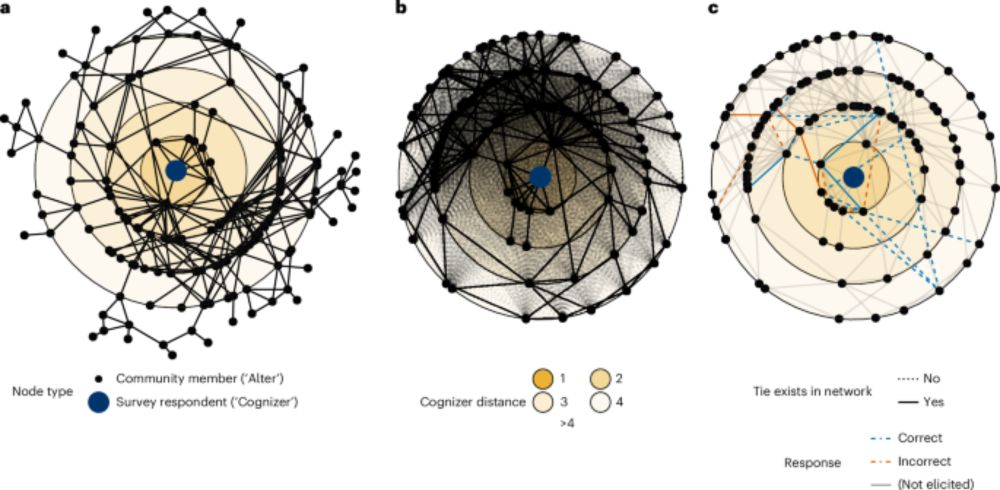
Cognitive representations of social networks in isolated villages - Nature Human Behaviour
Feltham et al. develop a sampling strategy to evaluate social network cognition across 82 Honduran villages, systematically mapping the underlying village networks.
www.nature.com
June 16, 2025 at 9:30 PM
New by @ericfeltham.bsky.social, Laura Forastiere, and @nachristakis.bsky.social: an extraordinarily ambitious effort to scale up and bring Krackhardt's classic work on cognitive social structures (CSSs) into the 21st century. Super excited to see it in print. www.nature.com/articles/s41...
Reposted by Jikkey

"Building alternative institutions outside of gov. that reduce reliance on the authoritarian regime, lessen its power and relevance over day-to-day life, and preserve sites of independent thought can be vital both in preserving science and in defending democracy." www.science.org/doi/10.1126/...

Scientists’ role in defending democracy
The United States’ democratic leadership, commitment to freedom of expression, and investment in the pursuit of knowledge have long enabled its preeminence in science and technology. Yet today we are ...
www.science.org
August 15, 2025 at 5:18 AM
"Building alternative institutions outside of gov. that reduce reliance on the authoritarian regime, lessen its power and relevance over day-to-day life, and preserve sites of independent thought can be vital both in preserving science and in defending democracy." www.science.org/doi/10.1126/...
Reposted by Jikkey

Here is Bonica and Grumbach’s from yesterday. This may seem petty to some but it’s important for the parties as they look to recruit candidates for the next few cycles. bsky.app/profile/adam...

We took a close look at Split Ticket's WAR metric, which has become influential in Democratic circles for suggesting moderates significantly outperform progressives.
Our finding: The metric contains systematic biases that overstate the advantage of moderation. A corrected model shows no advantage.🧵
Our finding: The metric contains systematic biases that overstate the advantage of moderation. A corrected model shows no advantage.🧵
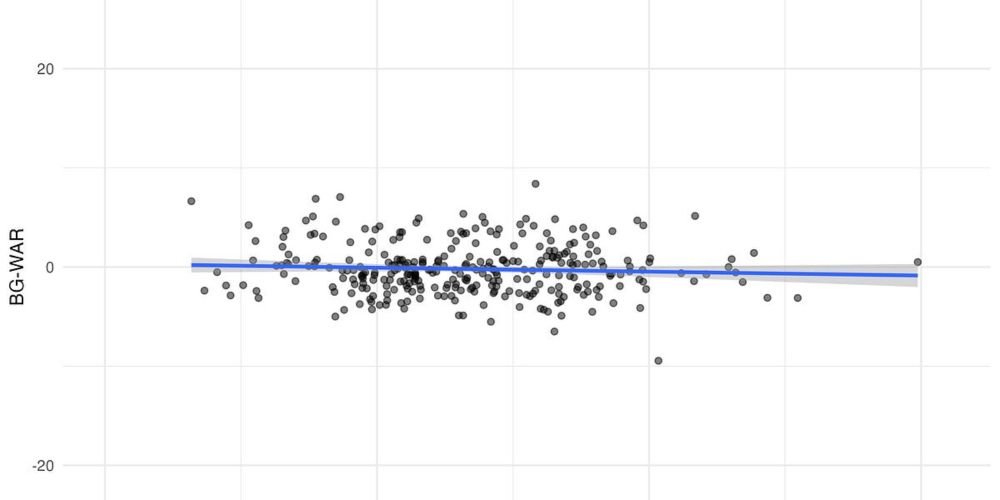
Do Moderates Do Better?
Uncovering Bias in Split Ticket’s WAR Scores
data4democracy.substack.com
August 15, 2025 at 2:55 PM
Here is Bonica and Grumbach’s from yesterday. This may seem petty to some but it’s important for the parties as they look to recruit candidates for the next few cycles. bsky.app/profile/adam...
Reposted by Jikkey
OK here's the blog post.
1) Split Ticket's WAR model is biased in favor of moderates
2) We create our own WAR measure w/ stronger model; correlates w/ @gelliottmorris.com's
3) Correlation ≠ causation. Diff-in-diffs & RDDs show no moderation effects
data4democracy.substack.com/p/do-moderat...
1) Split Ticket's WAR model is biased in favor of moderates
2) We create our own WAR measure w/ stronger model; correlates w/ @gelliottmorris.com's
3) Correlation ≠ causation. Diff-in-diffs & RDDs show no moderation effects
data4democracy.substack.com/p/do-moderat...
August 14, 2025 at 8:08 PM
OK here's the blog post.
1) Split Ticket's WAR model is biased in favor of moderates
2) We create our own WAR measure w/ stronger model; correlates w/ @gelliottmorris.com's
3) Correlation ≠ causation. Diff-in-diffs & RDDs show no moderation effects
data4democracy.substack.com/p/do-moderat...
1) Split Ticket's WAR model is biased in favor of moderates
2) We create our own WAR measure w/ stronger model; correlates w/ @gelliottmorris.com's
3) Correlation ≠ causation. Diff-in-diffs & RDDs show no moderation effects
data4democracy.substack.com/p/do-moderat...
Reposted by Jikkey
"In short, the agreement gives legal form to an extortion scheme—the first of its kind!—that defies the relevant statutes as well as the constitutional separation of powers and the First Amendment."
We are back to a medieval state-formation model, see Tilly here
journals.sagepub.com/doi/10.1177/...
We are back to a medieval state-formation model, see Tilly here
journals.sagepub.com/doi/10.1177/...
August 9, 2025 at 7:53 PM
"In short, the agreement gives legal form to an extortion scheme—the first of its kind!—that defies the relevant statutes as well as the constitutional separation of powers and the First Amendment."
We are back to a medieval state-formation model, see Tilly here
journals.sagepub.com/doi/10.1177/...
We are back to a medieval state-formation model, see Tilly here
journals.sagepub.com/doi/10.1177/...
Reposted by Jikkey
"How Trump is reshaping government data. The Trump administration has influenced data used by researchers, economists and scientists — an effort that drew more attention after the president fired the head of the Bureau of Labor Statistics." www.nbcnews.com/politics/don...

How Trump is reshaping government data
The Trump administration has influenced data used by researchers, economists and scientists — an effort that drew more attention after the president fired the head of the Bureau of Labor Statistics.
www.nbcnews.com
August 5, 2025 at 5:45 PM
"How Trump is reshaping government data. The Trump administration has influenced data used by researchers, economists and scientists — an effort that drew more attention after the president fired the head of the Bureau of Labor Statistics." www.nbcnews.com/politics/don...
Reposted by Jikkey

“just 68% of the 7,057 researchers whose work had produced null results had shared them in some form, and just 30% had tried to publish them in a journal.”
What a joke.
#NullEffectsMatter
www.nature.com/articles/d41...
What a joke.
#NullEffectsMatter
www.nature.com/articles/d41...

Researchers value null results, but struggle to publish them
Survey finds that fear of reputational harm and a lack of support and publication platforms are among respondents’ key concerns.
www.nature.com
July 24, 2025 at 12:33 AM
“just 68% of the 7,057 researchers whose work had produced null results had shared them in some form, and just 30% had tried to publish them in a journal.”
What a joke.
#NullEffectsMatter
www.nature.com/articles/d41...
What a joke.
#NullEffectsMatter
www.nature.com/articles/d41...
Reposted by Jikkey

Check out Consenus AI! Deep Search is its agentic search mode that runs incredible full literature reviews across 200 million papers in minutes. consensus.app

Search - Consensus: AI Search Engine for Research
Consensus is a search engine that uses AI to find answers in scientific research.
consensus.app
July 10, 2025 at 10:48 PM
Check out Consenus AI! Deep Search is its agentic search mode that runs incredible full literature reviews across 200 million papers in minutes. consensus.app
Reposted by Jikkey
As platforms reduce moderation, toxic/threatening content may rise. If you're doing digital culture/discourse rsrch, come & learn more re: our Civility Analyzer, which offers researchers an accessible, data-driven approach to studying prosocial & harmful behaviours. socialmedialab.ca/2025/06/28/2...

2025 Social Media Lab - Computational Social Science Summer School - Online [July 14-16, 2025 via Zoom] - Social Media Lab
Where: online (via Zoom) When: July 14-16, 2024 Contact Info [email protected] @SMLabTO INSTRUCTORS Join us for the Social Media Lab’s 2025 Computational Social Science (CSS) Summer School. E...
socialmedialab.ca
July 1, 2025 at 7:08 PM
As platforms reduce moderation, toxic/threatening content may rise. If you're doing digital culture/discourse rsrch, come & learn more re: our Civility Analyzer, which offers researchers an accessible, data-driven approach to studying prosocial & harmful behaviours. socialmedialab.ca/2025/06/28/2...
Reposted by Jikkey
Join us for the Social Media Lab’s 2025 Computational Social Science (CSS) Summer School. Explore cutting-edge digital methods in this hands-on workshop series. No coding required. socialmedialab.ca/2025/06/28/2...
2025 Social Media Lab - Computational Social Science Summer School - Online [July 14-16, 2025 via Zoom] - Social Media Lab
Where: online (via Zoom) When: July 14-16, 2024 Contact Info [email protected] @SMLabTO INSTRUCTORS Join us for the Social Media Lab’s 2025 Computational Social Science (CSS) Summer School. E...
socialmedialab.ca
June 30, 2025 at 9:08 PM
Join us for the Social Media Lab’s 2025 Computational Social Science (CSS) Summer School. Explore cutting-edge digital methods in this hands-on workshop series. No coding required. socialmedialab.ca/2025/06/28/2...
Reposted by Jikkey

Don’t give anyone ideas…

@jbf1755.bsky.social I think we should bring this back.

June 28, 2025 at 9:22 PM
Don’t give anyone ideas…
Reposted by Jikkey

今さら感はあるのだけど/初めてのMyGPT作り note.com/yearman/n/n2...

初めてのMyGPT作り|まつーらとしお
ChatGPTに課金していると自作のGPT(AIチャットボット)を作ることができる。夏に勉強しようとは思っているんだけど、他大学の授業でレポートの初期添削にこChatGPTのAPIを使っている話を聞いて、自分のクラスだけならととりあえず試作してみることにした。 今の授業で困りごととまではいかないのだけど、添削してもそこから直して提出まで数日だとちょっと難しいとか、何度も見れないとかあり、それなら...
note.com
June 22, 2025 at 6:59 AM
今さら感はあるのだけど/初めてのMyGPT作り note.com/yearman/n/n2...