



Milo Imbeni
@pyramidalmilo.bsky.social
PhD in Maastricht, microglia and microscopes
Reposted by Milo Imbeni

Microglia adopt fundamentally different strategies for surveilling the health of neurons during chronic neurodegeneration.
buff.ly/77pl2x9
buff.ly/77pl2x9

December 23, 2025 at 11:02 AM
Microglia adopt fundamentally different strategies for surveilling the health of neurons during chronic neurodegeneration.
buff.ly/77pl2x9
buff.ly/77pl2x9
Reposted by Milo Imbeni

IMP1 regulates actin in microglia – nervous system immune cells – as they reorganise in response to challenge
📷 Josune Imaz-Iruretagoyena
et al Achucarro Basque Center for Neuroscience
in @plosbiology.org
➡️ bpod.org.uk/archive/2025... with
@antdlewis.bsky.social
📷 Josune Imaz-Iruretagoyena
et al Achucarro Basque Center for Neuroscience
in @plosbiology.org
➡️ bpod.org.uk/archive/2025... with
@antdlewis.bsky.social

December 24, 2025 at 11:34 AM
IMP1 regulates actin in microglia – nervous system immune cells – as they reorganise in response to challenge
📷 Josune Imaz-Iruretagoyena
et al Achucarro Basque Center for Neuroscience
in @plosbiology.org
➡️ bpod.org.uk/archive/2025... with
@antdlewis.bsky.social
📷 Josune Imaz-Iruretagoyena
et al Achucarro Basque Center for Neuroscience
in @plosbiology.org
➡️ bpod.org.uk/archive/2025... with
@antdlewis.bsky.social
Reposted by Milo Imbeni

Systemic administration of PD-L1 blocking antibodies leads to removal of senescent microglia #NeuroDegeneration 🧪🧠
https://www.biorxiv.org/content/10.64898/2025.12.22.695923v1
https://www.biorxiv.org/content/10.64898/2025.12.22.695923v1
December 25, 2025 at 8:01 AM
Systemic administration of PD-L1 blocking antibodies leads to removal of senescent microglia #NeuroDegeneration 🧪🧠
https://www.biorxiv.org/content/10.64898/2025.12.22.695923v1
https://www.biorxiv.org/content/10.64898/2025.12.22.695923v1
Reposted by Milo Imbeni

Bhat et al. Lightweight open-source fine-tuning of SAM2 enables domain-specific microscopy segmentation.
www.biorxiv.org/content/10.1...
www.biorxiv.org/content/10.1...
December 26, 2025 at 3:06 PM
Bhat et al. Lightweight open-source fine-tuning of SAM2 enables domain-specific microscopy segmentation.
www.biorxiv.org/content/10.1...
www.biorxiv.org/content/10.1...
Reposted by Milo Imbeni
Uddin et al.
Deep Disentangled Representation Learning Reveals Neuron Subtype-Specific Nuclear Morphologies Across Aging in Mice and Humans
www.biorxiv.org/content/10.1...
Deep Disentangled Representation Learning Reveals Neuron Subtype-Specific Nuclear Morphologies Across Aging in Mice and Humans
www.biorxiv.org/content/10.1...
December 26, 2025 at 3:01 PM
Uddin et al.
Deep Disentangled Representation Learning Reveals Neuron Subtype-Specific Nuclear Morphologies Across Aging in Mice and Humans
www.biorxiv.org/content/10.1...
Deep Disentangled Representation Learning Reveals Neuron Subtype-Specific Nuclear Morphologies Across Aging in Mice and Humans
www.biorxiv.org/content/10.1...
Reposted by Milo Imbeni
Grandgirard et al NucGen3D: a Synthetic Framework for Large-Scale 3D Nuclear Segmentation with Open-Source Training Data AND Models www.biorxiv.org/content/10.1...

NucGen3D: a Synthetic Framework for Large-Scale 3D Nuclear Segmentation with Open-Source Training Data AND Models
Robust nuclear segmentation in 3D microscopy images is a critical yet unresolved challenge in quantitative cell biology, hindered by the scarcity and variability of annotated volumetric datasets. Beca...
www.biorxiv.org
December 26, 2025 at 3:00 PM
Grandgirard et al NucGen3D: a Synthetic Framework for Large-Scale 3D Nuclear Segmentation with Open-Source Training Data AND Models www.biorxiv.org/content/10.1...
Reposted by Milo Imbeni

In a #ScienceReview from earlier this year, researchers provide a critical evaluation of research linking glymphatic dysfunction with Alzheimer’s disease.
Learn more: https://scim.ag/4qhg28c
Learn more: https://scim.ag/4qhg28c

Glymphatic dysfunction in Alzheimer’s disease: A critical appraisal
Thirteen years after the initial publication defining the glymphatic system, we critically reappraise the role of its dysfunction in Alzheimer’s disease (AD). Our understanding of glymphatic function ...
scim.ag
December 25, 2025 at 2:24 PM
In a #ScienceReview from earlier this year, researchers provide a critical evaluation of research linking glymphatic dysfunction with Alzheimer’s disease.
Learn more: https://scim.ag/4qhg28c
Learn more: https://scim.ag/4qhg28c
Reposted by Milo Imbeni

NASA’s SPHEREx space telescope has completed its first infrared map of the entire sky!
This is the most comprehensive spectral view of the infrared sky, with 102 colors (or wavelengths) of infrared light from observations made between May and December 2025.
🧪 ⚛️ 🔭
This is the most comprehensive spectral view of the infrared sky, with 102 colors (or wavelengths) of infrared light from observations made between May and December 2025.
🧪 ⚛️ 🔭

December 23, 2025 at 9:45 PM
NASA’s SPHEREx space telescope has completed its first infrared map of the entire sky!
This is the most comprehensive spectral view of the infrared sky, with 102 colors (or wavelengths) of infrared light from observations made between May and December 2025.
🧪 ⚛️ 🔭
This is the most comprehensive spectral view of the infrared sky, with 102 colors (or wavelengths) of infrared light from observations made between May and December 2025.
🧪 ⚛️ 🔭
'Tis the season


December 24, 2025 at 12:23 PM
'Tis the season
Reposted by Milo Imbeni

The organization of function is mostly determined by anatomical connectivity, but that’s quite different from cytoarchitecture, which is how Brodmann areas are defined.
Connectivity-defined areas probably don't have compact blobby shapes, and are definitely patchy.
Connectivity-defined areas probably don't have compact blobby shapes, and are definitely patchy.
December 23, 2025 at 1:02 PM
The organization of function is mostly determined by anatomical connectivity, but that’s quite different from cytoarchitecture, which is how Brodmann areas are defined.
Connectivity-defined areas probably don't have compact blobby shapes, and are definitely patchy.
Connectivity-defined areas probably don't have compact blobby shapes, and are definitely patchy.
Reposted by Milo Imbeni
Here’s a great paper (one of the precious few) comparing connectivity-based areas to cytoarchitectural areas, from Marie Carlen’s lab. The connectivity maps were the ones that predicted function.
www.biorxiv.org/content/10.1...
www.biorxiv.org/content/10.1...

A Prefrontal Cortex Map based on Single Neuron Activity
The intrinsic organization underlying the central cognitive role of the prefrontal cortex (PFC) is poorly understood. The work to date has been dominated by cytoarchitecture as a canvas for studies on...
www.biorxiv.org
December 23, 2025 at 1:02 PM
Here’s a great paper (one of the precious few) comparing connectivity-based areas to cytoarchitectural areas, from Marie Carlen’s lab. The connectivity maps were the ones that predicted function.
www.biorxiv.org/content/10.1...
www.biorxiv.org/content/10.1...
Reposted by Milo Imbeni
New Perspective from myself, Sarah Heilbronner and @myoo.bsky.social . “Rethinking the centrality of brain areas in understanding functional organization” in Nature Neuroscience. 🧵
rdcu.be/eVZ1A
rdcu.be/eVZ1A

Rethinking the centrality of brain areas in understanding functional organization
Nature Neuroscience - Parcellation of the cortex into functionally modular brain areas is foundational to neuroscience. Here, Hayden, Heilbronner and Yoo question the central status of brain areas...
rdcu.be
December 23, 2025 at 1:02 PM
New Perspective from myself, Sarah Heilbronner and @myoo.bsky.social . “Rethinking the centrality of brain areas in understanding functional organization” in Nature Neuroscience. 🧵
rdcu.be/eVZ1A
rdcu.be/eVZ1A
Reposted by Milo Imbeni

and the winner of the "2025 best thing on Internet" has just arrived
neal.fun/size-of-life/
@carlbergstrom.com
neal.fun/size-of-life/
@carlbergstrom.com

Size of Life
From an amoeba to a blue whale
neal.fun
December 23, 2025 at 4:07 PM
and the winner of the "2025 best thing on Internet" has just arrived
neal.fun/size-of-life/
@carlbergstrom.com
neal.fun/size-of-life/
@carlbergstrom.com
Reposted by Milo Imbeni

A must-read review. It argues that brain areas are only one of several organizing principles and are not especially central, given their weak correspondence to function. Cytoarchitecture and connectivity are a starting point, not the endpoint.
www.nature.com/articles/s41...
#neuroscience
www.nature.com/articles/s41...
#neuroscience

Rethinking the centrality of brain areas in understanding functional organization - Nature Neuroscience
Parcellation of the cortex into functionally modular brain areas is foundational to neuroscience. Here, Hayden, Heilbronner and Yoo question the central status of brain areas in neuroscience from the ...
www.nature.com
December 23, 2025 at 5:21 PM
A must-read review. It argues that brain areas are only one of several organizing principles and are not especially central, given their weak correspondence to function. Cytoarchitecture and connectivity are a starting point, not the endpoint.
www.nature.com/articles/s41...
#neuroscience
www.nature.com/articles/s41...
#neuroscience
Reposted by Milo Imbeni

The case against AI music feels, to many, intuitive—but the implications of its popularity are much bigger than a few more cringe songs. Spencer Kornhaber explores:

AI Is Testing What Society Wants From Music
The emerging technology is warping the record industry in all sorts of strange—and foreboding—ways.
bit.ly
December 22, 2025 at 1:30 PM
The case against AI music feels, to many, intuitive—but the implications of its popularity are much bigger than a few more cringe songs. Spencer Kornhaber explores:
Reposted by Milo Imbeni
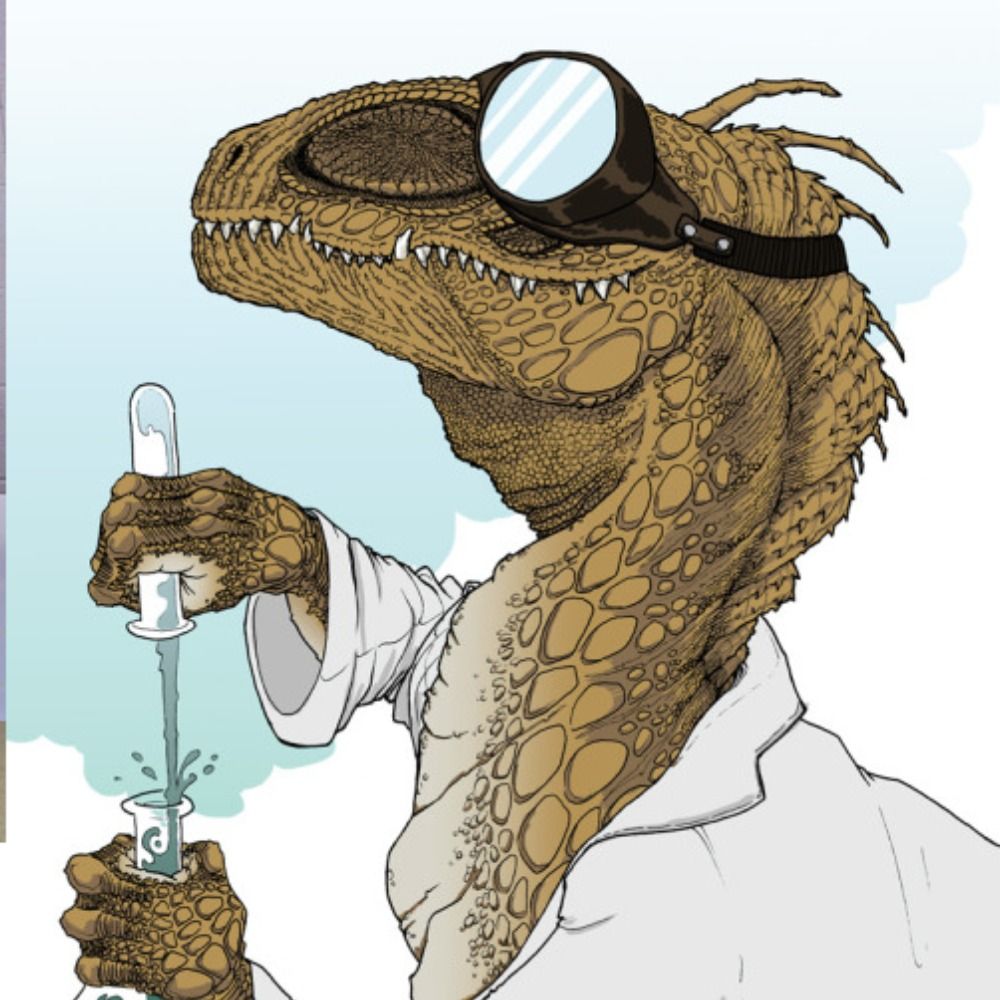
So reindeer (Rangifer tarandus) can't fly, but they are VERY MAGICAL.
For example, their EYES CHANGE COLOR during the year & they're one of the few large mammals that can see UV. Golden brown in summer, deep blue in winter.
Let's talk about the unique visual adaptations of Rudolph and company.
For example, their EYES CHANGE COLOR during the year & they're one of the few large mammals that can see UV. Golden brown in summer, deep blue in winter.
Let's talk about the unique visual adaptations of Rudolph and company.

December 20, 2025 at 11:36 PM
So reindeer (Rangifer tarandus) can't fly, but they are VERY MAGICAL.
For example, their EYES CHANGE COLOR during the year & they're one of the few large mammals that can see UV. Golden brown in summer, deep blue in winter.
Let's talk about the unique visual adaptations of Rudolph and company.
For example, their EYES CHANGE COLOR during the year & they're one of the few large mammals that can see UV. Golden brown in summer, deep blue in winter.
Let's talk about the unique visual adaptations of Rudolph and company.
Reposted by Milo Imbeni
Members of WarsawGliaComm Publish 🔬🧬🧪
Proud to highlight the new study from Anna Malik Lab in NatComm! Brilliant insights into how astrocyte distress triggers brain pathology via δ-secretase. Check it out!
👉 www.nature.com/articles/s41...
#neuroscience #glia #Warsaw
Proud to highlight the new study from Anna Malik Lab in NatComm! Brilliant insights into how astrocyte distress triggers brain pathology via δ-secretase. Check it out!
👉 www.nature.com/articles/s41...
#neuroscience #glia #Warsaw

Astrocytes distress triggers brain pathology through induction of δ secretase in a murine model of Alzheimer’s disease - Nature Communications
The role of astrocytes in Alzheimer’s disease pathology remains insufficiently characterized. Here, the authors show that aggravated astrocyte response to Aβ causes brain inflammation, and amyloid and...
www.nature.com
December 18, 2025 at 8:29 AM
Members of WarsawGliaComm Publish 🔬🧬🧪
Proud to highlight the new study from Anna Malik Lab in NatComm! Brilliant insights into how astrocyte distress triggers brain pathology via δ-secretase. Check it out!
👉 www.nature.com/articles/s41...
#neuroscience #glia #Warsaw
Proud to highlight the new study from Anna Malik Lab in NatComm! Brilliant insights into how astrocyte distress triggers brain pathology via δ-secretase. Check it out!
👉 www.nature.com/articles/s41...
#neuroscience #glia #Warsaw
Reposted by Milo Imbeni

Organelles do NOT have a single uniform pH.
And if you think they must, because “protons diffuse fast,” this paper is for you.
A thread on why that assumption is wrong; and what we found instead. 🧵 1/n
And if you think they must, because “protons diffuse fast,” this paper is for you.
A thread on why that assumption is wrong; and what we found instead. 🧵 1/n

Organelles harbour pH gradients https://www.biorxiv.org/content/10.64898/2025.12.12.694065v1
December 17, 2025 at 12:46 AM
Organelles do NOT have a single uniform pH.
And if you think they must, because “protons diffuse fast,” this paper is for you.
A thread on why that assumption is wrong; and what we found instead. 🧵 1/n
And if you think they must, because “protons diffuse fast,” this paper is for you.
A thread on why that assumption is wrong; and what we found instead. 🧵 1/n
Reposted by Milo Imbeni
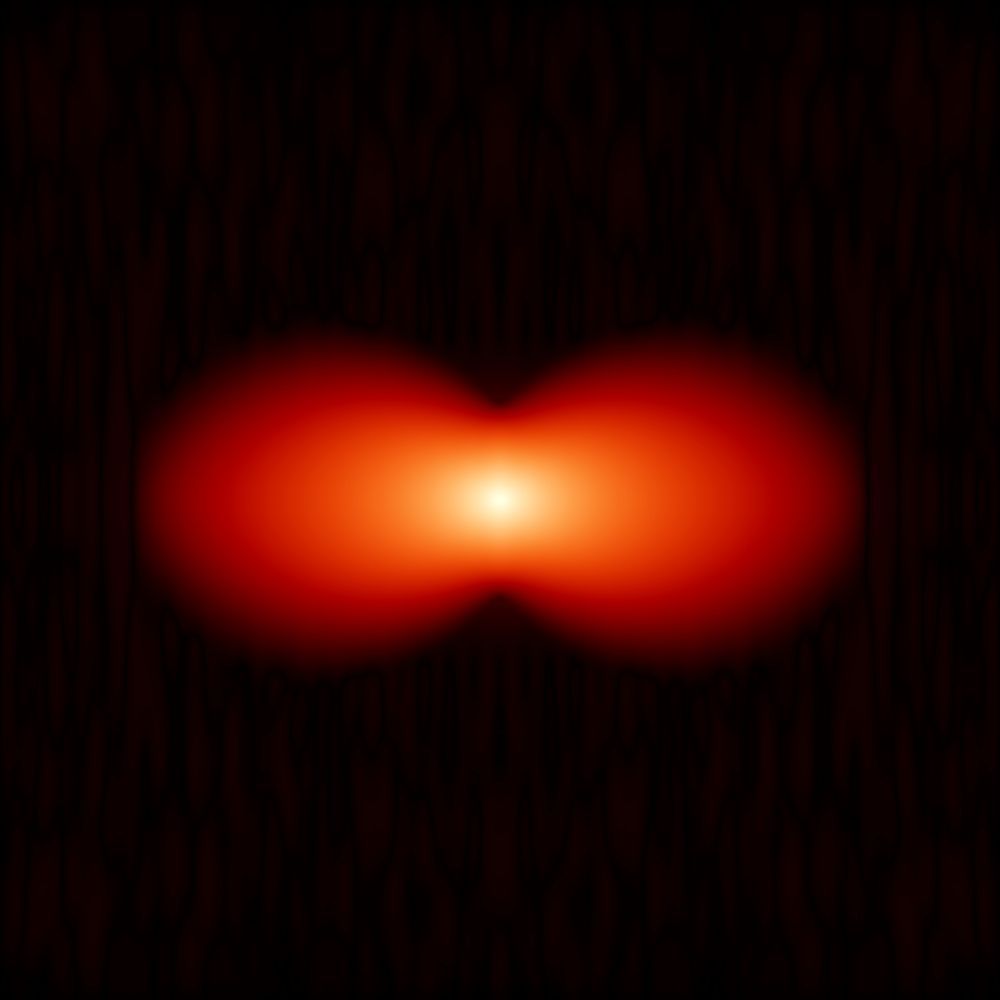
Now published with peer-review-induced improvements in Biomedical Optics Express: doi.org/10.1364/BOE.579043
We continue to recommend the use of Sarstedt lumox dishes for ease of use and high-quality imaging performance: bsky.app/profile/jame...
We continue to recommend the use of Sarstedt lumox dishes for ease of use and high-quality imaging performance: bsky.app/profile/jame...
We present a simple method to easily increase the imageable depth of an expansion microscopy gel on a typical inverted microscope ten-fold, using some carefully placed FEP film and a water dipping objective lens:
December 15, 2025 at 3:41 PM
Now published with peer-review-induced improvements in Biomedical Optics Express: doi.org/10.1364/BOE.579043
We continue to recommend the use of Sarstedt lumox dishes for ease of use and high-quality imaging performance: bsky.app/profile/jame...
We continue to recommend the use of Sarstedt lumox dishes for ease of use and high-quality imaging performance: bsky.app/profile/jame...
Reposted by Milo Imbeni
Our group has been looking at beta bursts for the last 5 years, but we do it a little differently than most - we group into types them based on their waveforms. In this open access article we lay out why and what we think this might mean
journals.sagepub.com/doi/10.1177/...
#neuroskyence
journals.sagepub.com/doi/10.1177/...
#neuroskyence

December 12, 2025 at 10:00 AM
Our group has been looking at beta bursts for the last 5 years, but we do it a little differently than most - we group into types them based on their waveforms. In this open access article we lay out why and what we think this might mean
journals.sagepub.com/doi/10.1177/...
#neuroskyence
journals.sagepub.com/doi/10.1177/...
#neuroskyence
Reposted by Milo Imbeni

#fluorescencefriday microglia (yellow) and Abeta plaques (magenta) in our AD mouse model in 3D from a cleared 🧠 using @lifecanvastech.bsky.social SHIELD Courtesy of @shahrzadbahrampour.bsky.social and @nadiahaghbinphd.bsky.social with @mind-western.bsky.social and @neuroak.bsky.social Low-res.
December 12, 2025 at 2:04 PM
#fluorescencefriday microglia (yellow) and Abeta plaques (magenta) in our AD mouse model in 3D from a cleared 🧠 using @lifecanvastech.bsky.social SHIELD Courtesy of @shahrzadbahrampour.bsky.social and @nadiahaghbinphd.bsky.social with @mind-western.bsky.social and @neuroak.bsky.social Low-res.
Reposted by Milo Imbeni

Absolutely amazing chart from @peterkellner.bsky.social's piece in @thenewworldmag.bsky.social today:
www.thenewworld.co.uk/peter-kellne...
www.thenewworld.co.uk/peter-kellne...

December 9, 2025 at 9:58 PM
Absolutely amazing chart from @peterkellner.bsky.social's piece in @thenewworldmag.bsky.social today:
www.thenewworld.co.uk/peter-kellne...
www.thenewworld.co.uk/peter-kellne...


Reposted by Milo Imbeni

Neuronal APOE4 alone is sufficient to drive tau pathology, neurodegeneration, and neuroinflammation in an Alzheimer's disease mouse model https://www.biorxiv.org/content/10.1101/2025.11.25.690488v1
November 29, 2025 at 5:15 PM
Neuronal APOE4 alone is sufficient to drive tau pathology, neurodegeneration, and neuroinflammation in an Alzheimer's disease mouse model https://www.biorxiv.org/content/10.1101/2025.11.25.690488v1
Reposted by Milo Imbeni
An issue we're seeing at all levels of university is that many students are simply refusing to do *anything*. They aren't reading the syllabus, aren't following assignment guidelines, aren't engaging with material, ignoring deadlines. And this might seem like old news, but it truly has ramped up.
November 28, 2025 at 10:15 PM
An issue we're seeing at all levels of university is that many students are simply refusing to do *anything*. They aren't reading the syllabus, aren't following assignment guidelines, aren't engaging with material, ignoring deadlines. And this might seem like old news, but it truly has ramped up.