



Ben Hall
@hallben.bsky.social
Professor in computational cancer biology at UCL interested in disease, mutations, and aging. Funded by CRUK, MRC and Royal Society.
Personal account for science, code, music, photography! “Tired is the new awake”
Personal account for science, code, music, photography! “Tired is the new awake”
Pinned
Ben Hall
@hallben.bsky.social
· Nov 3

UCL – University College London
UCL is consistently ranked as one of the top ten universities in the world (QS World University Rankings 2010-2022) and is No.2 in the UK for research power (Research Excellence Framework 2021).
www.ucl.ac.uk
Very excited to share an advert for a new lecturer position in Computational Cancer at UCL! Permanent position at assistant professor level- join a growing community at UCL in a cutting edge discipline.
Please share widely!
www.ucl.ac.uk/work-at-ucl/...
Please share widely!
www.ucl.ac.uk/work-at-ucl/...
Inspiring computational #cancer careers session yesterday with speakers from J&J and AZ!
Interested in the field? On Friday I’m giving a lecture to introduce our new MSc Computational Cancer. Register below:
www.ucl.ac.uk/engineering/...
Interested in the field? On Friday I’m giving a lecture to introduce our new MSc Computational Cancer. Register below:
www.ucl.ac.uk/engineering/...

February 11, 2026 at 3:37 PM
Inspiring computational #cancer careers session yesterday with speakers from J&J and AZ!
Interested in the field? On Friday I’m giving a lecture to introduce our new MSc Computational Cancer. Register below:
www.ucl.ac.uk/engineering/...
Interested in the field? On Friday I’m giving a lecture to introduce our new MSc Computational Cancer. Register below:
www.ucl.ac.uk/engineering/...
Reposted by Ben Hall

Reposted by Ben Hall
'To John, these informal talks were the real work of science: listening, encouraging, connecting. He spoke not only with his own group but with anyone who passed through (...) Many of our conversations happened there, in that ordinary room that he made extraordinary, simply by how he inhabited it.'

John Gurdon 1933–2025 - Nature Biotechnology
Nature Biotechnology - John Gurdon 1933–2025
www.nature.com
February 10, 2026 at 10:43 AM
'To John, these informal talks were the real work of science: listening, encouraging, connecting. He spoke not only with his own group but with anyone who passed through (...) Many of our conversations happened there, in that ordinary room that he made extraordinary, simply by how he inhabited it.'
Reposted by Ben Hall
Short thread on our new paper. We use face mask efficacy research as a “stress test” for systematic review methods. We analysed 66 systematic reviews of face mask efficacy; they reached widely different conclusions (~half said they work, half said that evidence of efficacy was lacking). 1/
Our new paper:
Synthesis challenges in complex evidence: A critical analysis of systematic reviews of face mask efficacy
#episky #healthpolicy #medsky
www.cambridge.org/core/journal...
Synthesis challenges in complex evidence: A critical analysis of systematic reviews of face mask efficacy
#episky #healthpolicy #medsky
www.cambridge.org/core/journal...
Synthesis challenges in complex evidence: A critical analysis of systematic reviews of face mask efficacy | Research Synthesis Methods | Cambridge Core
Synthesis challenges in complex evidence: A critical analysis of systematic reviews of face mask efficacy
www.cambridge.org
February 8, 2026 at 10:18 AM
Short thread on our new paper. We use face mask efficacy research as a “stress test” for systematic review methods. We analysed 66 systematic reviews of face mask efficacy; they reached widely different conclusions (~half said they work, half said that evidence of efficacy was lacking). 1/
Reposted by Ben Hall

Yesterday we came together to honour Professor Raymond Dwek through the naming of the Raymond Dwek Seminar Room. Raymond's family (pictured) joined the celebration and Raymond was visibly touched, saying: "Thank you for this amazing gesture. I'm humbled by it, but I will treasure it."

February 6, 2026 at 2:29 PM
Yesterday we came together to honour Professor Raymond Dwek through the naming of the Raymond Dwek Seminar Room. Raymond's family (pictured) joined the celebration and Raymond was visibly touched, saying: "Thank you for this amazing gesture. I'm humbled by it, but I will treasure it."
Reposted by Ben Hall

The way UK govt funds science is in the midst of a major transition, with creation of a much more direct link between government priorities & UKRI research funding.
My attempt to set in context the biggest upheaval in UK science funding policy since the 1980s:
softmachines.org?p=3252
My attempt to set in context the biggest upheaval in UK science funding policy since the 1980s:
softmachines.org?p=3252
UK science policy in transition – Soft Machines, by Richard Jones
softmachines.org
February 6, 2026 at 8:48 AM
The way UK govt funds science is in the midst of a major transition, with creation of a much more direct link between government priorities & UKRI research funding.
My attempt to set in context the biggest upheaval in UK science funding policy since the 1980s:
softmachines.org?p=3252
My attempt to set in context the biggest upheaval in UK science funding policy since the 1980s:
softmachines.org?p=3252
Reposted by Ben Hall

So now we have it- not only the reduction from 12-13 to 3 grants from each board recommended for funding but the budget for applicant-led research to be reduced from £200 million to £113 million per year. This is appalling, Especially given all that is happening with medical research in the US.
Medical Research Council ‘will fund fewer applicant-led grants’.
Confirmation from deputy leader comes as council restructures investments, with calls on hold until summer.
www.researchprofessionalnews.com/rr-news-uk-r...
Confirmation from deputy leader comes as council restructures investments, with calls on hold until summer.
www.researchprofessionalnews.com/rr-news-uk-r...

Medical Research Council ‘will fund fewer applicant-led grants’ - Research Professional News
Confirmation from deputy leader comes as council restructures investments, with calls on hold until summer
www.researchprofessionalnews.com
February 6, 2026 at 10:04 AM
So now we have it- not only the reduction from 12-13 to 3 grants from each board recommended for funding but the budget for applicant-led research to be reduced from £200 million to £113 million per year. This is appalling, Especially given all that is happening with medical research in the US.
Reposted by Ben Hall

A new study has found that 38% of the nearly 20m new cancers worldwide in 2022 were caused by preventable factors. Two risks stand out virtually everywhere

More than a third of cancers arise from preventable risks
Smoking, infections and alcohol are the top causes
econ.st
February 5, 2026 at 5:20 PM
A new study has found that 38% of the nearly 20m new cancers worldwide in 2022 were caused by preventable factors. Two risks stand out virtually everywhere
Reposted by Ben Hall
The #UCL World Cancer Day: Public Lecture streamed on Youtube is very (over)optimistic about the role of AI in drug design and in silico clinical trials (ouch). Computer people always overestimate the reliability of data. One day, perhaps (and perhaps not). www.youtube.com/live/T2um3A7...

World Cancer Day: Public Lecture
YouTube video by UCL
www.youtube.com
February 5, 2026 at 5:31 PM
The #UCL World Cancer Day: Public Lecture streamed on Youtube is very (over)optimistic about the role of AI in drug design and in silico clinical trials (ouch). Computer people always overestimate the reliability of data. One day, perhaps (and perhaps not). www.youtube.com/live/T2um3A7...
Reposted by Ben Hall
One week to our computational cancer careers event! With speakers (Marta Ewa Polak Elizabeth Coker and Cassandra Kosmidou, PhD ) from pharma, venture capital and academia, join us next Tuesday to learn about careers in this growing domain!
register online!
www.eventbrite.co.uk/e/shaping-ca...
register online!
www.eventbrite.co.uk/e/shaping-ca...

Shaping Cancer Research with Computation
Careers Across Academia and Industry
www.eventbrite.co.uk
February 3, 2026 at 9:00 AM
One week to our computational cancer careers event! With speakers (Marta Ewa Polak Elizabeth Coker and Cassandra Kosmidou, PhD ) from pharma, venture capital and academia, join us next Tuesday to learn about careers in this growing domain!
register online!
www.eventbrite.co.uk/e/shaping-ca...
register online!
www.eventbrite.co.uk/e/shaping-ca...
Reposted by Ben Hall

❄️☕👩🏻💻A Game-Changing 20 Years: Progress and Future Directions in Lung Cancer Screening - Journal of Thoracic Oncology www.jto.org/article/S155...

A Game-Changing 20 Years: Progress and Future Directions in Lung Cancer Screening
In the past two decades, lung cancer screening (LCS) with low-dose computed tomography
(LDCT) has emerged as one of the most effective strategies for reducing lung cancer
mortality. Landmark trials, i...
www.jto.org
February 4, 2026 at 11:26 AM
❄️☕👩🏻💻A Game-Changing 20 Years: Progress and Future Directions in Lung Cancer Screening - Journal of Thoracic Oncology www.jto.org/article/S155...
One week to our computational cancer careers event! With speakers (Marta Ewa Polak Elizabeth Coker and Cassandra Kosmidou, PhD ) from pharma, venture capital and academia, join us next Tuesday to learn about careers in this growing domain!
register online!
www.eventbrite.co.uk/e/shaping-ca...
register online!
www.eventbrite.co.uk/e/shaping-ca...
Shaping Cancer Research with Computation
Careers Across Academia and Industry
www.eventbrite.co.uk
February 3, 2026 at 9:00 AM
One week to our computational cancer careers event! With speakers (Marta Ewa Polak Elizabeth Coker and Cassandra Kosmidou, PhD ) from pharma, venture capital and academia, join us next Tuesday to learn about careers in this growing domain!
register online!
www.eventbrite.co.uk/e/shaping-ca...
register online!
www.eventbrite.co.uk/e/shaping-ca...
Reposted by Ben Hall
AstraZeneca is hiring in Predictive Science, Digital, and Automation and you even get my face on your screen. Being real, this is an awesome department to work in though #chemjobs #UKchemjobs #EUchemjobs www.linkedin.com/posts/nessac...

Not 100% sure whether becoming *my* new colleague is a win or a threat, 😂 but the amazing PSDA group at AstraZeneca is looking for new faces to join a clever, fun, and interdisciplinary team! I… | Nes...
Not 100% sure whether becoming *my* new colleague is a win or a threat, 😂 but the amazing PSDA group at AstraZeneca is looking for new faces to join a clever, fun, and interdisciplinary team! I believ...
www.linkedin.com
February 3, 2026 at 8:10 AM
AstraZeneca is hiring in Predictive Science, Digital, and Automation and you even get my face on your screen. Being real, this is an awesome department to work in though #chemjobs #UKchemjobs #EUchemjobs www.linkedin.com/posts/nessac...
Reposted by Ben Hall

Pretty extraordinary to think about how much cardiovascular researchers figured out, and how that turned into public health campaigns, medicines, surgeries, and emergency care that changed millions of people's lives.
ourworldindata.org/cardiovascul...
ourworldindata.org/cardiovascul...

January 31, 2026 at 2:54 PM
Pretty extraordinary to think about how much cardiovascular researchers figured out, and how that turned into public health campaigns, medicines, surgeries, and emergency care that changed millions of people's lives.
ourworldindata.org/cardiovascul...
ourworldindata.org/cardiovascul...
Reposted by Ben Hall

#UKsciencefundingcrisis MRC,BBSRC,EPSRC paused researcher-led grants until Spring. This means no funds in 2026 as evaluation takes 6-9 months. Projects halted, staff, knowledge loss. We need to challenge this and the lack of info and clarity. #ScienceisVital #academicSky
shorturl.at/ag03S
shorturl.at/ag03S

UK science funding is currently facing a profound crisis, particularly for Life Sciences. Medical Research Council and BBSRC have paused researcher-led grant applications until the Spring, with no… | ...
UK science funding is currently facing a profound crisis, particularly for Life Sciences. Medical Research Council and BBSRC have paused researcher-led grant applications until the Spring, with no cle...
www.linkedin.com
January 31, 2026 at 2:23 PM
#UKsciencefundingcrisis MRC,BBSRC,EPSRC paused researcher-led grants until Spring. This means no funds in 2026 as evaluation takes 6-9 months. Projects halted, staff, knowledge loss. We need to challenge this and the lack of info and clarity. #ScienceisVital #academicSky
shorturl.at/ag03S
shorturl.at/ag03S
Reposted by Ben Hall

Reposted by Ben Hall

MRC instructs grant review boards to slash funding rates.
Boards asked to recommend just three applications for funding, as BBSRC also suspends calls.
www.researchprofessionalnews.com/rr-news-uk-r...
Boards asked to recommend just three applications for funding, as BBSRC also suspends calls.
www.researchprofessionalnews.com/rr-news-uk-r...

MRC instructs grant review boards to slash funding rates - Research Professional News
Boards asked to recommend just three applications for funding, as BBSRC also suspends calls
www.researchprofessionalnews.com
January 30, 2026 at 7:53 AM
MRC instructs grant review boards to slash funding rates.
Boards asked to recommend just three applications for funding, as BBSRC also suspends calls.
www.researchprofessionalnews.com/rr-news-uk-r...
Boards asked to recommend just three applications for funding, as BBSRC also suspends calls.
www.researchprofessionalnews.com/rr-news-uk-r...
Reposted by Ben Hall

AI tools are immensely powerful. The use of AI as a general purpose chat bot that is used like an encyclopaedia is the worst possible use of AI. AI is now, given good instructions from a knowledgeable user, capable of doing absolutely vast amounts of work extremely fast.

lots of people, especially on here, are fastened onto the idea that it's just AI bro marketing or whatever to consider it a fixture of the information landscape. it's easy to think that when everyone in your circles is an ethical AI refuser. but I'm afraid it really has been mass adopted.
January 29, 2026 at 9:09 AM
AI tools are immensely powerful. The use of AI as a general purpose chat bot that is used like an encyclopaedia is the worst possible use of AI. AI is now, given good instructions from a knowledgeable user, capable of doing absolutely vast amounts of work extremely fast.
Reposted by Ben Hall

Miller & Wankowicz (2026) Binding Entropy Can Be Predicted by Crystallographic Ensembles. #bioRxiv #preprint #CompChem #PhysChem #biophys #cheminformatics #chemsky 🧪
doi.org/10.64898/202...
doi.org/10.64898/202...
Binding Entropy Can Be Predicted by Crystallographic Ensembles
Protein-ligand binding is governed by free energy, comprising both enthalpic and entropic contributions. Yet structural interpretations of binding thermodynamics have predominantly focused on enthalpic interactions, largely neglecting entropy because it is difficult to quantify from static structural models. Here, we developed multiconformer ensemble models to analyze high-resolution X-ray crystallography structures and estimate both protein and solvent conformational entropies. These ensemble models successfully predicted experimental binding entropies measured by isothermal titration calorimetry for over 70 protein-ligand pairs across 12 proteins, revealing a strong linear correlation. Protein entropy, estimated using crystallographic order parameters that capture both harmonic and anharmonic motion, correlates linearly with experimental binding entropy. Incorporating resolution-corrected differences in water-molecule counts substantially improves predictions, demonstrating that protein and solvent contributions must be considered jointly. Analysis of water-protein hydrogen bonding networks partially explains entropic differences across complexes. These results establish that crystallographic ensembles can quantify binding entropy, enabling explicit entropic considerations in structure-based studies of molecular recognition for both functional analysis and drug design. ### Competing Interest Statement The authors have declared no competing interest. American Cancer Society, https://ror.org/02e463172
doi.org
January 29, 2026 at 10:36 AM
Miller & Wankowicz (2026) Binding Entropy Can Be Predicted by Crystallographic Ensembles. #bioRxiv #preprint #CompChem #PhysChem #biophys #cheminformatics #chemsky 🧪
doi.org/10.64898/202...
doi.org/10.64898/202...
Reposted by Ben Hall

oh, this is really good on what @joxley.jmoxley.co.uk calls "airport book brain", where glib "solutions" are jumped on by politicians who want smooth narratives, discarding nuance and complexity. Complete with a nice pop at Jonathan Haidt, and at the "UPF" brigade, too. (ht @rorycj.bsky.social)

Airport Book Brain
How faddish ideas keep seducing.
www.joxleywrites.jmoxley.co.uk
January 23, 2026 at 9:55 AM
oh, this is really good on what @joxley.jmoxley.co.uk calls "airport book brain", where glib "solutions" are jumped on by politicians who want smooth narratives, discarding nuance and complexity. Complete with a nice pop at Jonathan Haidt, and at the "UPF" brigade, too. (ht @rorycj.bsky.social)
Reposted by Ben Hall
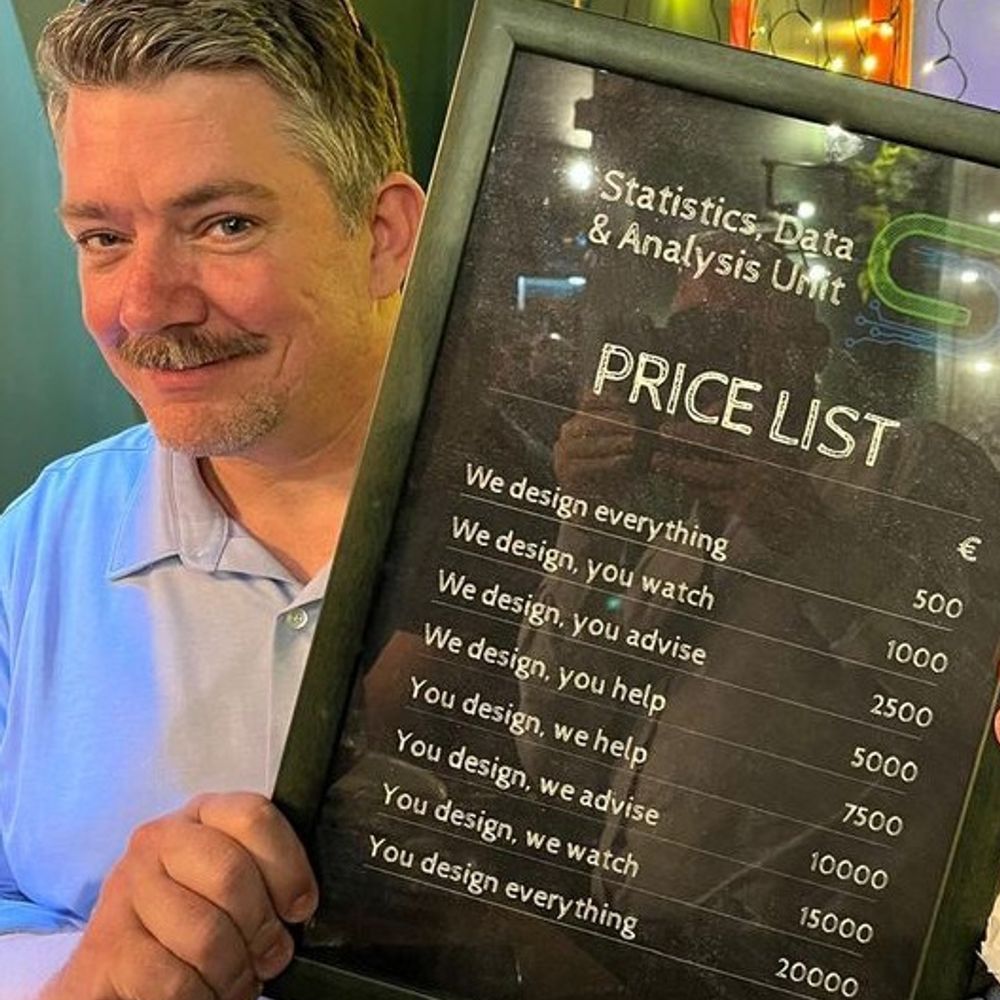
Finally, the evidence I needed to show my kids that, "Yes, you did this to me!"


January 22, 2026 at 5:54 AM
Finally, the evidence I needed to show my kids that, "Yes, you did this to me!"
Reposted by Ben Hall
Second preprint of the year in which @sarahgersing.bsky.social from @rhp-lab.bsky.social mapped the effects of >7500 variants in glucokinase (GCK) on the interaction with the glucokinase regulatory protein so that we now have a 3D GCK scan (abundance, interaction, activity)
doi.org/10.64898/202...
doi.org/10.64898/202...

January 18, 2026 at 6:14 PM
Second preprint of the year in which @sarahgersing.bsky.social from @rhp-lab.bsky.social mapped the effects of >7500 variants in glucokinase (GCK) on the interaction with the glucokinase regulatory protein so that we now have a 3D GCK scan (abundance, interaction, activity)
doi.org/10.64898/202...
doi.org/10.64898/202...
Reposted by Ben Hall

Funny, but also one of the two best career pieces of advice I got -- get exercise, especially when you are too stressed or don't have time for it.

discovered a pretty critical coding error in The Human Body where sometimes the way to feel better when you feel too bad to work out is to work out. this is suboptimal for user experience of The Human Body
January 17, 2026 at 6:21 AM
Funny, but also one of the two best career pieces of advice I got -- get exercise, especially when you are too stressed or don't have time for it.
Reposted by Ben Hall
One of my concerns with AI-assisted research in biology is that we're already looking only in the lamplight and AI incentivizes us to narrow the beam. Seems like it's happening...
www.nature.com/articles/s41...
www.nature.com/articles/s41...

Artificial intelligence tools expand scientists’ impact but contract science’s focus - Nature
Artificial intelligence boosts individual scientists’ output, citations and career progression, but collectively narrows research diversity and reduces collaboration, concentrating work in data-rich a...
www.nature.com
January 15, 2026 at 4:08 PM
One of my concerns with AI-assisted research in biology is that we're already looking only in the lamplight and AI incentivizes us to narrow the beam. Seems like it's happening...
www.nature.com/articles/s41...
www.nature.com/articles/s41...
Reposted by Ben Hall

'Another Warrington has hit the North-West'.

January 14, 2026 at 1:18 PM
'Another Warrington has hit the North-West'.